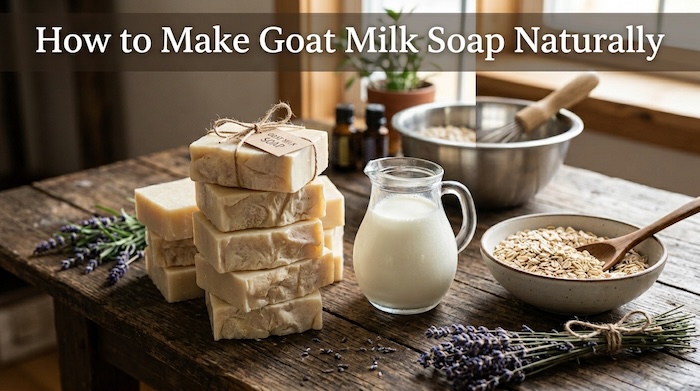
Goat milk soap has become one of my favorite soaps to make because it leaves the skin feeling soft, creamy, and moisturized. Many people use goat milk soap to help with dry or sensitive skin, and it’s a wonderful addition to homemade cold process soap recipes.
Goat milk contains natural fats, vitamins, and alpha hydroxy acids that can help gently cleanse and exfoliate the skin without leaving it feeling stripped or dry.
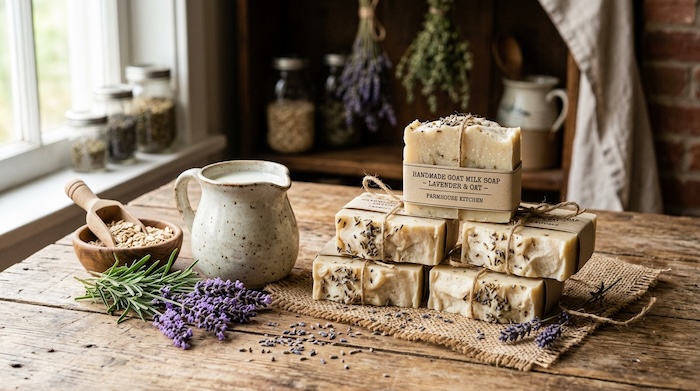
Benefits of Goat Milk Soap for Skin
Goat milk is rich in nutrients that are known to benefit the skin, including:
- Vitamin A, which may help support healthy-looking skin
- Vitamin B2 and other B vitamins that help moisturize
- Natural fats that create a creamy, conditioning soap bar
- Alpha hydroxy acids that help remove dead skin cells gently
Many people find goat milk soap especially helpful during dry winter months or when dealing with rough, itchy skin.
You may also enjoy reading Natural Ways to Help Dry Itchy Skin (My Experience With Eczema) and Best Shampoo Bars for Natural Hair Care.
Can You Use Goat Milk in Any Soap Recipe?
Yes — almost any cold process soap recipe can be turned into a goat milk soap recipe.
Simply replace the water in your recipe with goat milk.
For beginner soap makers, I highly recommend first reading Cold Process Soap Making Instructions before attempting milk soaps because milk soaps require slightly cooler temperatures and a bit more patience.
Why Temperature Matters in Goat Milk Soap
One of the most important things to understand about making goat milk soap is temperature control.
Milk contains natural sugars. If the lye gets too hot when mixed with the milk, those sugars can scorch or burn. This can cause:
- An unpleasant odor
- Dark orange or brown milk
- Overheating in the mold
- Darker finished soap bars
While darker goat milk soap is perfectly fine to use, many soap makers prefer a lighter creamy-colored bar.
Freezing the Goat Milk
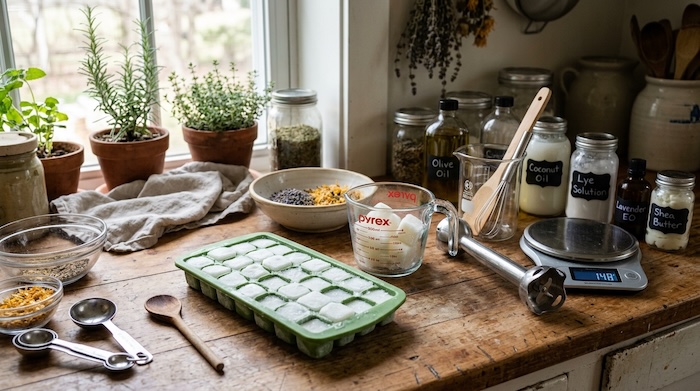
The easiest way to prevent scorching is to partially or fully freeze the goat milk before adding the lye.
I usually measure out the goat milk first and place it in the freezer until it becomes slushy or partly frozen. Sometimes I freeze it solid, and that works too.
Another easy method is freezing the milk in ice cube trays.
The colder the milk is, the easier it is to keep temperatures under control.
Tips for Adding Lye to Goat Milk
When adding lye to frozen goat milk:
- Sprinkle the lye in slowly a little at a time
- Stir continuously while adding the lye
- Keep temperatures low
- Never dump all the lye in at once
If the milk is fully frozen, you may need to add a tiny amount of water to help get things started.
As the lye begins to heat up, the frozen milk will slowly thaw. Continue stirring until all of the lye has fully dissolved.
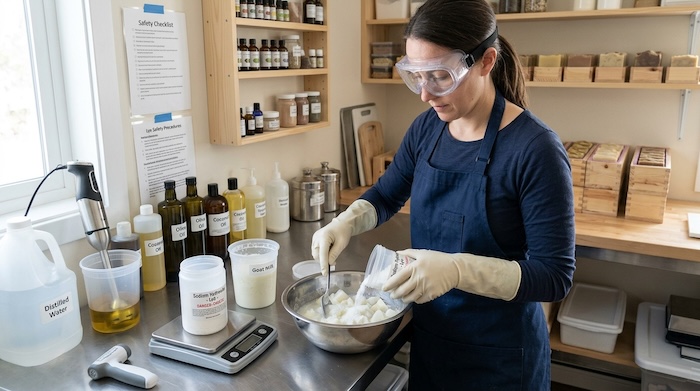
For safety, always wear safety goggles for soap making, chemical-resistant gloves, and use a digital soap making scale for accurate measurements.
You may also want to read Soap Making Problems and Troubleshooting if you run into any issues while making milk soap.
Making the Soap
Once your lye and oils are ready, make the soap exactly as you would any other cold process recipe.
If you are new to soap making, see my full Step-by-Step Instructions on How to Make Soap tutorial with photos and detailed instructions.
Goat milk soap works beautifully with:
- Oatmeal
- Honey
- Lavender essential oil
- Calendula petals
- Colloidal oatmeal
A good stick blender for soap making will help bring your soap to trace more evenly.
If you enjoy natural additives, you may also like reading Natural Soap Colorants and Essential Oils for Soap Making.
Best Essential Oils for Goat Milk Soap
Some essential oils pair especially well with goat milk soap because they complement the creamy, natural scent of the milk.
Popular choices include:
- Lavender essential oil
- Cedarwood essential oil
- Chamomile essential oil
- Sweet orange essential oil
- Oatmeal, milk, and honey fragrance blends
Goat milk soap is often lightly scented because many people prefer its gentle natural smell.
Molding Goat Milk Soap
After pouring the soap into the mold, I usually leave regular cold process soaps covered for 24 to 48 hours.
Goat milk soap behaves a little differently.
For a Darker Rustic Bar
If you leave the mold insulated and covered, the soap will naturally darken into a tan or caramel color.
I personally don’t mind this rustic look at all.
For a Lighter Creamy Colored Bar
If you prefer a lighter white or cream-colored goat milk soap:
- Pour the soap into the mold
- Place the mold directly into the freezer for 24 hours
- Remove from freezer
- Let sit another 24–48 hours before unmolding
This helps prevent the soap from overheating and keeps the bars much lighter in color.
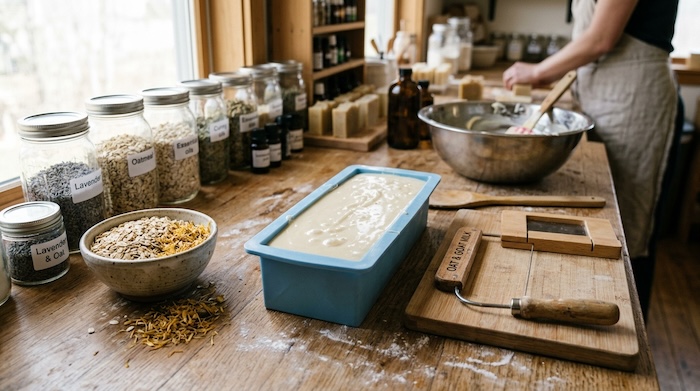
Using a silicone soap mold makes unmolding goat milk soap much easier.
Using Goat Milk Powder
Powdered goat milk is another great option and can be easier to work with than fresh milk.
There are two common ways to use it:
Method 1: Reconstitute and Freeze
- Mix the powder with water according to package directions
- Freeze the milk mixture
- Add lye slowly as described above
Method 2: Add Powder to Oils
- Mix the lye with plain water as usual
- Add the goat milk powder directly to cooled oils
- Blend well before adding the lye solution
Both methods work well.
How Long Does Goat Milk Soap Need to Cure?
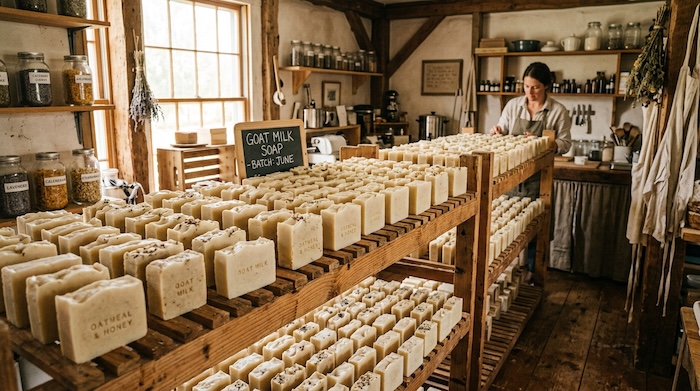
Like all cold process soap, goat milk soap should cure for about 4 to 6 weeks before use.
This allows excess water to evaporate and helps create a harder, longer-lasting bar.
Using a soap curing rack or breathable storage shelves helps air circulate around the bars while curing.
Final Thoughts
Goat milk soap is one of the nicest handmade soaps you can make. The creamy lather and gentle feel on the skin make it a favorite for many soap makers.
Once you get comfortable controlling temperatures, goat milk soap is actually very easy to make and works beautifully in almost any cold process recipe.
You may also enjoy reading:
- Cold Process Soap Making Instructions
- Soap Making Problems and Troubleshooting
- Essential Oils for Soap Making
- Natural Soap Colorants
- How to Choose Safe, Natural Baby Skincare Products
Disclaimer
This post is for informational and educational purposes only. I am not a medical professional, and the information shared here is based on personal experience and traditional soap-making practices. Always test homemade skincare products on a small area of skin first and discontinue use if irritation occurs.
When making cold process soap, sodium hydroxide (lye) must be handled carefully using proper safety equipment including gloves and eye protection. Follow all safety precautions when working with lye.
This post may contain affiliate links. As an Amazon Associate, I earn from qualifying purchases at no additional cost to you.
© 2016 – 2026, Tes. All rights reserved.
I freeze the milk too. It’s the only way I keep it from going brown.
I freeze the milk too. It’s the only way I keep it from going brown. happysoulorganics.com