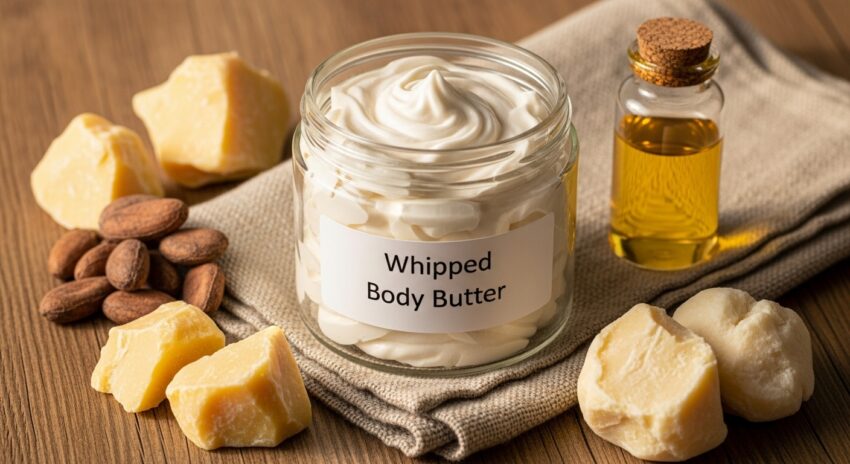
Making body butter recipes at home is surprisingly simple — and once you understand the basics, you’ll never look at store-bought products the same way again.
Body butter is often compared to lotion, but there’s an important difference most people don’t realize:
👉 Most commercial lotions are made up of 70–90% water.
That was shocking to me when I first learned it. We’re essentially paying premium prices for water and petroleum-derived ingredients whipped together with fragrance. Like I’ve told my kids, I struggle to pay companies for products that can quietly harm our skin — even if we don’t feel it right away.
The good news?
You can make nourishing, customizable body butter yourself — using ingredients you recognize and trust.
📑 Table of Contents
Click a section below to jump directly to that topic.
- What Is Body Butter?
- Body Butter vs Lotion: What’s the Difference?
- Two Types of Homemade Body Butter
- Emulsified Body Butter (With Water)
- Ingredient Breakdown: Waxes, Oils & Butters
- Basic Emulsified Body Butter Recipe
- Whipped Body Butter (Oil-Only)
- Do You Need a Preservative?
- Common Body Butter Mistakes
- Choosing the Best Oils for Body Butter
What Is Body Butter?
Body butter is a rich skincare product made primarily from plant butters and oils. It’s thicker and more concentrated than lotion and is designed to deeply moisturize dry or sensitive skin.
Depending on the recipe, body butter can be:
-
Oil-only (whipped body butter)
-
Water-based (emulsified body butter, similar to a thick lotion)
Understanding the difference is key to making a safe, effective product.
Body Butter vs Lotion: What’s the Difference?
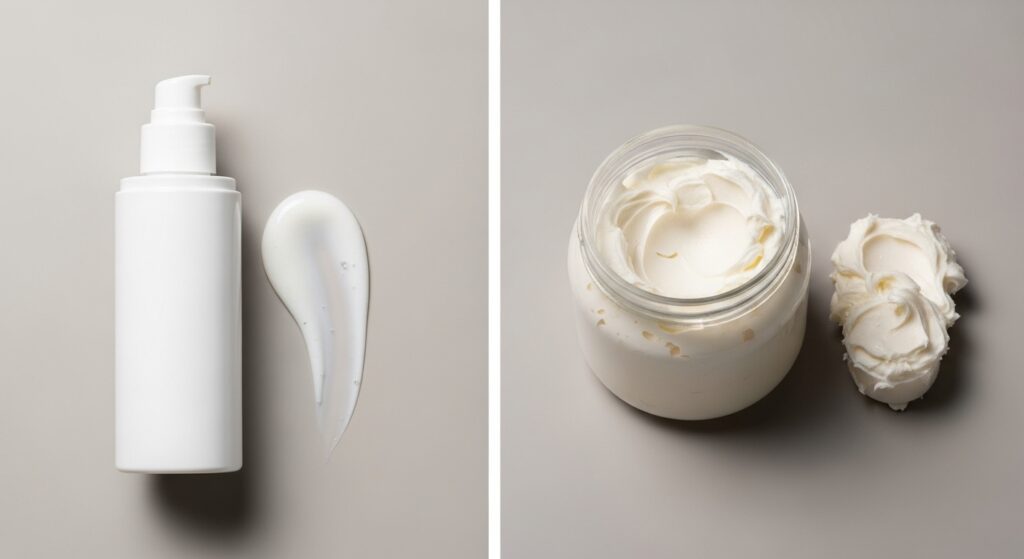
| Body Butter | Lotion |
|---|---|
| High oil & butter content | Mostly water |
| Thick and rich | Lightweight |
| Often preservative-free (oil-only) | Always needs a preservative |
| Long-lasting moisture | Fast absorbing |
Many people expect body butter to absorb like lotion — but it’s meant to sit on the skin longer and provide deep nourishment.
Two Types of Homemade Body Butter
1️⃣ Emulsified Body Butter (With Water)
-
Contains water
-
Requires waxes + emulsifier
-
Must include a preservative
-
Feels like a thick lotion
2️⃣ Whipped Body Butter (Oil-Only)
-
No water
-
No preservative required
-
Made from oils and butters only
-
Thick, fluffy texture
Both are great — but they are not interchangeable.
Emulsified Body Butter (With Water)
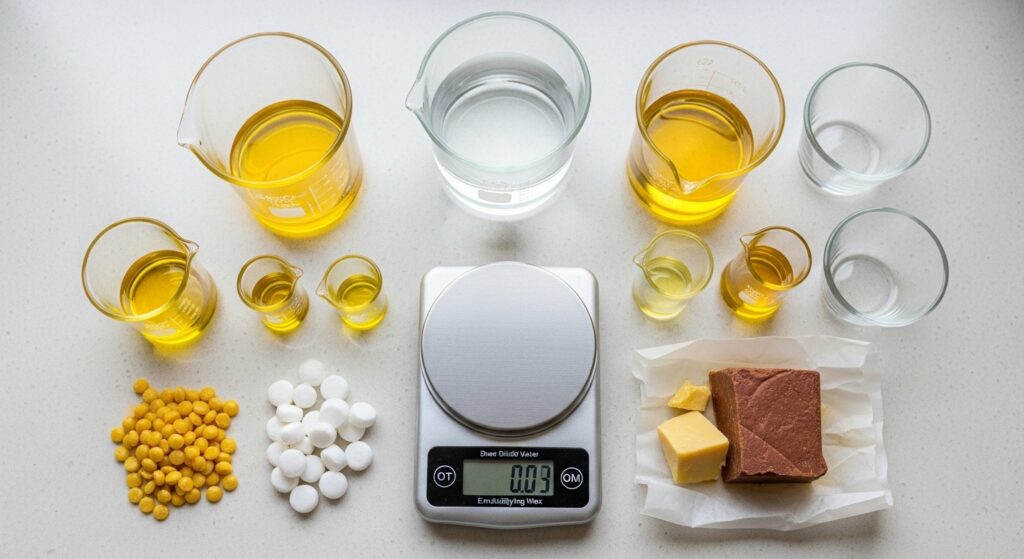
This type of body butter behaves like a rich lotion. It uses waxes to bind oil and water together.
Ingredient Breakdown: Waxes, Oils & Butters
Here’s the basic know-how:
-
You can swap wax types (within reason)
-
Different waxes create different textures
-
Beeswax or emulsifying wax keeps oil and water from separating
-
Stearic acid thickens but does not emulsify on its own
-
Oils and butters affect absorption and skin feel
-
You can use one oil or many
Basic Emulsified Body Butter Recipe
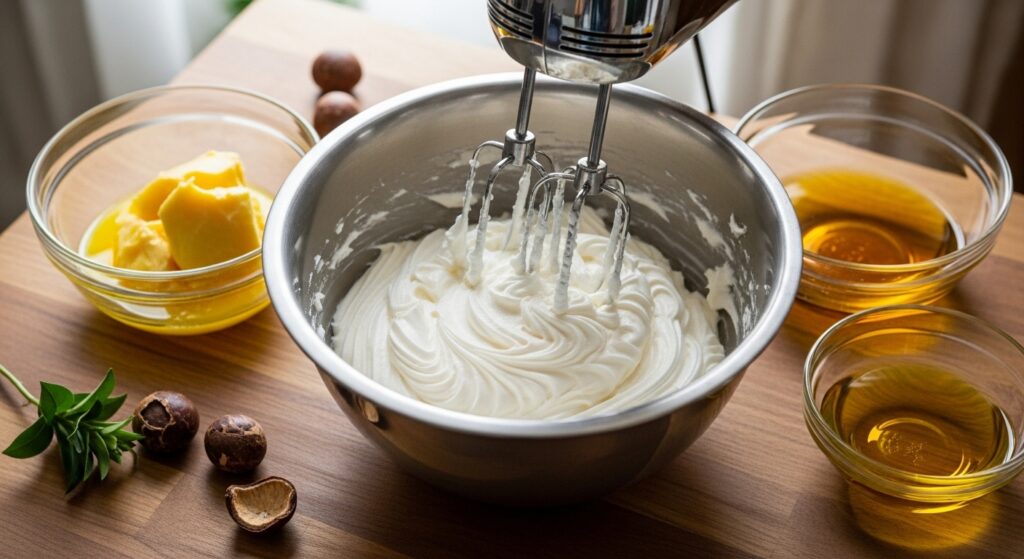
Makes approximately 7½ oz
Waxes & Butters
-
2 tsp stearic acid (optional thickener)
-
2 tsp emulsifying wax or beeswax
-
3 tsp cocoa butter
-
1 tsp shea butter
Liquid Oils
-
1½ tsp jojoba oil
-
1½ tsp grapeseed oil
-
½ tsp apricot kernel oil
-
½ tsp hemp oil
Other Ingredients
-
1 tsp glycerine (optional)
-
5.5 oz distilled water
-
1 tsp Germall (or another broad-spectrum preservative)
-
Essential oils or fragrance oil (optional)
Simplified Ingredient Groups
Grouping ingredients makes it easier to customize without buying everything:
-
2 tsp stearic acid (optional)
-
2 tsp beeswax or emulsifying wax
-
4 tsp solid butter
-
4 tsp liquid oils
-
1 tsp glycerine (optional)
-
5.5 oz distilled water
-
1 tsp preservative
⚠️ Measurement Tip:
For consistent results, lotions and body butters are best made by weight, not volume. Teaspoons can vary depending on ingredient density.
My First Lotion (A Beginner Lesson)
My first lotion was made with a bowl, a fork, and a microwave — seriously.
I grated beeswax from a candle, used olive oil, heated everything until melted, then slowly stirred in water. It sort of worked… but I learned a lot.
What went wrong:
-
Beeswax smell was overpowering
-
Olive oil left my skin overly shiny
-
Texture was too thick
-
I didn’t realize lotions were mostly water
Those early mistakes taught me why ingredient balance matters.
Whipped Body Butter (Oil-Only)
If you want the easiest option, this is it.
Whipped body butter contains only oils and butters — no water.
Basic Ratio
-
75% solid butter
-
25% liquid oil
For example:
-
2 cups oils & butters whipped = ~3 cups finished body butter
Because there’s no water:
✔ No preservative needed
✔ Longer shelf life
✔ Truly “all-natural”
Do You Need a Preservative?
Yes — if there is water. No — if there isn’t.
Important Safety Note
Any body butter or lotion containing water must include a broad-spectrum preservative. Without one, mold and bacteria can grow even if the product looks and smells fine.
Oil-only whipped body butter does not need a preservative.
Common Body Butter Mistakes
-
Using water without a preservative
-
Too much beeswax (draggy feel)
-
Using olive oil alone (excess shine)
-
Expecting body butter to absorb like lotion
-
Skipping emulsifiers in water-based recipes
Choosing the Best Oils for Body Butter
If I had to choose just two ingredients:
-
Cocoa butter – rich, protective, deeply moisturizing
-
Jojoba oil – closely mimics our skin’s natural sebum and absorbs well
👉 Want to use cocoa butter in your body butter?
Learn more about the benefits of cocoa butter in skincare.
👉 Curious why jojoba oil works so well?
Here’s great information about jojoba oil and skin balance.
Final Thoughts
Once you understand the difference between lotion and body butter, making your own becomes simple — and empowering.
Whether you choose a whipped oil-only butter or a water-based emulsified version, homemade body butter lets you control:
-
ingredients
-
scent
-
texture
-
and skin benefits
And that’s something no store-bought jar can compete with.
Important Note:
This information is for educational purposes only.
This post may contain affiliate links. If you make a purchase through these links, I may earn a small commission at no extra cost to you.
Updated Feb 2026
© 2024 – 2026, Tes. All rights reserved.