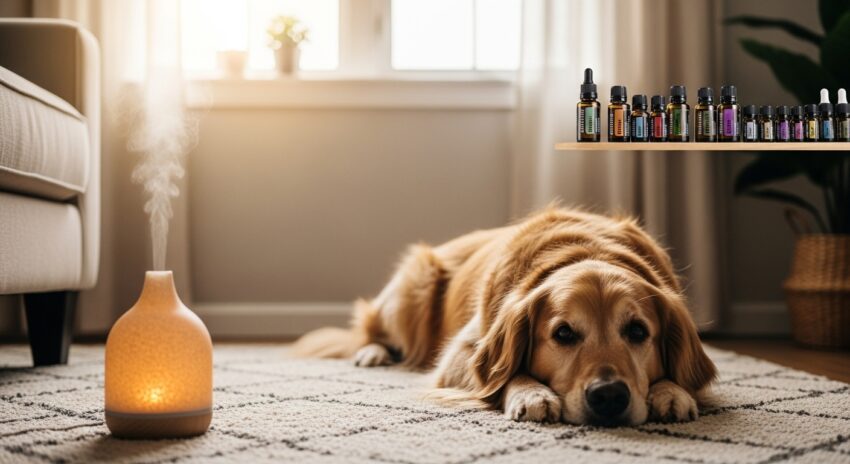
Many pet owners are interested in using natural products in their homes — including essential oils for cleaning, scenting, or personal care. While essential oils can offer benefits for humans, dogs are far more sensitive to these concentrated plant extracts.
Not all essential oils are safe for dogs, and even oils sometimes described as “dog-friendly” can cause problems if they are improperly used, poorly diluted, or diffused in enclosed spaces.
This guide explains how essential oils affect dogs, which oils are commonly avoided, which are sometimes used with caution, and how to keep your pet safe if you choose to use essential oils in your home.
📑 Table of Contents
Click a section below to jump directly to that topic.
- Can Essential Oils Be Used Safely Around Dogs?
- Why Dogs Are More Sensitive to Essential Oils
- Safe Ways to Use Essential Oils in Dog Homes
- Essential Oils Sometimes Used Around Dogs (With Extreme Caution)
- Essential Oils Commonly Avoided Around Dogs
- Dilution Guidelines for Dogs
- Common Signs of Essential Oil Toxicity in Dogs
- Pet-Safe Alternatives to Essential Oils
- Important Safety Disclaimer
- Frequently Asked Questions
Can Essential Oils Be Used Safely Around Dogs?
Essential oils are highly concentrated aromatic compounds extracted from plants. Dogs process these compounds differently than humans and may react more strongly — even to small amounts.
Essential oils are not inherently safe or unsafe, but their safety depends on:
-
The specific oil used
-
Proper dilution
-
Method of exposure
-
The dog’s size, age, and health
-
Ventilation and duration of exposure
Because of these variables, essential oils should always be used cautiously and never as a replacement for veterinary care.
For pet owners interested in learning more about natural approaches to dog care, a veterinarian-written guide on holistic dog health can provide helpful background before trying any new products.
Why Dogs Are More Sensitive to Essential Oils
Dogs have:
-
A much stronger sense of smell than humans
-
Thinner skin and more absorbent paw pads
-
Livers that may struggle to metabolize certain compounds
Most adverse reactions occur from:
-
Inhalation (especially from diffusers)
-
Direct skin application without proper dilution
-
Ingestion
Safe Ways to Use Essential Oils in Dog Homes
If you choose to use essential oils in a home with dogs, follow these safety guidelines:
-
Always dilute essential oils heavily
-
Never apply undiluted oils directly to your dog
-
Avoid continuous or strong diffusion
-
Ensure your dog can leave the room if a diffuser is running
-
Use oils short-term, not continuously
-
Never add essential oils to food or water
Do not use essential oils on puppies under 12 weeks of age.
If you’re primarily using essential oils for household scent or cleaning, switching to pet-safe cleaning products made without harsh chemicals can help reduce unnecessary exposure for dogs.
Essential Oils Sometimes Used Around Dogs (With Extreme Caution)
Some essential oils are sometimes used by experienced pet owners only when properly diluted and with veterinary guidance. These oils are not universally safe and should never be assumed harmless.
Commonly referenced oils include:
-
Lavender
-
Chamomile
-
Frankincense
-
Sweet Orange
-
Cardamom
-
Coriander
-
Ginger
-
Carrot Seed
-
Marjoram
⚠️ These oils should only be used:
-
At very low dilution rates
-
For short periods
-
Never internally
-
Never near the face or nose
Essential Oils Commonly Avoided Around Dogs
Many essential oils are widely recognized as unsafe or high-risk for dogs, especially when inhaled or applied to skin.
Oils commonly avoided include:
-
Tea Tree (Melaleuca)
-
Peppermint
-
Wintergreen
-
Clove (bud or leaf)
-
Oregano
-
Thyme
-
Birch
-
Pine
-
Camphor
-
Anise
-
Garlic
-
Juniper
-
Mustard
-
Rue
-
Savory
-
Yarrow
These oils may cause neurological, respiratory, or gastrointestinal symptoms and should not be used on or around dogs.
Dilution Guidelines for Dogs
Dogs require much lower dilution rates than humans.
General guideline (external use only):
-
1–2 drops essential oil
-
Mixed into 1–2 tablespoons of carrier oil
Carrier oils may include:
-
Fractionated coconut oil
-
Olive oil
-
Sweet almond oil
When in doubt, do not increase strength — lower is always safer.
Common Signs of Essential Oil Toxicity in Dogs
If your dog has been exposed to essential oils, watch for symptoms such as:
-
Difficulty breathing
-
Lethargy or weakness
-
Tremors or muscle twitching
-
Vomiting or drooling
-
Loss of coordination
-
Pawing at the mouth or face
-
Redness of lips, gums, or tongue
-
Strong essential oil odor on fur or breath
If symptoms appear, contact your veterinarian immediately or call the Pet Poison Helpline (800-213-6680).
Pet-Safe Alternatives to Essential Oils
Many dog owners choose vet-formulated products instead of essential oils to reduce risk.
Pet-safe alternatives include:
-
Gentle, essential-oil-free dog shampoos
-
Oatmeal-based skin products
-
Veterinary-approved calming aids
-
Pet-safe household cleaners
These options provide peace of mind without the risks associated with essential oil exposure.
Many dog owners prefer using gentle, vet-formulated shampoos instead of essential oils to help soothe dry or sensitive skin while reducing the risk of irritation.
For dogs with ongoing skin concerns, some pet owners choose veterinary-recommended medicated shampoos designed to support skin health when used as directed by a veterinarian.
Some pet owners also explore veterinarian-approved calming aids for stressful situations like travel or thunderstorms instead of diffusing essential oils in shared spaces.
Important Safety Disclaimer
This article is for educational purposes only and does not replace professional veterinary advice. Always consult your veterinarian before introducing essential oils or natural remedies to your pet’s environment.
Frequently Asked Questions
Can I diffuse essential oils if my dog is in the room?
It is best to avoid diffusing oils in enclosed spaces. If used, ensure good ventilation and allow your dog to leave the area freely.
Can essential oils be used in dog shampoo?
Only under veterinary guidance and at very low dilution rates. Many dogs react better to essential-oil-free formulas.
Are natural products always safer for dogs?
No. Natural substances can still be toxic. Safety depends on dosage, exposure, and the individual animal.
This post may contain affiliate links. If you make a purchase through these links, I may earn a small commission at no extra cost to you.
Updated Jan 2026
© 2019 – 2026, Tes. All rights reserved.
This is a very interesting article about dogs and essential oils. I have a dog that has very dry itchy skin. I appreciate the ideas. I will definitely try some of these! Thanks so much.
I make handcrafted soap. I made soap using coconut oil, olive oil, neem oil, tallow and castor oil. I had 43oz of oils and used 3% rosemary and 2% peppermint of total oils. 43x.03=1.29oz rosemary
43x.02=.85 oz
Is this safe to be used on dogs? I’ve read pros and cons about peppermint.
Rosemary is ok to use for dogs but in moderation. I have a pet shampoo recipe if you want to try it, I have sold this to many happy dog owners and horse owners.
Here is the link: Pet and Dog shampoo Recipe