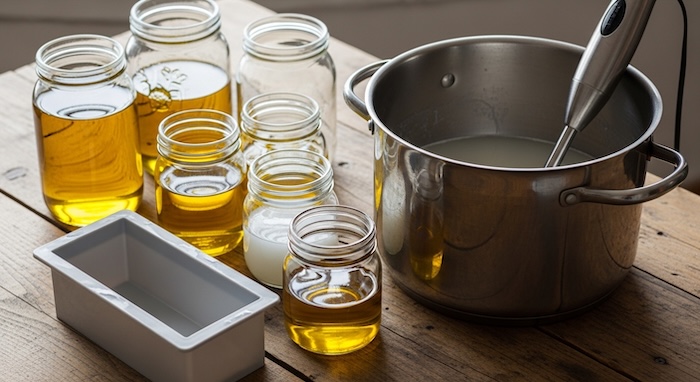
Making your own soap is one of the most rewarding skills you can learn. Whether you’re doing it for your family, your homestead, or to eventually sell, having the right soap making supplies makes all the difference.
The good news? You don’t need a fancy setup to get started.
In fact, many of the tools you need can be found around your home or picked up second-hand. I started that way myself, and it worked just fine.
This guide will walk you through:
- What you actually need (and what you don’t)
- Where to find supplies affordably
- Safe materials to use (and avoid)
- The best beginner oils and tools
- Where to go next once you’re ready
⚠️ Safety First: Choosing the Right Materials
Before anything else, let’s talk safety—because soap making involves sodium hydroxide (lye).
👉 Never use aluminum containers or utensils.
Lye reacts with aluminum and can release dangerous fumes and ruin your batch.
Instead, stick with:
- Stainless steel (best for oils)
- Heat-safe glass (for lye solution)
- Heavy-duty plastic (lye-safe containers)
💡 Personal tip:
I always mix my lye solution in a container placed inside the sink. If anything were to crack or spill, it’s contained safely.
If you’re new to handling lye, make sure you read this first: What to Do If Lye Touches Skin
🛒 Where to Find Soap Making Supplies
You don’t need to spend a fortune to get started.
Budget-Friendly Options:
- Thrift stores (great for bowls, molds, utensils)
- Your own kitchen (just keep soap tools separate once used)
- Local hardware stores (for safety gear)
Online Options:
- Amazon (easy starter kits and tools)
- Soap supply shops (for specialty oils, fragrance, additives)
If you’re building your full setup, see: Complete Soap Making Supplies List for Beginners
🧰 Basic Soap Making Supplies (What You Actually Need)
Here’s a simple beginner setup:
Essential Tools:
- Digital scale (must be accurate) A reliable digital scale like this is one of the most important tools you’ll own—this Etekcity Digital Kitchen Scale is accurate down to the gram and perfect for soap making.
- Stainless steel pot (for oils)
- Heat-safe container (for lye solution)
- Stick blender (for trace) For reaching trace quickly and evenly, I highly recommend using an immersion blender like this Mueller Immersion Hand Blender — it saves time and gives much better results than hand stirring.
- Thermometer (optional but helpful)
- Silicone spatula
- Safety gear (gloves + goggles) Don’t skip safety gear—these NoCry Safety Goggles and ThxToms Chemical Resistant Gloves are affordable and designed for working with lye safely.
A digital kitchen scale with gram accuracy is one tool you should not skip—it ensures your lye calculations are safe and accurate.
🧱 Soap Molds: Simple or Fancy?
You can go as simple or as advanced as you like.
Beginner Options:
- Silicone loaf molds (easy release)
- Wooden molds lined with freezer paper
- Repurposed containers (milk cartons, etc.)
When You’re Ready to Upgrade:
- Loaf molds with cutters
- Individual cavity molds
- Custom molds for selling
For a deeper breakdown, see: Best Soap Molds for Cold Process Soap
If you want an easy upgrade, a silicone loaf mold like this Amazon Basics Silicone Loaf Mold makes unmolding clean and simple.
🧴 Where to Buy Soap Making Ingredients
Your ingredients matter just as much as your tools.
Basic Ingredients:
- Oils and butters
- Sodium hydroxide (lye)
- Distilled water
Optional Additives:
- Essential oils
- Clays
- Herbs
- Milks (goat milk, coconut milk)
Start here to understand your oils: Soap Making Oils – 10 of the Best Oils to Use
For beginners, buying a starter oil kit like this Essential Depot Soap Making Kit can simplify your first batches and ensure you have the right ingredients on hand.
🧪 Why a Lye Calculator Is Essential
Soap making is chemistry—every oil needs a specific amount of lye.
Never guess your measurements.
Always run your recipe through a calculator: How to Use a Soap Lye Calculator Safely
This step alone prevents:
- Lye-heavy (unsafe) soap
- Soft or failed batches
- Wasted ingredients
🧼 Beginner Recipes to Get Started
Once you have your supplies ready, start simple.
Try beginner-friendly recipes here: Easy Cold Process Soap Recipes for Beginners
Keep your first batches:
- Small
- Simple
- Fragrance-light
Focus on learning the process first.
📊 Want to Stay Organized?
As you start making more batches, tracking becomes important.
I created simple printable tools to help with that: Soap Batch Log & Cure Tracker
- Track oils and measurements
- Record curing times
- Improve consistency
🌿 Final Thoughts: Start Simple and Build From There
You don’t need a perfect setup to start making soap.
Start with:
- Basic tools
- A simple recipe
- Safe practices
Then build as you go.
Most experienced soap makers didn’t start with fancy molds or expensive equipment—we worked our way up one batch at a time.
🔗 Quick Navigation 👉 Soap safety: What to Do If Lye Touches Skin
- 👉 Tools list: Complete Soap Making Supplies for Beginners
- 👉 Oils guide: Best Oils for Soap Making
- 👉 Lye calculator: How to Use a Soap Lye Calculator Safely
- 👉 Recipes: Beginner Soap Recipes
Disclosure:
The information provided on this website is for educational purposes only and should not be considered professional advice. Always practice proper safety when making soap or skincare products.
This post may contain affiliate links. As an Amazon Associate, I earn from qualifying purchases at no additional cost to you.