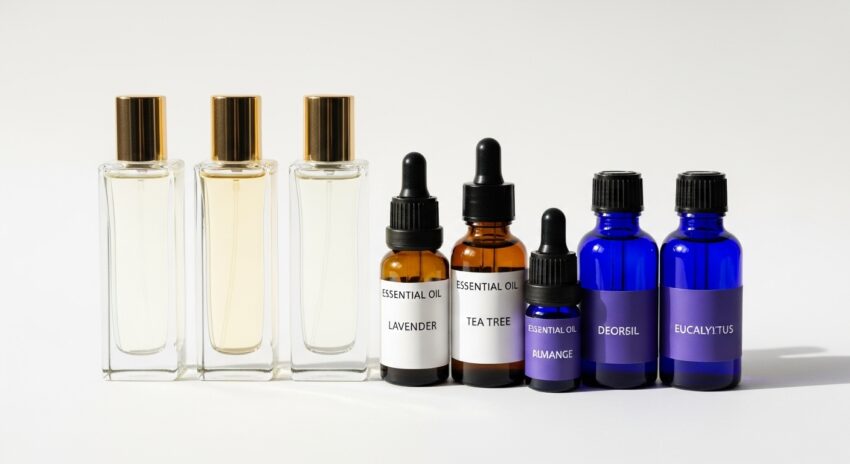
Perfumes are designed to smell beautiful — but many people are starting to ask an important question:
Are perfumes toxic or potentially harmful?
The answer isn’t black and white. Some conventional, store-bought perfumes contain synthetic fragrance blends made up of dozens of undisclosed chemicals, while natural perfume oils made with essential oils typically offer greater ingredient transparency. For people with allergies, sensitivities, or a desire to reduce chemical exposure, this difference matters.
Let’s break it down clearly and factually.
🔍 Why Perfume Ingredients Aren’t Fully Disclosed
One of the biggest concerns surrounding perfumes is ingredient transparency.
In many countries, fragrance formulas are protected as trade secrets. This allows manufacturers to list a single word — fragrance, parfum, or aroma — instead of disclosing every ingredient used in the scent.
A single fragrance blend can contain dozens of individual chemicals, many of which are not listed separately on the label. This makes it difficult for consumers to know exactly what they are exposed to, especially those with sensitivities.
🧪 What “Fragrance” Really Means on a Label
When you see:
-
Fragrance
-
Parfum
-
Aroma
…it usually refers to a mixture of scent compounds, not one ingredient.
This means:
-
Multiple chemicals may be present without being individually named
-
Sensitive individuals cannot easily identify triggers
-
“Unscented” products may still contain masking fragrances that dull the sense of smell
⚠️ Common Concerns With Synthetic Fragrance Ingredients
Consumer safety organizations and researchers have raised concerns about certain fragrance chemicals, including:
-
Phthalates, sometimes used to help scents last longer
-
Synthetic musks, which can accumulate in the environment
-
Known allergen triggers, linked to headaches, skin irritation, or respiratory discomfort in sensitive individuals
Some studies have explored associations between long-term exposure to certain fragrance chemicals and:
-
Hormonal disruption
-
Neurological irritation
-
Increased sensitivity reactions
It’s important to note that not all fragrance ingredients have been fully assessed for long-term, cumulative exposure, and safety testing standards vary widely.
🌬️ How Fragrance Exposure Happens
Fragrance chemicals can enter the body through:
-
Skin absorption
-
Inhalation
-
Indirect exposure from household products
Because fragrance is used so widely, exposure often happens daily and repeatedly, even for people who don’t wear perfume.
🧼 Where Synthetic Scents Are Commonly Found
Synthetic fragrances are not limited to perfumes. They are commonly found in:
-
Laundry detergent and fabric softener
-
Dishwashing liquids
-
Soap and body wash
-
Shampoo and conditioner
-
Candles and air fresheners
-
Floor and household cleaners
Even products labeled “unscented” may contain odor-masking ingredients designed to interfere with the nose’s ability to detect smells.
👩🔬 My Experience Working With Fragrance Oils
I’ve worked with fragrance oils and essential oils for many years in a soap-making and skincare business.
During that time, I noticed:
-
Some fragrance oil samples triggered instant headaches
-
Certain scents caused heart-racing sensations when heated
-
Customers often confused synthetic scents with natural ones
-
Some products marketed as “natural” were not fully natural
One musk-based fragrance in particular caused such a strong physical reaction while I was working with it that I stopped using it altogether.
Because of these experiences, I now choose to avoid synthetic fragrance in my home and prefer essential oil-based soaps, scents, and perfume oils.
🌿 Natural Perfumes vs Synthetic Perfumes
Natural perfume oils made with essential oils:
-
Use plant-derived aromatic compounds
-
Offer full ingredient transparency
-
Allow precise control over dilution and strength
-
Are often preferred by fragrance-sensitive individuals
That said, essential oils are still powerful substances and should always be used properly and diluted correctly.
👉Essential Oils vs Fragrance Oils
🧴 Making Your Own Perfume Oil
Making your own perfume oil allows you to:
-
Choose every ingredient
-
Avoid undisclosed fragrance blends
-
Customize scent strength
-
Create unique, personal blends
👉 How to Make Your Own Perfume Oil With Essential Oils
🔬 What Research & Experts Say
Publications such as Scientific American and environmental health organizations have explored fragrance safety, ingredient disclosure, and consumer exposure.
While research is ongoing, there is growing agreement that ingredient transparency and informed consumer choice are key when it comes to fragrance use.
❓ Frequently Asked Questions (FAQ)
Are all perfumes toxic?
No. Not all perfumes are toxic. However, many conventional perfumes contain undisclosed synthetic fragrance blends that may cause irritation or sensitivity in some people.
Are natural perfumes safer?
Natural perfumes made with essential oils often provide greater ingredient transparency. Many people with sensitivities prefer them, but they should still be used properly and diluted correctly.
Why don’t perfume labels list all ingredients?
Fragrance formulas are protected as trade secrets, allowing manufacturers to group ingredients under the term “fragrance” or “parfum.”
Can fragrance cause headaches or skin irritation?
Some people experience headaches, dizziness, or skin irritation when exposed to certain fragrance ingredients, especially synthetic ones.
Are essential oils risk-free?
No. Essential oils are concentrated and should be used with care. Proper dilution and safe usage are important.
Is “unscented” the same as fragrance-free?
Not always. Unscented products may still contain odor-masking ingredients that affect how the nose detects smells.
🌼 Final Thoughts
Perfume itself isn’t automatically dangerous — but knowing what’s in it matters.
For those who want more control, fewer unknowns, and greater transparency, natural perfume oils made with essential oils offer a thoughtful alternative. Understanding fragrance ingredients empowers you to make choices that align with your comfort, values, and lifestyle.
This article is intended for educational purposes only and reflects personal experience and publicly available research. Individual sensitivities vary. Always check ingredient labels and use scented products, including essential oils, with care.
This post may contain affiliate links. If you make a purchase through these links, I may earn a small commission at no extra cost to you.
Updated Feb 2026
© 2024 – 2026, Tes. All rights reserved.