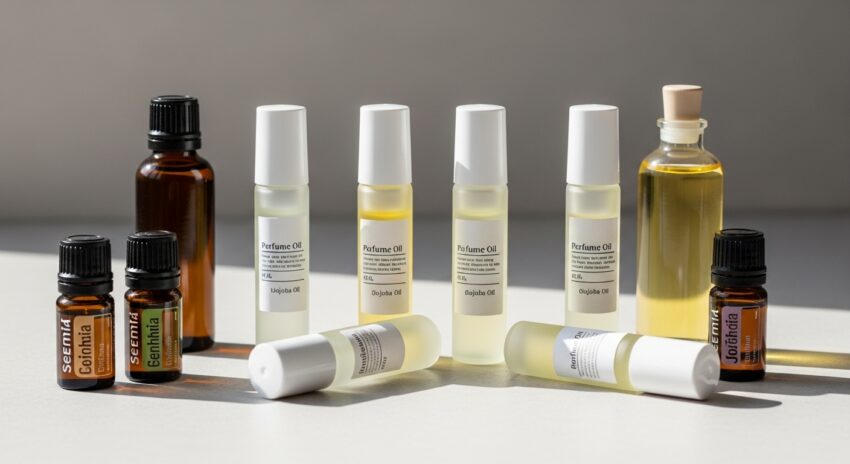
One of the easiest, most affordable, and most enjoyable products I ever made for markets and events was perfume oil.
I simply took my top 10 best-selling soap scents and turned them into roll-on perfume oils. They were beautifully packaged, easy to make, and consistently popular — selling for $12.95 each.
Perfume oils require no curing time, very little equipment, and can even be made to order, making them a perfect addition for soap makers, crafters, and anyone who loves working with scent.
🌿 What Are Perfume Oils?
Perfume oils are concentrated fragrance blends diluted in a carrier oil and applied directly to the skin using a roller ball or dab bottle.
Unlike alcohol-based perfumes, perfume oils:
-
Tend to last longer on the skin
-
Evaporate more slowly
-
Are compact and travel-friendly
-
Allow full control over ingredients
They’re especially popular with people who prefer a more subtle, personal scent.
✨ Why Perfume Oils Are So Popular
From both a maker and customer perspective, perfume oils are appealing because they:
-
Are quick and inexpensive to produce
-
Have a high perceived value
-
Can be customized easily
-
Pair perfectly with handmade soap and skincare
For markets and online shops, they make excellent impulse buys and gift items.
🧪 What You Need to Make Perfume Oils

There’s no single rigid recipe, but you’ll need:
-
Jojoba oil (carrier oil)
-
Essential oils and/or fragrance oils
-
10 ml roller ball bottles
-
Small funnel or pipette
-
Labels
That’s it — no heating, curing, or special equipment required.
🌰 Why Jojoba Oil Is the Best Carrier
Jojoba oil is ideal for perfume oils because:
-
It has a dry, non-greasy feel
-
Closely resembles natural skin oils
-
Is very stable with a long shelf life
-
Is widely considered gentle for skin
This makes it an excellent choice for daily-wear perfume oils.
🌸 Essential Oils vs Fragrance Oils
Perfume oils can be made using:
-
Essential oils for natural, plant-based scents
-
Fragrance oils to recreate popular or complex aromas
-
Or a combination of both
If you’re deciding whether to use essential oils or fragrance oils in perfume blends, understanding the difference between the two can help you choose what works best for your needs. 👉 read my post on Essential Oils vs Fragrance Oils
Each option has its place depending on your goals, audience, and scent preferences.
📏 Proper Perfume Oil Ratios
A commonly used concentration for perfume oils is:
20–25% scent / 75–80% carrier oil
For a 10 ml roller bottle:
-
2–2.5 ml essential oil or fragrance oil
-
Remaining volume filled with jojoba oil
This provides a noticeable scent while remaining skin-friendly for most users.
🌺 Creative Add-Ins for Visual Appeal
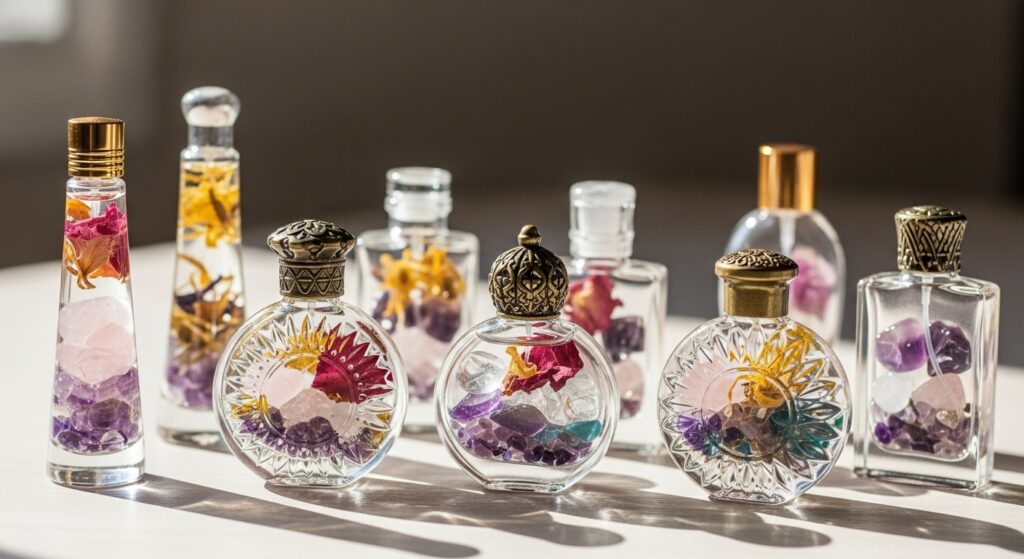
To make your perfume oils stand out, you can add:
-
Fully dried flower petals
-
Faux flowers
-
Small crystals or stones
-
Pieces of beach glass for themed scents
Example:
A tropical scent paired with a small piece of beach glass instantly adds personality and visual interest.
🧴 Bottles, Rollers & Filling Tools
Roller bottles come in many styles:
-
Clear, tinted, or frosted glass
-
Black, white, or metallic lids
Frosted bottles are my personal favorite — they look elegant and hide minor oil variations.
Helpful Tools
-
Tiny funnels to prevent spills
-
Disposable pipettes for easy filling
Important tips:
-
Always wipe oil residue from the bottle rim
-
Oil near the roller seat can cause slow leaks
-
Bottle and lid styles may change between suppliers
-
Some vanilla fragrance oils may appear cloudy when blended
🏷️ Labeling & Packaging Tips
-
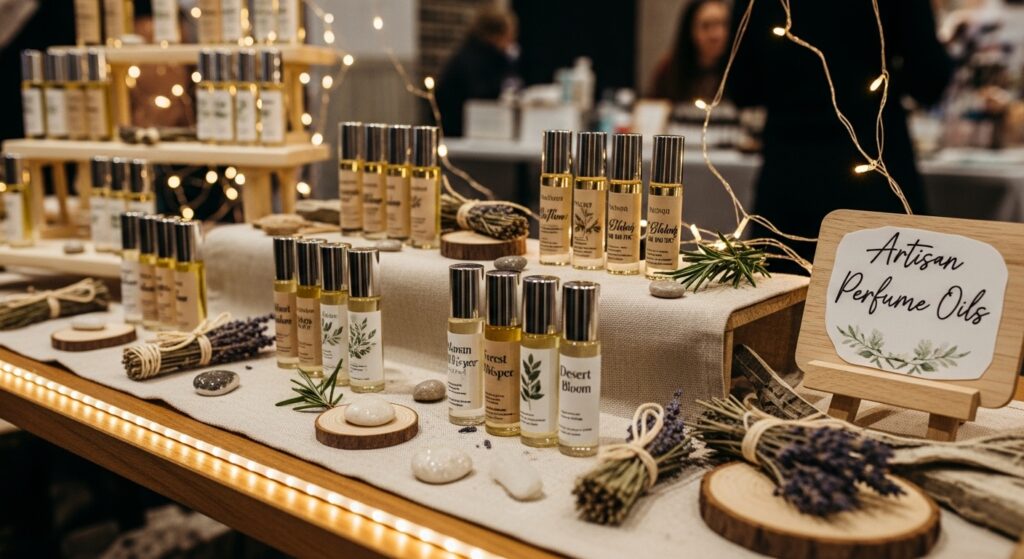
Printable sticky labels work well for small batches
-
Keep designs simple and readable
-
Tube or sleeve packaging adds a premium feel
Beautiful packaging can dramatically increase perceived value — I’ve seen similar perfume oils sell for $45 or more with upscale presentation.
🛠️ Can You Offer Custom Perfume Oils?
Yes — and customers love this option.
Custom perfume oils:
-
Can be mixed on demand
-
Don’t require curing time
-
Encourage repeat business
-
Are far easier to customize than soap
They’re an excellent way to build customer loyalty.
❓ Frequently Asked Questions (FAQ)
How long do perfume oils last?
Perfume oils made with jojoba oil can last 1–2 years when stored away from heat and direct sunlight.
Are perfume oils better than spray perfumes?
Perfume oils are more concentrated and longer-lasting on the skin, while sprays disperse scent more widely. Preference depends on personal taste.
Can I mix essential oils and fragrance oils together?
Yes, as long as you follow safe usage rates and test blends carefully.
Do perfume oils stain clothing?
Oil-based perfumes can stain delicate fabrics if applied heavily. It’s best to apply to skin rather than clothing.
Can beginners make perfume oils?
Absolutely. Perfume oils are one of the easiest scent products to start with.
🌼 Final Thoughts
Perfume oils are a simple, creative, and versatile product that fits beautifully alongside handmade soap and natural skincare.
Whether you’re making them for yourself, gifts, or to sell, they offer complete control over scent, ingredients, and presentation — with minimal investment and maximum flexibility.
🌿 Gentle Disclaimer
This content is for educational and informational purposes only and reflects personal experience and general formulation practices.
Individual skin sensitivities vary. Always perform a patch test and review ingredient safety information before using new scented products. This information is not intended to diagnose, treat, cure, or prevent any medical condition.
This post may contain affiliate links. If you make a purchase through these links, I may earn a small commission at no extra cost to you.
Updated Feb 2026
© 2024 – 2026, Tes. All rights reserved.