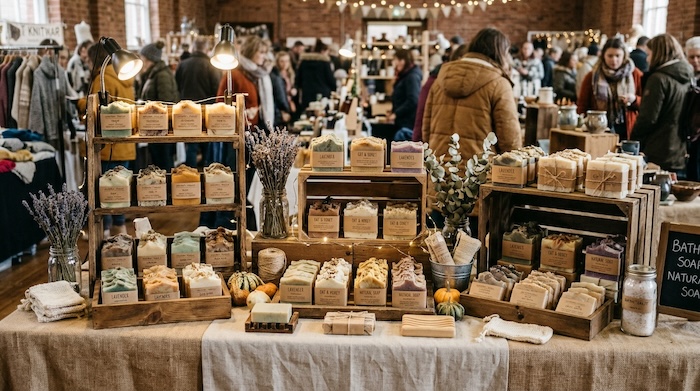
Selling handmade soap at craft fairs and festivals can be a wonderful way to grow your soap-making business, meet new customers, and make money from something you enjoy creating.
I’ve attended many craft fairs and festivals over the years, and one thing I’ve learned is that choosing the right event is just as important as having good products and competitive prices.
Some craft fairs have been very successful for me, while others haven’t even covered the cost of attending. Over the years, I’ve learned what to look for when choosing events, which questions to ask organizers, and how important booth location and competition can be.
If you’re thinking about selling your handmade soap at craft fairs, farmer’s markets, or Christmas markets, I’ll share some of the things I’ve learned along the way.
We’ll look at how to find suitable events, what makes a craft fair profitable, how to set up your soap display, and ways to encourage more sales.
Table of Contents
- Why Sell Handmade Soap at Craft Fairs?
- How to Find Craft Fairs and Festivals
- How to Choose a Profitable Craft Fair
- How Much Does It Cost to Sell at a Craft Fair?
- Choosing the Best Booth Location
- Setting Up an Attractive Handmade Soap Display
- Preparing for Outdoor Craft Fairs
- Selling Handmade Soap at Christmas Craft Fairs
- Questions to Ask Craft Fair Organizers
- How to Encourage More Sales at Your Craft Fair Booth
- Keep Track of What Sells at Each Event
- What Should You Bring to a Craft Fair?
- Frequently Asked Questions About Selling Handmade Soap at Craft Fairs
- Final Thoughts on Selling Handmade Soap at Craft Fairs
Why Sell Handmade Soap at Craft Fairs?
Craft fairs are a great place to sell handmade soap because customers can actually see and smell your products before buying them.
When selling online, customers rely on photographs and descriptions. At a craft fair, they can pick up a sample bar, smell the different scents, and ask questions about the ingredients.
This personal interaction is one of the things I enjoy most about selling soap at markets.
Craft fairs also give you the opportunity to:
- Introduce new customers to handmade soap.
- Find out which scents and products are most popular.
- Build a customer base in your local community.
- Sell seasonal soaps and gift sets.
- Promote your website or online shop.
- Receive immediate feedback on your products.
- Encourage repeat customers.
Another advantage is learning which products sell best. Sometimes a soap you expect to be popular doesn’t sell nearly as well as another scent you hadn’t given much thought to.
Attending markets can help you decide what to make more of in the future.
How to Find Craft Fairs and Festivals
Finding the right events takes a little research, but there are plenty of places to start looking.
Search Online for Local Craft Fairs
The internet is one of the easiest places to find upcoming events.
Try searching for:
- Craft fairs near me
- Local craft fairs
- Handmade artisan markets
- Farmer’s markets accepting vendors
- Christmas craft fairs
- Fall craft festivals
- Spring craft markets
- Craft fairs in your town or province
- Home and garden shows
- Local festivals and community events
- Juried craft shows
Don’t limit yourself to events advertised specifically as craft fairs.
I’ve found that other types of festivals can also provide opportunities to sell handmade soap.
Depending on where you live, you might look for garlic festivals, rodeos, boat races, agricultural fairs, or community celebrations.
The important thing is finding events that attract people who may be interested in purchasing handmade products.
Ask Other Artisans for Recommendations
Another good way to find events is to speak with other vendors.
Experienced artisans often know which shows are worthwhile and which ones are better avoided.
Your local tourism office, community centre, or chamber of commerce may also have information about upcoming events.
If you’re interested in selling your soap wholesale, look into gift shows and trade shows that cater to retailers.
Consider Juried Craft Shows
Some of the best events I’ve attended have been juried craft shows.
A juried show requires vendors to apply and have their products reviewed before being accepted.
You may be asked to submit photographs, product descriptions, or samples.
The organizers then decide whether your products are suitable for their event.
These shows can be worth considering because organizers often pay attention to the quality and variety of products being sold.
Some of the more popular juried shows have waiting lists, so don’t be discouraged if you can’t get into one right away.
How to Choose a Profitable Craft Fair
One of the biggest mistakes you can make is signing up for an event without asking enough questions.
Just because an event attracts a large crowd doesn’t necessarily mean you’ll make a lot of sales.
Find Out How Much Foot Traffic to Expect
I always ask organizers how many people attended the event in previous years.
Foot traffic is important because the more potential customers who pass your booth, the more opportunities you have to make sales.
However, the type of crowd matters too.
People attending a Christmas craft fair are often looking for gifts, while visitors at a music festival may be more interested in entertainment.
Both events can be successful, but it’s worth considering why people are attending.
Find Out How Many Soap Vendors Will Be There
This is one question I never forget to ask.
Competition is part of doing business, but too many vendors selling the same type of product can make it difficult for everyone.
I learned this lesson a few years after I started attending craft fairs.
I signed up for an out-of-town event with approximately 30 vendors.
Unfortunately, six of those vendors were selling handmade soap.
Not one of us made enough money to cover our travel expenses, hotel accommodations, and booth fees.
I haven’t been back to that event since.
That experience taught me to ask how many soap makers and natural skincare vendors will be attending before paying for a space.
I’ve also attended events where customers walked past booths commenting about how much soap or jewelry was being sold.
A good organizer should try to provide a reasonable variety of products so customers have an interesting shopping experience.
Look for Events With Returning Vendors
One thing I look for is whether the same vendors return to an event year after year.
When artisans continue attending, it’s often a good sign that the event is worthwhile.
Some of the better shows even have waiting lists.
If you find an event that looks promising but is already full, consider adding your name to the waiting list for the following year.
How Much Does It Cost to Sell at a Craft Fair?
Before booking an event, take a little time to calculate how much it will cost to attend.
Your booth rental is only one expense.
You may also need to pay for:
- Travel and fuel
- Hotel accommodations
- Parking
- Meals
- Tables and chairs
- Display equipment
- Packaging and shopping bags
- Payment processing fees
- Vendor insurance
- Additional help
And don’t forget the cost of making the soap itself.
If you’re unsure how much each bar costs to produce, my guide on The Cost of Making Your Own Soap explains how to calculate ingredient costs and compare soap-making expenses.
Calculate How Much You Need to Sell
Let’s say your expenses for a craft fair are:
| Expense | Cost |
|---|---|
| Booth rental | $100 |
| Travel and parking | $40 |
| Food and other expenses | $20 |
| Total | $160 |
Now suppose you sell your handmade soap for $8 per bar and it costs $3 to make and package each bar.
That leaves $5 per bar toward your event expenses and profit.
You would need to sell 32 bars just to cover the $160 in event expenses.
Anything sold beyond that would contribute toward your earnings, although you’ll still need to consider other business costs and the value of your time.
This is why I recommend working out your expenses before committing to an event.
Choosing the Best Booth Location
Booth placement is something I pay close attention to.
You don’t want to spend money on a craft fair only to discover that your table is hidden in a corner where very few customers walk.
Over the years, I’ve found that one of my favourite locations is to the right of the entrance and against a wall.
Of course, every venue is different, but being near a busy entrance or main walkway can provide good visibility.
Are Corner Booths Worth the Extra Money?
Corner booths are another location I like.
They usually cost a little more, but customers can approach from two different directions.
This gives you more display space and additional opportunities to attract attention.
However, if you’re using a corner booth, I recommend having someone help you.
When you’re busy helping customers on one side, it’s easy to miss potential sales on the other.
Look at the Floor Plan Before Booking
Whenever possible, ask to see the event layout.
Consider:
- Where customers will enter.
- Which aisles are likely to be busiest.
- Whether your booth will be visible.
- How close other soap vendors will be.
- Whether there is enough space for your display.
- Whether customers can comfortably stop and browse.
If you’re considering attending an event the following year, visiting it as a shopper can be a good way to see how the venue is organized.
Setting Up an Attractive Handmade Soap Display
An attractive display can make a big difference in how many people stop at your booth.
You don’t need to spend a fortune on display equipment.
Sometimes the simplest displays are the most appealing.
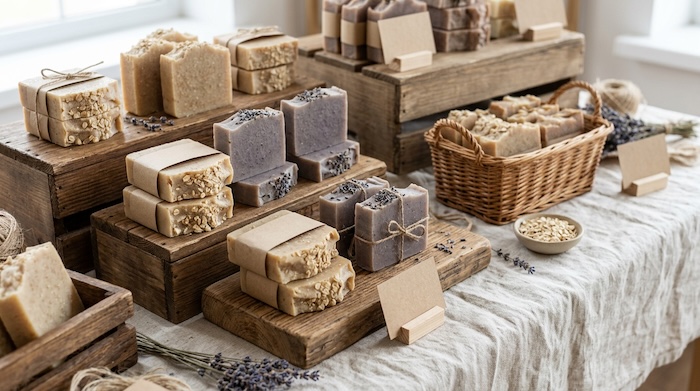
Wooden crates, small shelves, baskets, and neatly covered tables can all work well for handmade soap.
Display Products at Different Heights
Try to avoid placing every bar flat on the table.
Using wooden risers, small shelves, or stacked crates gives your display more height and makes it easier for customers to see your products.
You can find various styles of wooden display risers on Amazon, or make your own if you enjoy woodworking.
Make Your Prices Easy to See
I like having clear prices displayed so customers don’t need to ask how much everything costs.
Small signs can also help highlight gift sets, multiple-bar specials, or seasonal products.
Keep your display tidy and avoid overcrowding the table.
Make Your Packaging Part of the Display
Simple packaging can make handmade soap look more attractive and professional.
Kraft paper bands, boxes, and decorative labels can work beautifully with natural soap.
If you’re looking for ideas, read my article on Soap Packaging Ideas.
You may also want to review Eco-Friendly Soap Labeling when preparing labels for your products.
Before selling, make sure your soap meets the applicable labeling and cosmetic requirements in your area.
Preparing for Outdoor Craft Fairs
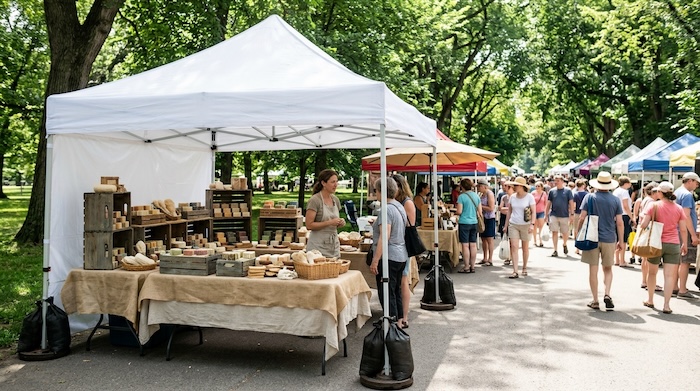
Outdoor craft fairs require a little more preparation because you’ll usually need to supply your own shelter, tables, and chairs.
Over the years, I’ve attended outdoor events in parks, parking lots, and courtyards.
One thing I’ve learned is to be prepared for changing weather conditions.
Invest in a Good Market Canopy
One of the best purchases I made was an Impact Canopy Tent.
I purchased my canopy many years ago, and it served me well through numerous outdoor markets.
A sturdy canopy helps provide shade and shelter for both you and your products.
When purchasing a market tent, check the event requirements for canopy size, construction, and safety.
Don’t Forget Canopy Weights
Not every outdoor event is held on grass.
I’ve attended markets in parking lots and cobblestone courtyards where tent pegs weren’t an option.
Over the years, I’ve tried several ways of securing my canopy.
Eventually, I settled on sand-filled canvas weight bags that wrap around the tent legs and attach to the corners.
They’re much easier to transport and set up than some of the other methods I’ve tried.
Make sure your canopy is properly secured according to the manufacturer’s instructions and the event’s requirements. If severe weather develops, follow the organizer’s safety directions.
Protect Your Soap From Rain
Soap and rain don’t mix very well!
I have sidewalls for my canopy, and they’ve come in handy when the weather changes.
I also recommend bringing a clear waterproof cover that you can place over your table if wind starts blowing rain into the tent.
Keep extra inventory in covered, moisture-resistant containers.
Selling Handmade Soap at Christmas Craft Fairs
Christmas craft fairs can be excellent opportunities for handmade soap makers.
Many shoppers are looking for affordable gifts, stocking stuffers, teacher presents, and small gifts for friends and family.
Handmade soap is well suited to these occasions because it’s practical, attractive, and easy to package.
Some ideas include:
- Christmas-scented soaps
- Small soap gift boxes
- Three-bar gift sets
- Soap and washcloth combinations
- Decorative holiday packaging
- Stocking stuffer soaps
- Small gift baskets

You don’t necessarily need to make completely different products for Christmas.
Sometimes adding a festive ribbon or gift box to your regular soaps is enough to make them more appealing as gifts.
If you’re looking for seasonal inspiration, have a look at my Christmas Soap Recipes.
Just remember to start making your Christmas soap early enough to allow it to cure properly before the markets begin.
Questions to Ask Craft Fair Organizers
Before paying for booth space, I recommend asking the organizer the following questions.
- How many people attended the event last year?
- How many vendors will be participating?
- How many handmade soap or natural skincare vendors will be attending?
- What size is the booth space?
- Are tables and chairs included?
- Is electricity available?
- Are there additional charges for electricity?
- How is the event being advertised?
- What time can vendors begin setting up?
- Is vendor insurance required?
- Is Wi-Fi available for credit card processing?
- Is parking included in the booth fee?
- Are washrooms nearby?
- Will food and drinks be available?
- Are there special regulations or permits required?
- What is the cancellation and refund policy?
- What happens if an outdoor event is cancelled because of weather?
Asking these questions can help you decide whether an event is worth attending and avoid unexpected expenses.
How to Encourage More Sales at Your Craft Fair Booth
Once you’ve chosen a good event and set up your display, there are several things you can do to encourage customers to purchase your soap.
Be Friendly and Approachable
I find that a friendly greeting goes a long way.
Some customers enjoy asking questions about ingredients and soap-making methods, while others prefer to browse quietly.
Give people time to look around, but be available when they need help.
Let Customers Smell Your Soap
One of the biggest advantages of selling handmade soap in person is that customers can smell the different scents.
Consider keeping sample bars available so customers don’t need to open packaged products.
Offer Gift Sets
Gift sets can be particularly popular at Christmas markets.
You might offer several complementary scents packaged together or combine soap with a washcloth or soap dish.
Make sure you account for the additional packaging costs when setting your prices.
Accept Different Payment Methods
It’s a good idea to accept more than just cash.
Many customers prefer paying by debit or credit card.
A portable card reader can make this easier.
Remember to check whether you’ll have a reliable internet connection at the event.
Promote Your Website
Craft fairs are also a good opportunity to introduce customers to your website or online store.
Consider including a business card with every purchase.
You could also display a QR code linking to your website so customers can find you again.
If you collect email addresses for marketing, be sure to follow the consent and privacy rules that apply to your business.
Keep Track of What Sells at Each Event
One habit I’ve developed over the years is keeping an inventory list for every event.
Before leaving for a craft fair, I record how many bars of each type of soap I’m taking.
When I return home, I count what is left.
This helps me determine:
- Which scents were most popular.
- Which products didn’t sell well.
- How many bars sold.
- Whether gift sets were successful.
- How much inventory to prepare next time.
I also recommend keeping track of booth expenses and total sales.
After attending several events, you’ll have a much better idea of which craft fairs are worth returning to.
What Should You Bring to a Craft Fair?
There are quite a few things to remember when preparing for a craft fair.
In addition to your handmade soap, you’ll need display equipment, packaging, payment supplies, signage, and a few personal essentials.
I’ve found that having a checklist makes preparing for events much easier.
Rather than covering every item here, I’ve put together a separate article with a more detailed list of supplies.
Read my Craft Fairs and Festivals: What Do I Need to Bring? for everything you’ll want to have ready before your next market.
Frequently Asked Questions About Selling Handmade Soap at Craft Fairs
Is selling handmade soap at craft fairs profitable?
Selling handmade soap at craft fairs can be profitable if you choose suitable events, price your products correctly, and keep expenses under control. Some markets will be more successful than others, so tracking your sales and costs is important.
How much soap should I bring to my first craft fair?
The amount depends on the size of the event, expected attendance, and how many hours you’ll be selling. Start with a manageable selection of your most popular soaps and keep records so you can plan better for future events.
What handmade soap sells best at craft fairs?
Popular scents, attractive packaging, and seasonal gift sets often appeal to customers. However, preferences vary between markets. Keeping an inventory record will help you identify your best-selling products.
Do I need insurance to sell handmade soap at craft fairs?
Some event organizers require vendors to carry liability insurance. Product liability insurance may also be appropriate when selling handmade soap and skincare products. Check with the organizer and an insurance professional before attending.
Do I need a business license to sell handmade soap?
Requirements vary depending on your location. You may need business registration, local permits, or tax registration. Soap sold as a cosmetic may also be subject to specific product and labeling regulations. In Canada, for example, handmade soap sold for cleansing the body generally falls under cosmetic requirements.
Are Christmas craft fairs good for selling handmade soap?
Christmas craft fairs can be particularly good because shoppers are looking for gifts. Attractive soap gift sets, seasonal scents, and stocking stuffers may encourage additional sales.
Final Thoughts on Selling Handmade Soap at Craft Fairs
I’ve enjoyed attending craft fairs and festivals over the years, and they’ve taught me a great deal about selling handmade soap.
Some events have been wonderful experiences, while others have taught me expensive lessons.
The most important thing I’ve learned is to do your research before signing up.
Ask plenty of questions, find out how many other soap vendors will be attending, calculate your expenses, and pay attention to booth placement.
Once you find events that work well for your business, they can become an enjoyable and rewarding way to sell your handmade products.
And before heading to your next market, don’t forget to check my Craft Fair Packing Checklist so you don’t leave anything important behind.
Disclosure:
The information provided on this website is for educational purposes only and should not be considered professional advice. Always practice proper safety when making soap or skincare products.
This post may contain affiliate links. As an Amazon Associate, I earn from qualifying purchases at no additional cost to you.
updated Oct 2026
© 2016 – 2026, Tes. All rights reserved.