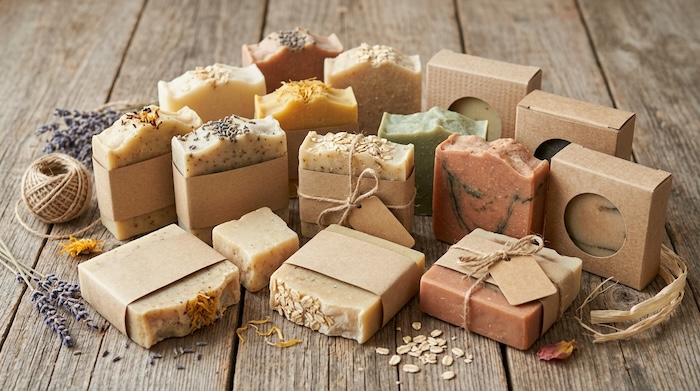
Making your own soap labels is one of those finishing touches that can make a handmade bar of soap look so much more appealing.
Over the years, I’ve tried many different ways to wrap and label my homemade soaps. Some worked better than others, and I’ve found that you really don’t need expensive equipment or professionally printed packaging to make your soap look attractive.
Whether you’re making soap to give as gifts, selling your handmade soaps, or simply want a nice way to store and display your finished bars, there are plenty of creative and inexpensive ways to package them.
I still make most of my soap labels myself, and one of my favorite methods is a simple wraparound paper label. It’s inexpensive, easy to print at home, and I can fit five labels on a single sheet of paper.
Below are some different soap labeling and packaging ideas I’ve used, along with a few other options worth trying.
Table of Contents
- Why Make Your Own Soap Labels?
- DIY Wraparound Soap Labels
- Wrapping Handmade Soap With Twine and Gift Tags
- Printable Sticker Labels for Handmade Soap
- Soap Boxes for a More Professional Look
- Wrapping Handmade Soap With Tissue Paper
- Natural and Eco-Friendly Soap Packaging Ideas
- What Information Should Go on a Handmade Soap Label?
- Tips for Making Homemade Soap Labels Look Professional
- Frequently Asked Questions About DIY Soap Labels
Why Make Your Own Soap Labels?
One of the things I enjoy about making soap is being able to create something from start to finish. Once the soap has cured, choosing how to wrap and label it is part of the fun.
Making your own labels has several advantages:
-
You can match the packaging to the scent or ingredients in your soap.
-
You can save money by printing labels at home.
-
You can change the design for seasonal soaps and special occasions.
-
You can make labels for different sizes and shapes of soap.
-
You can create attractive packaging without purchasing expensive supplies.
And if you’re making soap to sell, a consistent label design helps customers recognize your products.
DIY Wraparound Soap Labels
This is the method I use most often for my handmade soaps.
I make my labels on the computer, print them onto paper, cut them to size, and wrap them around each bar.
With the layout I use, I can fit five soap labels onto one sheet of paper, which keeps printing costs down.
You don’t need special design software to do this. I’ve made my labels using Microsoft Word, and it works quite well.
How to Make Soap Labels in Microsoft Word
-
Open a blank document in Microsoft Word.
-
Measure the width and circumference of your finished soap bars.
-
Insert text boxes for your soap name, ingredients, and other required information.
-
Arrange the text boxes so the information appears on the front and back of the soap once the label is wrapped around it.
-
Add a simple border, botanical design, or small picture if you like.
-
Print a test sheet on regular paper and check the fit.
-
Adjust the layout, save your template, and print as many labels as you need.
I like keeping the design fairly simple. A nice font, the name of the soap, and a small decorative element can be all you need.
Once you’ve made a template, you can reuse it for different soap recipes by changing the soap name and ingredient information.
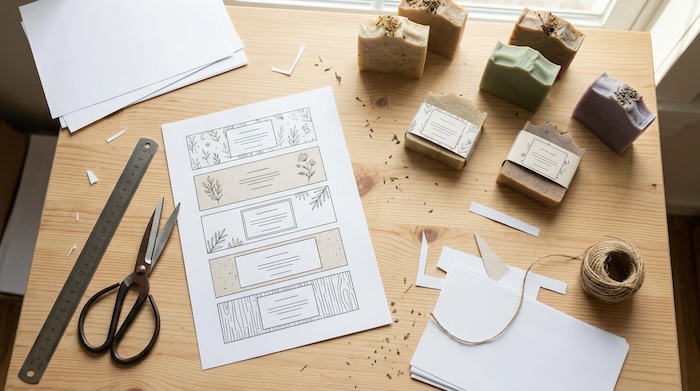
If you make quite a bit of soap, using a slightly heavier paper can give your labels a nicer finish. You can find printable kraft cardstock in different colors and weights.
Wrapping Handmade Soap With Twine and Gift Tags
Another attractive way to present handmade soap is to tie a piece of natural twine, cotton cord, or ribbon around the bar and attach a small tag.
I especially like this look for rustic soaps, herbal soaps, and handmade gifts.
You can leave part of the soap exposed or wrap it in paper first, then tie the cord around it.
Small kraft paper tags work particularly well, and you can print or write the soap name on one side and include the necessary product information on an attached label or insert.
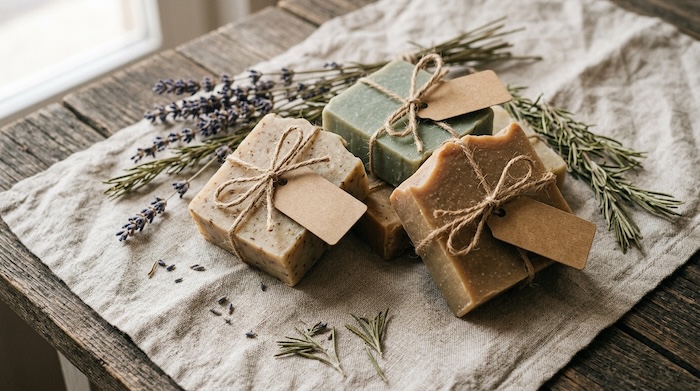
For an inexpensive finishing touch, try using kraft gift tags and natural twine from Amazon. They’re especially nice for Christmas soaps, wedding favors, and small handmade gift sets.
Just remember that if you’re selling your soap, the packaging still needs to provide the information required by the labeling regulations that apply to your products.
Printable Sticker Labels for Handmade Soap
Printable sticker labels are another easy option, especially if you want a more polished appearance.
They come in all sorts of shapes and sizes, including round, square, oval, and rectangular labels.
You can design your labels on the computer, print them at home, and attach them to a paper soap band, box, or other packaging.
I find round labels particularly useful for smaller soaps and wrapped shaving soaps.
If you’re making several different types of soap, using the same label style with different names or colors can help keep your packaging consistent.
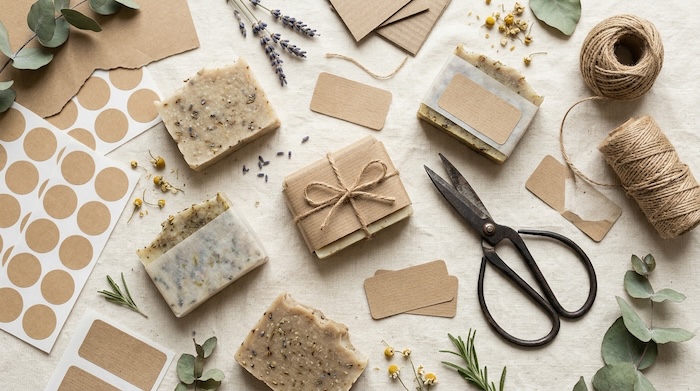
You can find printable kraft sticker labels in different shapes and sizes to suit your soap packaging.
Soap Boxes for a More Professional Look
If you’re making soap to sell or creating gift sets, soap boxes are another option worth considering.
Kraft soap boxes are particularly popular because they have a natural, rustic appearance and work well with many different soap designs.
Some boxes have windows so customers can see the soap inside, while others are completely enclosed.
You can attach a printed sticker label to the front and place the ingredient information on the back or another suitable panel.
Soap boxes are also useful when you’re putting together several bars for a gift.
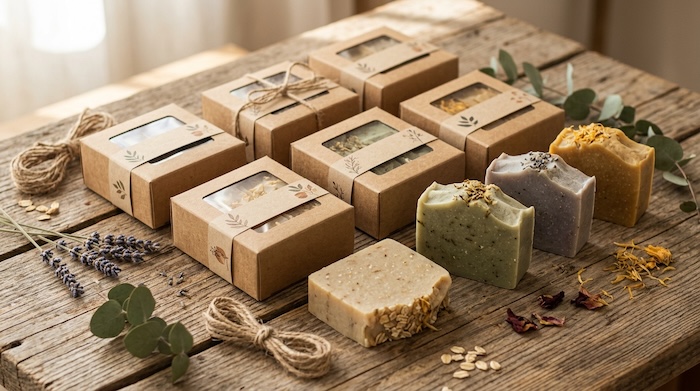
You can find kraft soap boxes with windows in different sizes. Be sure to measure your finished bars before ordering, since handmade soap molds don’t all produce the same dimensions.
If you’re looking for ways to reduce the amount of packaging you use, you might also enjoy my guide to Labeling Soap the Eco-Friendly Way.
Wrapping Handmade Soap With Tissue Paper
Tissue paper is something I’ve used quite a bit over the years, especially for guest-size soaps and shaving soaps.
It comes in so many different colors and patterns that it’s easy to find something to suit almost any type of soap.
For smaller guest soaps, I wrap each bar in tissue paper and add a small paper band around the middle.
I also use tissue paper for some of the men’s and ladies’ shaving soaps I make. A round label on top helps hold the paper in place and gives the package a finished appearance.
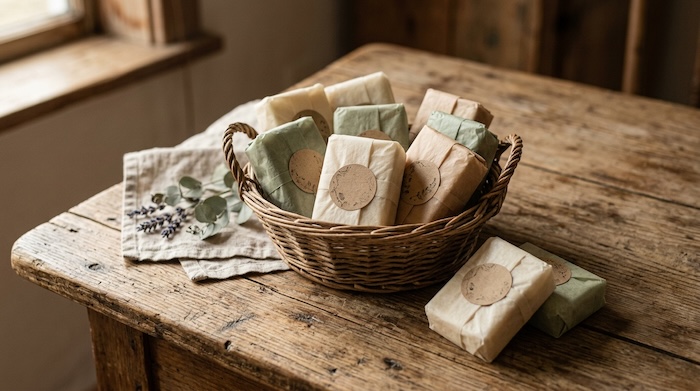
Tissue paper can also be useful when preparing customer orders. I like wrapping different soap scents individually before placing them in a shipping box.
For fully cured, dry soaps, plain acid-free tissue paper is a good option to consider. Avoid tissue paper that transfers dye or fragrance onto your soap.
You can find acid-free tissue paper for gift wrapping in neutral colors that complement natural handmade soap.
Natural and Eco-Friendly Soap Packaging Ideas
You don’t need elaborate packaging to make handmade soap look attractive.
Sometimes the simplest packaging is the nicest, particularly when you’re making natural soaps with herbs, clays, and essential oils.
Some inexpensive packaging ideas include recyclable kraft paper bands, cardboard soap boxes, plain paper wrapping, reusable cotton or muslin bags, and simple paper tags tied with natural twine.
The important thing is to choose packaging that protects your finished soap, allows you to include the necessary information, and suits the way the soap will be stored or displayed.
I also prefer not to wrap my soap until it has finished curing. Cold process soap needs adequate curing time before it’s ready to package and use.

If you’re just getting started with homemade soap, my Soap Making Recipes guide has several recipes you can try before experimenting with different packaging ideas.
What Information Should Go on a Handmade Soap Label?
Before you start designing your labels, it’s important to understand what information may be required.
Labeling regulations can vary depending on where you live, where you sell your soap, and how the product is classified.
Depending on the applicable regulations, requirements may cover product name or identity, net weight or quantity, ingredient list, business name and contact information, and required warnings or other information.
In Canada, handmade soap sold as a cosmetic generally falls under Canadian cosmetic labeling requirements. Products sold in other countries may have different rules.
It’s also important to be careful about the claims you make. Describing your soap as treating eczema, acne, or other medical conditions can affect how the product is regulated.
Before printing your labels, read my guide to Regulations for Homemade Soap Labels so you understand the labeling requirements that may apply to your soap.
If you’re unfamiliar with cosmetic ingredient terminology, my article on What Is INCI? explains how the naming system works, and my INCI Names guide can help when preparing ingredient lists.
You may also want to read about Organic and Natural Product Labeling Rules before describing your soap as organic or natural.
For Canadian requirements, you can refer to Health Canada’s cosmetic labeling information.
Always verify the current requirements for the country or region where your soap will be sold.
Tips for Making Homemade Soap Labels Look Professional
You don’t need to spend a fortune on packaging supplies. A few small details can make a big difference.
Keep your fonts easy to read, especially when listing ingredients. Choose colors that complement your soap rather than compete with it, and try to use the same basic design across your soap collection.
I also recommend printing one test label before printing an entire sheet. Soap bars can vary in size, and it’s frustrating to print a batch of labels only to discover they don’t fit.
If you’re selling soap, remember to include the cost of your labels, paper, ink, and packaging when calculating your prices.
For most of my everyday soaps, I still prefer a simple paper band. It’s inexpensive, easy to make, and doesn’t hide the beautiful handmade soap underneath.
Frequently Asked Questions About DIY Soap Labels
Can I make soap labels at home?
Yes. You can make your own soap labels using Microsoft Word or another design program. Print them on regular paper, cardstock, or adhesive label sheets and cut them to fit your soap packaging.
What is the cheapest way to label handmade soap?
A simple wraparound paper band is one of the least expensive options. You can fit several labels on a single sheet of paper and print them at home.
Should handmade soap be wrapped in plastic?
Not necessarily. Many cold process soaps can be packaged using paper bands or cardboard boxes once they’ve fully cured. The best packaging depends on the type of soap, humidity, and how the bars will be stored.
Can I use regular printer paper for soap labels?
Yes. Regular printer paper works well for simple wraparound labels. If you want a sturdier label, try a slightly heavier paper or lightweight cardstock.
Do I need an ingredient list on handmade soap?
That depends on the applicable laws and how your soap is classified and marketed. In Canada, cosmetic soaps generally require ingredient labeling in accordance with cosmetic regulations. Always check the requirements for your market.
Final Thoughts on Making Your Own Soap Labels
One of the nice things about handmade soap is that no two batches have to look exactly alike, and the same goes for the packaging.
You can keep things simple with a printed paper band or dress your soap up with tissue paper, twine, tags, or a beautiful kraft box.
Over the years, I’ve found that simple packaging often works best. It’s affordable, easy to reproduce, and lets the soap itself be the star.
Have fun experimenting with different soap labels and wrapping ideas until you find something that works for you.
Affiliate Disclosure: This post may contain affiliate links, including Amazon Associate links. As an Amazon Associate, I earn from qualifying purchases at no additional cost to you.
updated Oct 2026
© 2018 – 2026, Tes. All rights reserved.
These are beautiful examples! I haven’t made soap yet per se but I do make lotion bars and usually I wrap them in parchment paper with linen cordage and a special touch of clay leaves I make myself.
I especially like the first one, it’s very vintage, and the tissue paper makes a great and cheaper alternative to parchment paper.
Thanks for the ideas!
I like the added touch to clay leaves to your lotion bars. It’s nice when we can add that little touch, I think people appreciate that. Tissue paper does work very well and I love the fact that it comes in all kinds of colors and patterns. Thanks for stopping by the website.
I wish I had found soap making sooner. This make a nice holiday gift for people. This is something friends will love because it would be better than buying a block of soap, making it myself would add a personal touch. I might even make a bunch of soap and try to sell it on etsy or something.
Hand made soaps make wonderful Christmas gifts.
You got my attention with your post about shampoo bars so I thought I’d check out this one as well 🙂 I love the first idea of how to label the soap bars,; it is super creative and easy. It is printed in a neat little row, cut the strip and it wraps all the way around. The other ideas are cute as well. I like the one with twine or some sort of colorful rope (maybe even a ribbon) with a tag on it that says the ingredients, etc. Fun to read these ideas! Thanks.
I’m always trying to come up with something different to try. So many ways to wrap you soap for sale, or for a gift.
Is this for wrapping your own soap, or prior to selling them? It’s easier to label things we want these days with technology where it is. I like the soap wrapped in string, that is classy. I wasn’t even aware that I could buy soap boxes, I’ll have to check that out.
Soap boxes are a great way to present your soap. I have started using them since the Coronavirus hit.