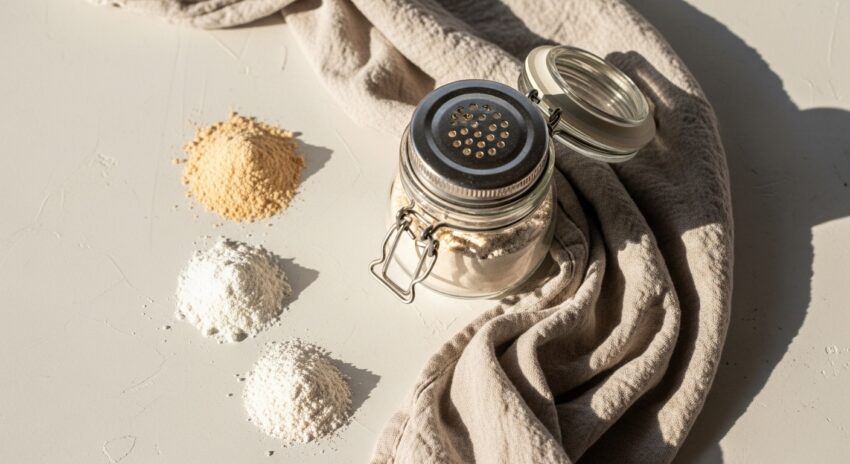
Why I Started Making My Own Baby Powder
I first began making homemade baby powder when my first grandchild arrived in 2000. Over the years, I experimented with different ingredients and ratios, gradually refining the recipe to be as gentle, effective, and simple as possible.
Today, I’m sharing my favorite natural baby powder recipe — one that’s talc-free, easy to make, and suitable for delicate skin when used properly.
What Is Baby Powder Used For?
Baby powder is commonly used to help:
-
Absorb excess moisture
-
Reduce friction
-
Keep skin dry and comfortable
It’s often applied during diaper changes to help keep baby’s skin dry, especially in warm or humid conditions.
Why Talc Is No Longer Recommended in Baby Powder
For many years, traditional baby powder was made with talc, a naturally occurring mineral. Talc itself is not harmful, but it can be contaminated with asbestos, a known carcinogen, during mining.
Because of long-standing safety concerns, many families now choose talc-free baby powder alternatives made with plant-based or mineral ingredients.
A Note on Commercial Baby Powder History
Johnson & Johnson introduced baby powder in the late 1800s, and it became a household staple for generations. In recent years, talc-based baby powder has raised safety concerns due to the possibility of asbestos contamination during mining. As a result, many manufacturers have shifted toward cornstarch-based formulas, and today most baby powders are clearly labeled talc-free.
Safer Ingredients Used in Natural Baby Powder
Many gentle, effective powders can replace talc. Common ingredients found in natural baby powder include:
- Cornstarch – widely used for moisture control
- Arrowroot Powder – absorbs moisture and feels silky on skin
- Zinc Oxide – helps protect skin and reduce irritation
- Kaolin (White) Clay – gentle, oil-absorbing mineral clay
- Calendula Flower Powder – traditionally used in soothing skincare
- Chamomile Powder – calming botanical powder
A Look at Store-Bought Natural Baby Powders
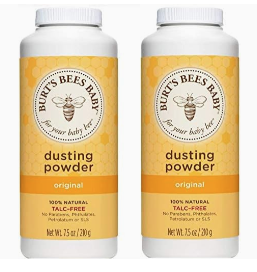
Some parents prefer ready-made options. One example is Burt’s Bees Baby Dusting Powder, which uses cornstarch as its primary ingredient instead of talc.
Cornstarch (also known as zea mays) comes from corn and acts as a natural moisture absorber and bulking agent.
Always read ingredient labels carefully, especially for fragrance or essential oil content
Homemade Talc-Free Baby Powder Recipe
Yield
This recipe makes approximately 7 cups of baby powder.
Equipment Needed
-
Large mixing bowl (8–10 cups or larger)
-
Spoon or spatula for mixing
-
Shaker bottles or airtight containers
Ingredients
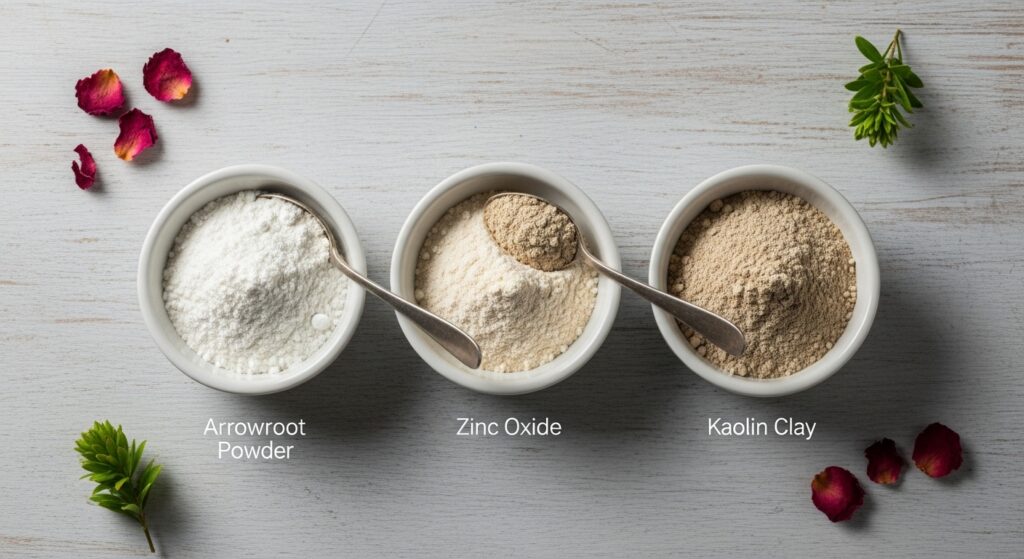
- 5 cups Arrowroot Powder
- 1/2 cup Zinc Oxide
- 1 Cup White Clay (Kaolin)
- 1/2 tsp Aloe Vera Extract (powder or oil-based extract)
⚠️ Avoid adding essential oils to baby powder, especially for infants.
Instructions
-
Add the arrowroot powder to a large mixing bowl.
-
Slowly add the zinc oxide and white clay, mixing thoroughly.
-
Add the aloe vera extract and continue mixing until evenly blended.
-
Transfer the finished powder into a clean, dry container or shaker bottle.
This powder has a soft, silky texture and blends easily without clumping.
Adjusting the Recipe Size
This recipe makes a large batch. If you prefer a smaller amount, simply halve or quarter the ingredients.
Some parents also use a protective jelly on dry or sensitive areas; this guide on **Is Vaseline Safe for Babies? Petroleum Jelly vs Natural Alternatives** explains the differences between petroleum jelly and natural options.
Storage & Shelf Life
-
Store in a sealed container in a cool, dry place
-
Avoid moisture exposure
-
Shelf life is approximately 6–12 months when stored properly
Discard if texture or smell changes.
Always keep powder containers tightly closed and out of reach of children.
If You Don’t Want to Make It Yourself
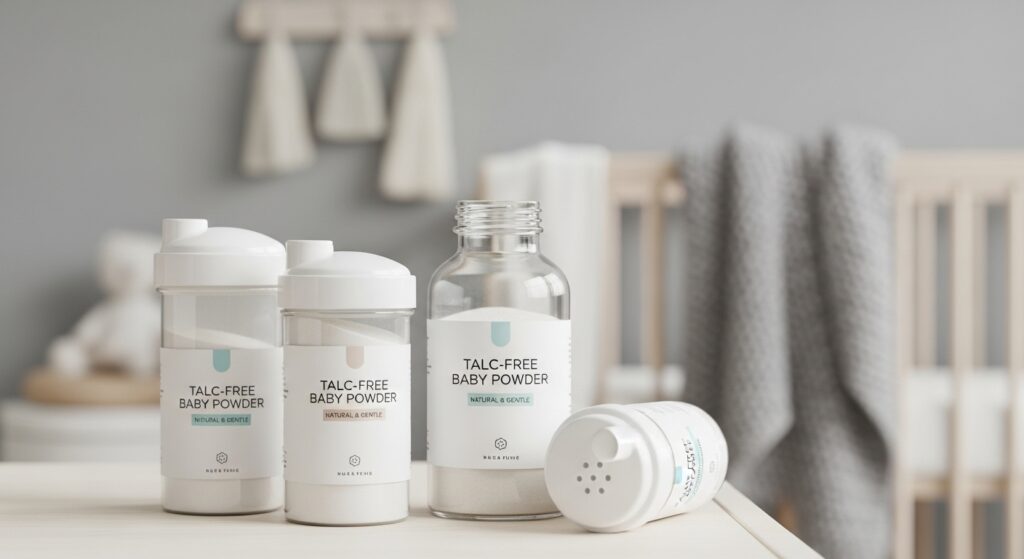
There are several talc-free baby powders available if you prefer store-bought options, including coconut-based and cornstarch-based formulas. Look for products that are:
-
Talc-free
-
Fragrance-free or lightly scented
-
Clearly labeled for baby use
If you prefer a ready-made option, here are a few well-reviewed talc-free baby powders many parents choose.
🛒 Recommended Baby Powder Products
Natural & Talc-Free Baby Powder Picks
Burt’s Bees Baby 100% Natural Dusting Powder – A highly rated, talc-free dusting powder made with naturally absorbent cornstarch and gentle enough for sensitive skin. A popular everyday choice many parents trust for keeping baby dry and comfortable.
Mother Sparsh Talc-Free Natural Dusting Powder – A natural dusting powder that’s talc-free and formulated with plant-based ingredients, great for sensitive skin.
Country Comfort Baby Powder – A well-loved natural baby powder with strong reviews, ideal for everyday moisture control and comfort.
Squeaky Cheek Organic Talc‑Free Unscented Dusting Powder – A higher-end organic talc-free powder that’s unscented, great for very sensitive skin or fragrance-free routines.
Not Just for Babies
Natural baby powder can also be useful for adults:
-
Helps reduce chafing
-
Absorbs moisture in shoes
-
Acts as a gentle body powder
-
Can be used before waxing to protect skin
-
Helps slip on rubber gloves
-
Works as a dry shampoo for pets (avoid face and eyes)
Important Safety Notes
-
Avoid inhalation of any powder (for adults and babies)
-
Use sparingly
-
Discontinue use if irritation occurs
-
Consult a healthcare professional if your baby has ongoing skin issues
Frequently Asked Questions About Natural Baby Powder
Is homemade baby powder safe for babies?
When made with gentle, talc-free ingredients and used sparingly, natural baby powder can be a suitable option for keeping skin dry. Avoid inhalation and discontinue use if irritation occurs.
Why is talc no longer recommended in baby powder?
Talc can be contaminated with asbestos during mining. Because of long-standing safety concerns, many parents now choose talc-free baby powders made with plant-based or mineral alternatives.
Can I use cornstarch instead of arrowroot powder?
Yes. Cornstarch is commonly used in natural baby powders and absorbs moisture well. Arrowroot is often preferred for its finer texture, but both are acceptable alternatives.
Is zinc oxide necessary in baby powder?
Zinc oxide adds a protective element and is often used in diaper care products. It can be omitted for a simpler powder, but it does provide additional skin protection.
How long does homemade baby powder last?
When stored in a sealed container away from moisture, homemade baby powder can last 6–12 months. Discard if it develops odor, clumping, or discoloration.
Should I add essential oils to baby powder?
Essential oils are not recommended for baby powder, especially for infants. This recipe is designed to work effectively without fragrance.
Can adults use natural baby powder?
Yes. Natural baby powder is often used by adults to reduce chafing, absorb moisture, and stay comfortable during warm weather or physical activity.
⚠️ SAFETY NOTE (KEEP THIS)
You already do this well — keep it near the bottom:
Avoid inhalation of powders. Use sparingly. Discontinue use if irritation occurs. Consult a healthcare professional for persistent skin concerns.
Disclaimer
This recipe is for educational and informational purposes only. Always consult a qualified healthcare provider for concerns related to baby skin conditions.
This post may contain affiliate links. If you make a purchase through these links, I may earn a small commission at no extra cost to you.
Updated Jan 2026
© 2020 – 2026, Tes. All rights reserved.
There has been a lot of negative publicity about baby powder, and mainly because of the talc that was used in many. So it is great to see that there are natural and safe alternatives available, and that one can make your own powder that is safe to use for babies.
You mention that talc has been linked to cancer risks, but is there a link between the use of baby powder and asthma in babies and kids? Can the powder get into the airways and cause irritations that can lead to asthma or other breathing difficulties? Thank you.
That is an excellent question, one I have not researched but I would think it would be a great concern for any mother with a child that suffers from asthma.
I make soaps, but going through your recipes for baby powder, they are materials that are easily accessible. Save for the arrowroot powder, I can’t source locally for others. Thank you for pointing out a link to your source on the Amazon website. I will take a look at it to make a purchase. I will start by making some for my family
Most are easy to find. I like the convenience also of amazon, but if you have any health food store you can probably find some there, although they can be pricey
I am must admit that I stumbled upon your article trying to research something else than baby powder. I was not aware that one can make baby powder or any powder for that matter, at home. Also, I always wondered why there is a Johnson’s Baby Powder – they will anyway use talc in it so how is that powder for children while others are not?
I did find a few answers here and you gave me a hobby to seriously pursue. All what you have written has begun making sense to me – only requirement is to have an absorbent powder replacing talc- and it should work.
Thanks for sharing this new concept for me.
Regards,
Rohit
thanks for you comment and stopping by the website.
I really enjoyed reading your detailed explanation of how to make a natural, talc-free baby powder at home and the reasons behind avoiding talc in baby products. It’s great that you shared the specific ingredients like arrowroot powder, zinc oxide, and white clay, as well as clear steps for mixing and storing the powder safely. I also appreciate the safety tips you included about avoiding inhalation and irritation. I was wondering, have you ever experimented with slightly different ratios of arrowroot to clay or added any other skin-soothing botanicals to adjust the texture or performance of the powder? I’d love to know more about your experience refining the recipe.
Thank you! Yes, I’ve played with the ratios a bit over time — adjusting the arrowroot and clay changes how soft or absorbent the powder feels. This recipe is the one I like the best and I usually keep the recipe very simple and avoid extra botanicals for baby use, but making small test batches is a great way to fine-tune it. Thanks for the great question!