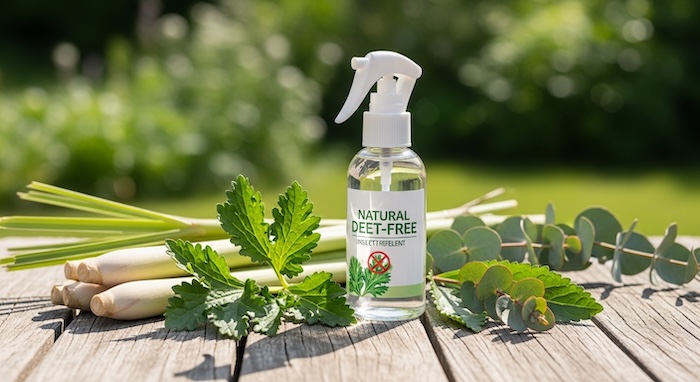
DEET Free Insect Repellent: Natural Protection That Actually Works
Spending time outdoors in the spring and summer is one of the best parts of living off-grid or simply enjoying a slower lifestyle. But nothing sends you back inside faster than relentless mosquitoes.
Most people reach for conventional bug sprays that contain DEET, a chemical pesticide widely used in commercial insect repellents. While effective, many people are now questioning its safety—especially for children and those with sensitive skin.
If you’re looking for a safer, more natural alternative, a DEET free insect repellent might be exactly what you need.

🦟 Why I Switched to DEET-Free Insect Repellent
I actually used to make and sell my own natural insect repellent locally. Unfortunately, strict Health Canada regulations made it too expensive for small home-based businesses like mine to continue selling.
That said, I still make it for my family—and I’m very particular about what goes into it.
I’ve also seen firsthand why regulations exist. At one local market, someone was selling an unlabeled “natural” bug spray and claiming it was safe for babies. It wasn’t.
👉 That’s why it’s so important to know exactly what’s in your products—especially when it comes to skincare.
⚠️ Harmful Side Effects of DEET
Research from Duke University Medical Center found that long-term exposure to DEET may affect the nervous system.
Potential side effects include:
- Muscle weakness
- Coordination issues
- Memory problems
- Neurological effects with prolonged exposure
Children are especially vulnerable, and DEET should never be used on infants.
There is also increased risk when DEET is combined with other chemicals or certain medications.
🌿 Benefits of DEET-Free Insect Repellent
Natural insect repellents offer several advantages:
✔ Made without synthetic chemicals
✔ Gentle on sensitive skin
✔ Pleasant scent (no harsh chemical smell)
✔ Can be reapplied safely
✔ Often multi-purpose (safe for home, pets, and garden use)
Many natural options rely on essential oils, which not only repel insects but can also provide calming aromatherapy benefits.
🌱 Key Ingredients That Actually Work
The most effective DEET-free repellents use a blend of essential oils:
- Lemongrass – repels mosquitoes, ticks, and fleas
- Citronella – well-known mosquito deterrent
- Eucalyptus – effective against mosquitoes, flies, and more
When combined, these oils create a powerful natural barrier against biting insects.
(Safe, Ready-to-Use Options)
If you’re not making your own, here are a few solid DEET-free options:
Recommended Products:
- Badger Aniti-Bug Plant-based insect repellent spray
- Buzz Off Citronella + eucalyptus bug spray
- Dr. Nice’s Bye-Bye Bug Bite for kids
🧴 Want to Make Your Own?
If you’re into DIY and natural living, making your own insect repellent is simple and affordable.
👉 how to make your own natural insect repellent at home
⚠️ Important Safety Note
Even natural ingredients can cause reactions.
- Always do a patch test
- Use caution with children and pets
- Avoid overuse of essential oils
- Never assume “natural” = automatically safe
👉 This is especially important if you’re already using essential oils in skincare.
essential oil safety guide
🌿 Final Thoughts
Switching to a DEET free insect repellent is a simple way to reduce chemical exposure while still enjoying the outdoors.
For me, it’s all about knowing what I’m putting on my skin—and keeping things as natural and safe as possible for my family.
⚠️ Disclaimer
This post is for informational purposes only and is based on personal experience and research. This DIY natural insect repellent is not registered or approved by Health Canada or any regulatory agency. It is not intended to diagnose, treat, cure, or prevent any disease.
Effectiveness may vary depending on environment, insect type, and individual sensitivity. Always use caution when applying any product to your skin.
Updated March 2026
© 2019 – 2026, Tes. All rights reserved.