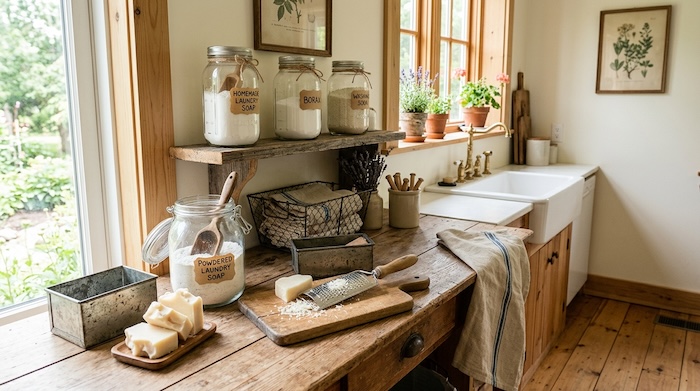
Making your own homemade laundry soap is one of the easiest ways to save money while reducing the number of chemicals used around your home.
When I first started making natural soap, it was because of severe eczema and sensitive skin issues. Over time, I also began making my own laundry soap because many commercial detergents left my skin irritated and itchy.
Your clothing, bedding, and towels stay against your skin all day long, so what you wash them in matters.
Since switching to homemade and natural products years ago, my skin problems have improved dramatically, and I haven’t had an eczema outbreak in a very long time.
If you already make cold process soap, homemade laundry soap is also a great way to use up soap ends and imperfect bars instead of wasting them.
For more on my experience with sensitive skin, see Natural Ways to Help Dry Itchy Skin (My Experience With Eczema).
Why Make Homemade Laundry Soap?
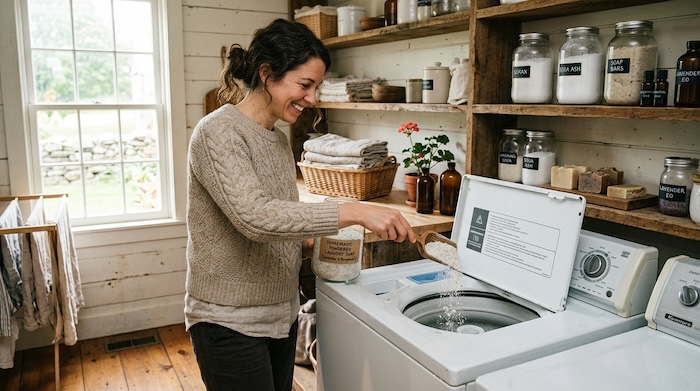
There are several reasons people choose to make their own laundry detergent:
- Saves money
- Uses fewer chemicals and fragrances
- Great way to use leftover handmade soap
- Works well for sensitive skin
- Reduces packaging waste
- Easy to customize
If you already make soap at home, this recipe becomes extremely inexpensive to make.
If you are new to soap making, see my post on Cold Process Soap Making Instructions to learn how to make your own natural soap bars from scratch.
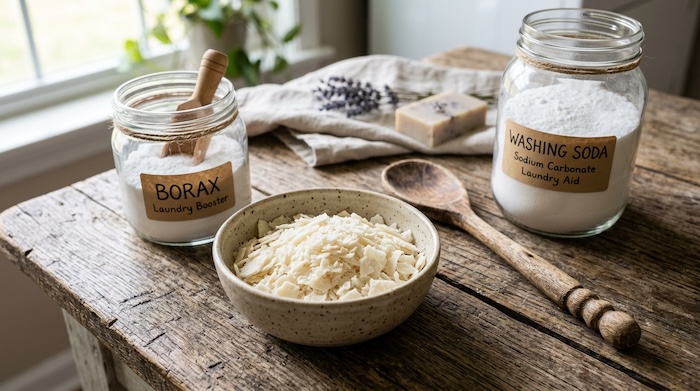
Powder Homemade Laundry Soap Recipe
This is the powder laundry soap recipe I use most often.
Ingredients
- 8 oz grated natural soap
- 4 oz washing soda
- 4 oz borax
I personally use the leftover end pieces from the cold process soap I make.
Some recipes also include baking soda, but I leave it out because my skin is very sensitive.
Directions
- Grate the soap into fine pieces using a stainless steel soap grater.
- Mix the grated soap with the washing soda and borax.
- Store in large glass storage jars with lids or airtight containers.
How Much To Use
- Light loads: about 2 tablespoons
- Large or heavily soiled loads: about 1/4 cup
Best Soap To Use For Homemade Laundry Soap
If you do not make your own soap, try to use a natural unscented soap with minimal additives.
You can also use natural castile soap bars for a gentle homemade detergent that works well for sensitive skin.
If you make your own soap, my posts on Soap Making Oils Chart and Properties and Soap Additives for Natural Cold Process Soap can help you choose oils and additives that are better suited for sensitive skin.
Where To Buy Washing Soda and Borax
Washing soda and 20 Mule Team Borax are usually found in the laundry aisle of most grocery stores.
What Does Borax Do?
Borax helps:
- remove stains
- deodorize laundry
- soften water
- boost cleaning power
Historically, borax was mined from dry lake beds in Tibet and later became widely known through the famous “20 Mule Team Borax” brand in the western United States.
What Does Washing Soda Do?
Washing soda (also called soda ash) acts as a natural water softener and helps remove:
- grease
- oil
- dirt
- stubborn stains
It also helps homemade laundry soap clean more effectively in hard water.
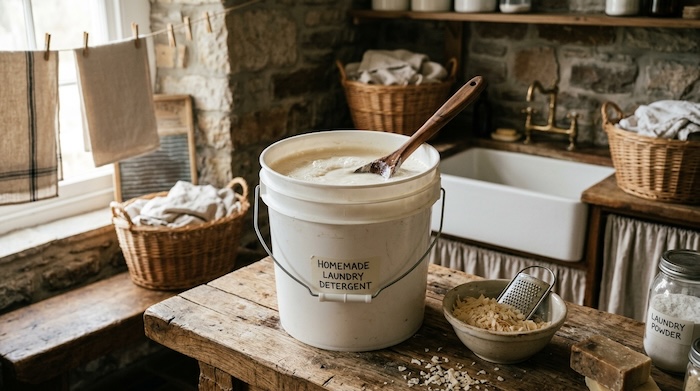
Liquid Homemade Laundry Soap Recipe
If you prefer liquid laundry detergent, this recipe works very well.
I usually make mine in a 5 gallon bucket with lid because many of my soap oils originally come in large pails that can be reused.
Ingredients
- 1 bar grated soap or soap ends
- Approximately 4 gallons water
- 1 3/4 cups borax
- 1 3/4 cups washing soda
Directions
Step 1: Dissolve the Soap
Place the grated soap into a large pot with a couple quarts of water.
Heat slowly while stirring until the soap completely dissolves.
Step 2: Prepare the Bucket
Fill a 5-gallon bucket with about 4 gallons of warm water.
Add:
- borax
- washing soda
Stir until fully dissolved.
Step 3: Combine Everything
Pour the dissolved soap mixture into the bucket and stir thoroughly.
Cover and let sit for 24 hours.
The mixture will thicken as it cools.
Stir well before transferring into jugs or storage containers.
How Much Liquid Laundry Soap To Use
- Small load: about 1/2 cup
- Average load: about 3/4 cup
- Large or heavily soiled load: about 1 cup
Because homemade laundry soap contains fewer fillers than commercial detergents, a little often goes a long way.
Homemade Laundry Soap for Sensitive Skin
If you have eczema or sensitive skin, avoid heavily scented detergents and strong artificial fragrances whenever possible.
You can also:
- use unscented soap bars
- avoid synthetic fragrance oils
- skip fabric softeners
- add an extra rinse cycle if needed
Everyone’s skin is different, so always test small amounts first.
If you enjoy natural products, you may also like my posts on Best Essential Oils for Soap Making and How to Choose Safe Natural Baby Skincare Products.
Helpful Supplies for Making Laundry Soap
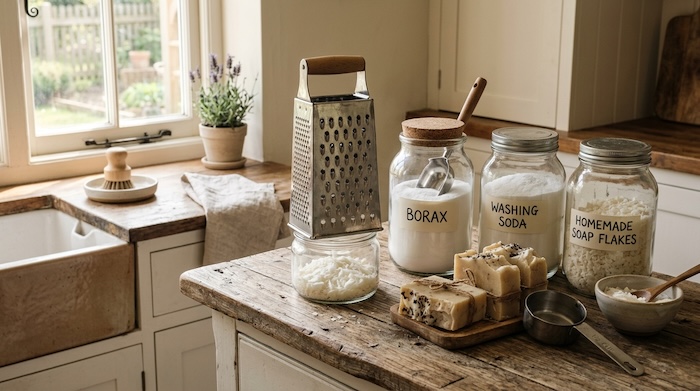
Here are a few things that make homemade laundry soap easier to prepare:
- stainless steel soap grater
- large glass storage jars with lids
- 5 gallon bucket with lid
- reusable measuring scoop
- natural castile soap bars
If you prefer ready-made natural detergent instead of making your own, Nellie’s All Natural Laundry Soda is one of the better natural options I’ve found.
Final Thoughts
Homemade laundry soap is simple to make, inexpensive, and a great way to reduce unnecessary chemicals in your home.
For our family, switching to homemade and natural products became part of a larger move toward healthier living, along with growing food, making soap, and living a more self-sufficient lifestyle.
Even if you only make small changes at first, every step helps.
Disclosure
This post may contain affiliate links. As an Amazon Associate, I earn from qualifying purchases at no extra cost to you. I only recommend products I personally use, trust, or believe may be helpful for natural living, soap making, and homesteading. Homemade laundry soap may not be suitable for all washing machines or skin types, so always test small amounts first and use at your own discretion.
© 2018 – 2026, Tes. All rights reserved.
This is a really cool article. Me and my wife have actually been interested in making homemade soap, because it is cost effective and we can try different types of fragrances. Thank you for this information, I didn’t realize it could be done this easily. I bet using baking soda will give that refreshing feeling as well.
There is a great cost savings when making your own laundry soap for sure and fragrances you can add whatever you like, being that I make my own soap the soap scraps I use already have a scent to them so that slightly scents the laundry soap, however I do usually add a bit more. The baking soda will soften the water as well as brighten your whites.
Hi Tes,
My niece suddenly developed a skin rash. The strange thing it is only in the mornings. She goes to bed fine, but in the mornings when she wakes up she’s got this red skin rash on her legs and arms. It lasts for a couple of hours before it disappears. Do you think it might be the laundry soap?
I love the idea of making your own laundry soap, especially if the commercial laundry soaps causes skin irritations. How much do you save making your own laundry soap?
Thanks for sharing your laundry soap recipe with us!
It does sound like the laundry soap could be your nieces issue, but first I’ll have to ask you does she sleep with a cat or dog? I’m asking this because my grandson had the same thing and we found that the cat was sleeping with him and he’s allergic to cat hair.
I’m not sure what my total cost savings would be, but I’m pretty sure it cost me pennies rather than dollars for each load of laundry.
I think this is a wonderful article! Using more natural products is the way to go when you have sensitive skin or a skin disorder like eczema.
I personally have sensitive skin, and I have to be very careful with perfumes, and dyes. These recipes offer a great alternative option, and for my lazy side you offer an all natural soap to buy as well! Thank you! How awesome!
I do have a suggestion for you to add to your bath soaps, it is all natural and should help your skin a lot! Hemp oil, it has so many benefits for the skin! It is a natural anti-inflammatory, and one heck of a moisturizer. I think you will appreciate this once you try it!
Yes natural skin care products are excellent. I do know about hemp oil I have been making hemp lotion and soap for many years it’s a wonderful moisturizer and great for aging skin. You may want to read more on Hemp here
Hemp Seed Oil Uses
Hemp Seed Oil Health Benefits – for you inside and out