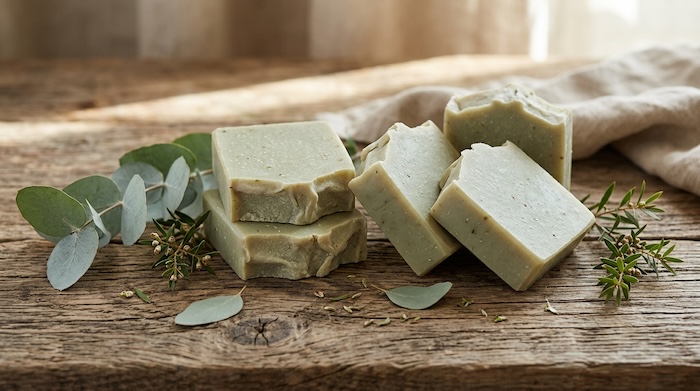
If you enjoy fresh, earthy scents, this Tea Tree and Eucalyptus Soap Recipe is a wonderful combination to try. Tea tree essential oil has a strong herbal scent, while eucalyptus adds a fresh, crisp aroma that gives this handmade soap a refreshing smell.
This has been one of my top 10 soaps. Customers enjoyed the combination of essential oils, and the soft green colour gave the soap a natural, earthy appearance.
I also make a plain Tea Tree Soap, but adding eucalyptus created a different fragrance that many of my customers really enjoyed.
This recipe uses my Basic Soap Recipe #2, with tea tree and eucalyptus essential oils added for fragrance and green oxide for colour.
If you’re new to soap making, you may want to start with my step-by-step guide to making cold process soap at home before trying this recipe.
Why You’ll Love This Tea Tree and Eucalyptus Soap
- Refreshing herbal fragrance: A distinctive blend of tea tree and eucalyptus.
- Natural-looking colour: Soft green bars that complement the earthy scent.
- Easy to customize: Leave out the colourant or experiment with other suitable essential oil blends.
Tea Tree and Eucalyptus Soap Recipe at a Glance
| Recipe Details | Information |
|---|---|
| Soap-making method | Cold process |
| Base recipe | Basic Soap Recipe #2 |
| Difficulty | Intermediate |
| Fragrance | Herbal, fresh, eucalyptus |
| Colour | Soft green |
| Approximate curing time | 4–6 weeks |
| Main oils | Olive/canola blend, coconut, palm |
| Batch size | Approximately 63.6 oz of base oils |
Tea Tree and Eucalyptus Soap Ingredients
This recipe is based on my Basic Soap Recipe #2.
Base Soap Ingredients
- 51.2 oz Olive/Canola blended oils
- 6.2 oz Coconut oil
- 6.2 oz Palm oil
- 23.4 oz Water
- 8.6 oz Lye crystals (sodium hydroxide)
Recipe safety note: These are my original recipe measurements. Before making the soap, confirm the lye amount with a reliable soap calculator using the exact olive/canola blend and the intended superfat. The measurements have not been independently verified here.
Accurate measurements are important when making cold process soap, especially when working with lye. I always weigh my ingredients rather than measuring by volume. This digital kitchen scale is the one I use when measuring my soap-making ingredients.
Essential Oils
- 1½ tablespoons Tea Tree essential oil
- 1½ tablespoons Eucalyptus essential oil
For accurate and repeatable results, essential oils are best measured by weight. Check the appropriate usage limits for the specific essential oils you’re using before adding them to your soap.
Colourant
- ¼ teaspoon hydrated green oxide
If you’re wondering why different oils are used in handmade soap, read my guide to the best oils for soap making
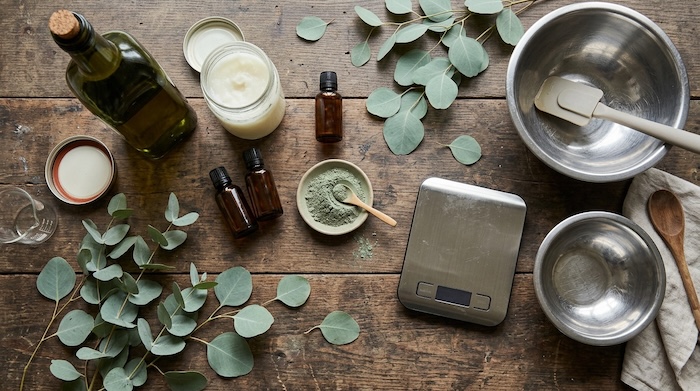
How to Make Tea Tree and Eucalyptus Soap
This soap is made using the traditional cold process method. If you’re familiar with cold process soap making, follow your usual procedure using the verified recipe measurements.
I generally like to let both my oils and lye solution cool to around 100°F (38°C) before mixing them together. This is my usual working temperature, although the best temperature can vary depending on the recipe.
For complete instructions on preparing your lye solution, combining your oils, and bringing soap to trace, follow my cold process soap-making tutorial.
For this particular recipe, there are two additional steps.
1. Add the essential oils. Once your soap reaches light trace, add the measured tea tree and eucalyptus essential oils. Stir thoroughly to distribute the fragrance throughout the soap batter.
2. Add the green oxide. Remove approximately 1 cup of soap batter and mix in the green oxide until evenly distributed. Pour the coloured portion back into the main pot and stir gently before pouring into your soap mould.
I found that mixing the green oxide into a small amount of soap batter first helped prevent concentrated spots of colour in the finished bars.

Once your soap has hardened enough, usually within 24–48 hours, remove it from the mould and cut it into bars.

This was one of the soaps I regularly made when I was selling handmade soap, and it was always satisfying to see the finished green bars lined up after cutting.
My Tips for Blending Tea Tree and Eucalyptus Essential Oils
One of the things I enjoyed most about making handmade soap was experimenting with different essential oil combinations. Tea tree blends nicely with eucalyptus, peppermint, and lavender, although each creates a different fragrance.
When testing new combinations, I found that holding two essential oil bottles together didn’t always give me a good idea of how they would smell blended. Instead, I started putting a couple of drops of each oil into a small bowl and mixing them. For example, two drops of tea tree and two drops of peppermint gave me a much better idea of how the scents worked together.
It’s a simple way to experiment before making a full batch of soap. Just remember to check the appropriate essential oil usage limits before adding your chosen blend to the recipe.
If you enjoy experimenting with different fragrances, read my guide to the best essential oils for soap making.
Curing Your Tea Tree and Eucalyptus Soap
Allow your finished soap to cure for approximately 4–6 weeks in a dry, well-ventilated area. This helps produce harder, longer-lasting bars.
For more information, read my guide on how long handmade soap should cure.
More Handmade Soap Recipes to Try
If you enjoy making handmade soap with natural ingredients, you might also like some of my other recipes.
Try my Coffee Soap Recipe for a rustic exfoliating bar that’s particularly useful after gardening or working outdoors.
You might also enjoy my Goat Milk Soap Recipe if you’d like to experiment with using milk in handmade soap.
Or browse my complete Soap Making Recipes collection for more handmade soap ideas.
Soap Making Safety Reminder: Always use suitable protective equipment when working with sodium hydroxide, verify your lye calculations, and follow appropriate essential oil usage limits. Essential oils can irritate sensitive skin, and this soap is not intended to treat skin conditions or insect bites.
Affiliate Disclosure: This article may contain affiliate links. As an Amazon Associate, I earn from qualifying purchases at no additional cost to you.
Updated October 2026
© 2023 – 2026, Tes. All rights reserved.