Skip to content

Making Soap Naturally

Professional recipes and advice about everything soap!

Menu
  • HOME
  • SOAP RECIPES
    • Baby Soap
    • Beer Soap
    • Castile Soap
    • Charcoal Soap
    • Coffee Soap
    • Dead Sea Mud Soap
    • Gardeners Soap
    • Green Mint Tea
    • Grocery Store Soap
    • Laundry Soap
    • Melt and Pour
    • Pet Shampoo
    • Recycle Bar Soap Pieces
    • Salt Soap
    • Shampoo Bar
    • Simple Halloween Recipe
  • SOAP BASES
    • Cold Process Soap Making: A Beginner’s Guide
  • INGREDIENTS
    • 🌿 Witch Hazel Benefits
  • SCENTS AND FRAGRANCE
    • Best Essential Oils For Soap Making
    • Essential Oils vs Fragrance Oils
    • Essential Oils & Aromatherapy: Supporting Wellness, Mood & Everyday Comfort
    • How to Scent Soap
    • How to use Essential Oils
    • 💜 Lavender Essential Oil Benefits, Uses & Soap Making Guide
    • 🌿 Tea Tree Essential Oil Benefits, Uses & Soap Making Guide
    • 🌿 Frankincense Essential Oil Benefits, Uses & Soap Making Guide
    • 🌿 Rosemary Essential Oil Benefits, Uses & Soap Making Guide
    • Essential Oil Dilution Chart for Skin, Hair & Soap Making
    • 🌿 Lemongrass Essential Oil Benefits, Uses & Soap Making Guide
    • 🌿 Eucalyptus Essential Oil Benefits, Uses & Soap Making Guide
    • 🌿 Peppermint Essential Oil Benefits, Uses & Soap Making Guide
    • 🍊 Sweet Orange Essential Oil Benefits, Uses & Soap Making Guide
    • Cedarwood Essential Oils
  • BATH AND BODY
  • BABY SKIN CARE
  • SOAP SUPPLIES
  • FAQ
  • SOAP BUSINESS & SELLING
Menu

Cocoa Butter and Soap
Posted on 08-0802-05 by Tes

Cocoa Butter and Soap

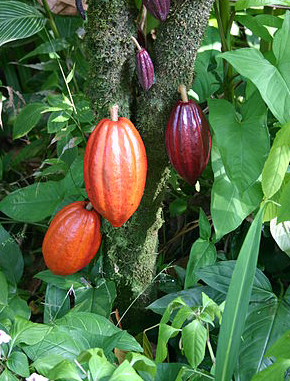
Cocoa Bean Pods

Super moisturizing cocoa butter in soap and other skin care products

Cocoa Butter in soap and other bath products creates a super moisturizing and skin protecting formula.

This butter is high in Non-saponifiable content, making your soap very moisturizing.

Where does cocoa butter come from?

Cocoa butter is a fat that is obtained form the cocoa bean, this bean grows in a pod on trees found in parts of the Caribbean, Latin America and Africa.


There are two ways to get the cocoa butter from the bean pods.

One is by making a Liquor and the other is is to extract the butter using the Broma Process.

Liquor Process

This process of extracting the cocoa butter consists of cleaning and heating the bean which will help to release the nib form the bean.

The nib is then ground, which is enough to turn the cocoa nibs to liquid, leaving the cocoa butter behind.

The Broma Process

In this process the roasted cocoa beans are hung in bags in a very warm room, which will melt the cocoa butter (cocoa butter will melt just above room temperature) the cocoa butter is collected as it drips off the beans.

The list of items created with cocoa butter include: chocolate, medicinal suppositories, lotions, and lipsticks.

Cocoa Butter and Soap
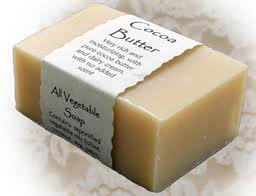
cocoabuttersoapThe specialty of this butter is that the adulterated version has a higher non-saponifiable content, which is good!

This means that when you make soap, the cocoa butter does not get amalgamated with the lye and water and therefore you can feel moisturizing abilities in the finished bar of soap.

If you are considering making soap with only cocoa butter, you could, but the soap would be hardened within 8 hours and left any longer in the mold it would be difficult to cut, you also would have a very, very expensive bar of soap.

To use cocoa butter well in your recipes, save the melted cocoa butter until your soap is at the trace stage, and then add it to your soap.

Even at 7% of your total recipe, you will feel the difference in your finished bar.  Your bar will also have creamy bubbles.

The benefits of adding Cocoa Butter to your soap recipe


Some of the benefits you will receive in adding this butter to your bath products are it’s antioxidant properties.

These properties will  help to reduce the free radicals in your skin.

This butter is an excellent product  when you are  looking for a deep moisturizer.

It is known to help calm skin irritations, eczema and other skin conditions, so if you have sensitive skin a bar with cocoa butter could help your skin.

This tropical butter is also perfect for saving a summertime tan, creating a shiny and healthy glow to skin, either by creating a lotion with cocoa butter, or rubbing the pure and raw bar or chunk right on your skin.

Refined vs. Unrefined, aka Natural vs. Deodorized

Pure cocoa butter has a wonderful warm scent of buttery chocolate, but some product makers do not want this scent in the finished product.  So in that case they would use the deodorized version.  The deodorized version has the scent removed, this is done by injecting steam into the melted butter and then treating it with clay to create an unscented white butter.
Canola oil and soap
Canola Oil
Castor Oil
Castor Oil
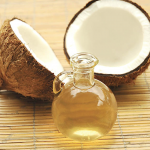
Coconut Oil
Coconut Oil
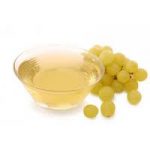
Grapeseed Oil
Grapeseed Oil
Hemp, Hempseed, Hemp seed Oil
Hemp seed Oil
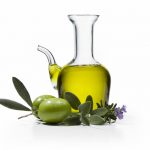
Olive Oil
Palm Oil
Rose hip
Rose hip Oil
Shea Nut Butter
Shea Nut Butter


© 2016 – 2017, Tes. All rights reserved.

2 thoughts on “Cocoa Butter and Soap”

  1. Wil says:
    08-18 at 12:09 am

    I agree and like this post alot. I use Cocoa butter in a lot of my soaps and I have a lotion that I use that also has cocoa butter. It help to revitalize my skin a lot so that it doesn’t crack or have irritations. Cocoa butter is an awesome, and seemingly natural ointment. I’d use it for just about all products, maybe I should go looking to see if there are more.

    Reply
    1. Teresa says:
      08-18 at 12:57 am

      Hi Wil, thanks for stopping by and commenting. I’m glad you like my post, cocoa butter really is an excellent natural product. I make a Hemp butter in which I use cocoa butter and it works so well on those dry cracked hands and even feet.

      Reply

Leave a Reply Cancel reply

Your email address will not be published. Required fields are marked *

Cold Process Soap Making

Want to make soap from scratch? This is the exact cold process method I use, broken down step by step.

Start the step-by-step soap tutorial »

  • 🍊 Sweet Orange Essential Oil Benefits, Uses & Soap Making Guide
  • 🌿 Peppermint Essential Oil Benefits, Uses & Soap Making Guide
  • Essential Oil Dilution Chart for Skin, Hair & Soap Making
  • Cold Process Soap Making: A Beginner’s Guide
  • Soap Making Oils – 10 of the Best Oils to Use
  1. Tes on DIY Baby Lotion (Gentle, Simple & Naturally Nourishing)02-01

    Thank you so much — I’m really glad the recipe felt clear and approachable. In my experience, the biggest difference…

  2. Tes on Cold Process Soap Making: A Beginner’s Guide02-01

    Soap making really is the perfect mix of simple and creative, and it’s a great hobby to explore with extra…

  3. Tes on 🍊 Sweet Orange Essential Oil Benefits, Uses & Soap Making Guide02-01

    Thanks for stopping by and sharing with others.

  4. Tom on 🍊 Sweet Orange Essential Oil Benefits, Uses & Soap Making Guide02-01

    Hey, I am very pleased I have came across this article as I am looking for something that will help…

  5. Tes on Cold Process Soap Making: A Beginner’s Guide01-31

    Hi Alex, I would love to visit the Dead Sea. What an experience that must have been and Yes I…

200x400

  • Privacy Policy

Recent Posts

  • 🍊 Sweet Orange Essential Oil Benefits, Uses & Soap Making Guide
  • 🌿 Peppermint Essential Oil Benefits, Uses & Soap Making Guide
  • Essential Oil Dilution Chart for Skin, Hair & Soap Making
  • Cold Process Soap Making: A Beginner’s Guide
  • Soap Making Oils – 10 of the Best Oils to Use

Making Soap Naturally is a participant in the Amazon Services LLC Associates Program, an affiliate advertising program designed to provide a means for sites to earn advertising fees by advertising and linking to amazon.com

©2018 Making Soap Naturally

© 2026 Making Soap Naturally | Powered by Superbs Personal Blog theme