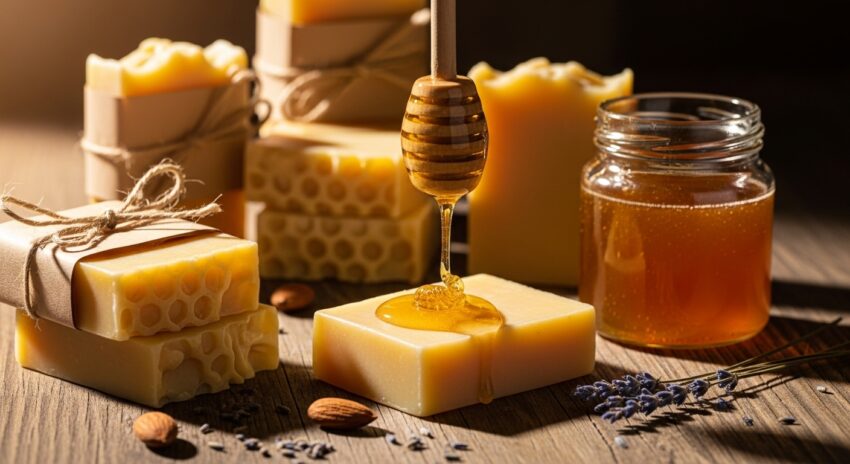
Honey has been used in skincare for centuries, long before commercial cleansers and synthetic additives existed. In handmade soap, honey isn’t just a decorative ingredient — it’s a functional addition that can improve moisture retention, boost lather, and enhance the overall feel of a bar.
If you’ve been curious about using honey in soap making, how much to use, or whether it’s suitable for sensitive skin, this guide walks you through everything you need to know.
📑 Table of Contents
Click a section below to jump directly to that topic.
- Why Use Honey in Soap Making?
- Does Honey Add Scent to Soap?
- How Much Honey to Use in Soap
- Tips for Using Honey in Cold Process Soap
- Is Honey Soap Safe for Sensitive Skin?
- Choosing the Right Honey for Soap Making
- When Honey Might Not Be the Best Choice
- Frequently Asked Questions About Honey in Soap
- Final Thoughts on Using Honey in Soap
Why Use Honey in Soap Making?
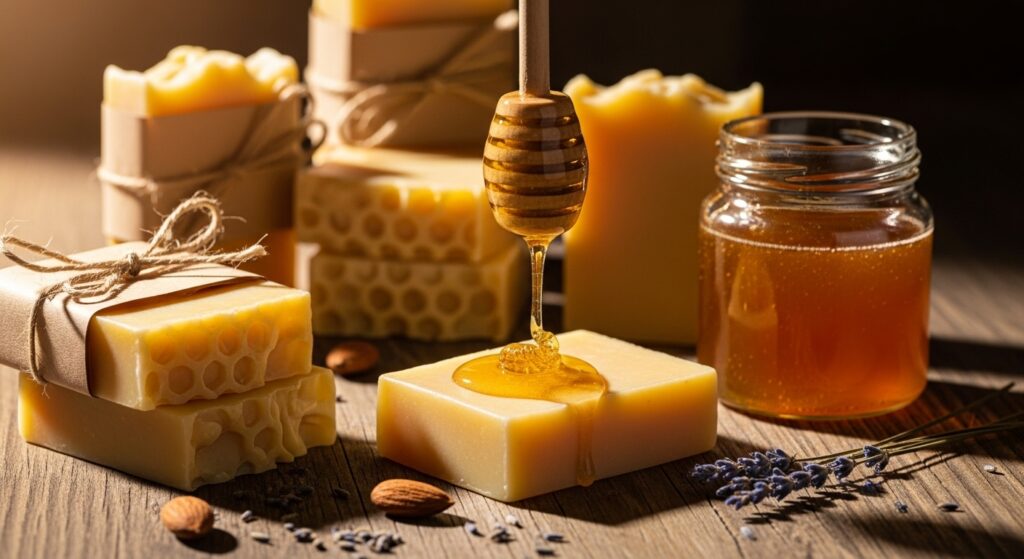
Honey is a natural humectant, meaning it helps attract moisture to the skin. While soap is a wash-off product, honey can still improve how conditioning and gentle a bar feels during use — especially for dry or mature skin.
Honey also contains naturally occurring antioxidants, which help support healthy-looking skin and protect against everyday environmental stressors. These properties make honey a popular choice among soap makers who prefer simple, natural ingredients.
Honey is just one of many natural ingredients used to enhance handmade soap. If you enjoy experimenting, exploring other natural soap additives like clays, milks, and botanicals can help you customize your recipes even further.
Does Honey Add Scent to Soap?
Honey does not add a strong fragrance to soap. Any natural honey aroma is very mild and often fades during saponification.
For this reason, honey is best used for its skin benefits rather than as a scenting ingredient. Many soap makers pair honey with gentle essential oils such as lavender or chamomile to create a soft, comforting bar. When choosing fragrance, it’s important to stick with essential oils that are considered gentle and skin-friendly, especially for sensitive skin formulas.
How Much Honey to Use in Soap
A little honey goes a long way in soap making.
Recommended usage rate:
-
½ to 1 tablespoon of honey per pound of oils
Using more than this can cause issues such as excessive heat, darker color, or sticky, soft bars. Honey should always be diluted in a small amount of warm distilled water (taken from your total liquid amount) before being added to soap batter.
If you’re still getting comfortable with additives, it helps to understand the full cold process soap making method first, including trace, temperature control, and timing.
Tips for Using Honey in Cold Process Soap
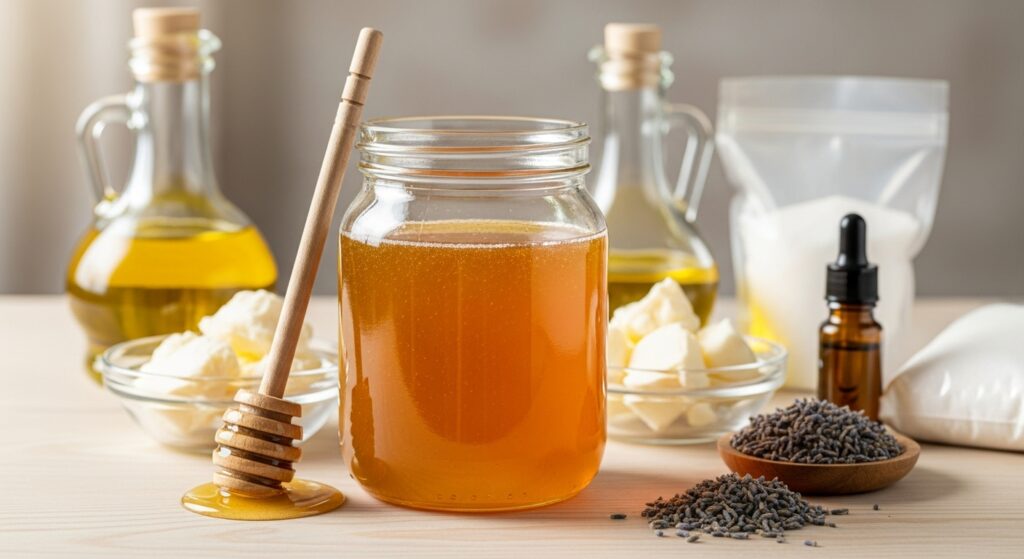
Honey is easy to work with, but it does require a bit of care:
-
Always dilute honey before adding it to soap
-
Add at light trace to avoid acceleration
-
Expect some natural darkening of the soap
-
Avoid heavy insulation, as honey increases heat
Because honey contains natural sugars, it can cause soap to overheat if you’re not careful. If you notice cracking, overheating, or softness, a soap making troubleshooting guide can help identify what went wrong and how to fix it.
Is Honey Soap Safe for Sensitive Skin?
Honey is generally considered gentle, but everyone’s skin is different.
People with allergies to bee products or pollen should use caution and always patch test first. This is especially important when making soap for babies, children, or highly sensitive skin.
If you’re formulating for delicate skin, keeping recipes simple is key. Choosing gentle, baby-safe soap ingredients and limiting additives can reduce the risk of irritation.
Choosing the Right Honey for Soap Making
Not all honey is created equal.
For soap making, look for:
-
Raw or minimally processed honey
-
Pure honey with no added syrups or flavorings
-
Honey from a reputable or local source
Highly processed honey may lack some of the natural properties that make it beneficial in handmade soap.
If you want to skip cold process and start with a ready-to-use base, the Honey Melt and Pour Soap Base 2 Pounds is a great choice — it’s a honey-enriched melt-and-pour soap base you can customize with your favorite oils, botanicals, or clays
When Honey Might Not Be the Best Choice
Despite its benefits, honey isn’t right for every soap or every person. Some users find that honey-based soaps don’t agree with their skin, even though the ingredient is natural.
If irritation occurs:
-
Discontinue use
-
Simplify the recipe
-
Consider alternatives like aloe, glycerin, or milk
Listening to your skin is always more important than following trends.
Frequently Asked Questions About Honey in Soap
Can you use honey in cold process soap?
Yes. Honey works well in cold process soap when used in small amounts and properly diluted to prevent overheating.
How much honey should I add to soap?
½ to 1 tablespoon per pound of oils is a safe and effective guideline.
Does honey make soap moisturizing?
Honey helps attract moisture, which can make soap feel more conditioning during use.
Will honey soap smell like honey?
No. Any honey scent is very mild and usually fades during saponification.
Is honey soap safe for sensitive skin?
Often yes, but patch testing is recommended, especially for those with allergies or reactive skin.
Final Thoughts on Using Honey in Soap
Honey can be a beautiful addition to handmade soap when used thoughtfully. Its humectant properties, lather support, and gentle nature make it a favorite among natural soap makers.
As with all soap ingredients, moderation and proper technique matter. When respected, honey can turn a simple recipe into a nourishing, well-balanced bar that feels as good as it looks.
Important Note:
This information is for educational purposes only.
This post may contain affiliate links. If you make a purchase through these links, I may earn a small commission at no extra cost to you.
Updated Feb 2026
© 2024 – 2026, admin. All rights reserved.