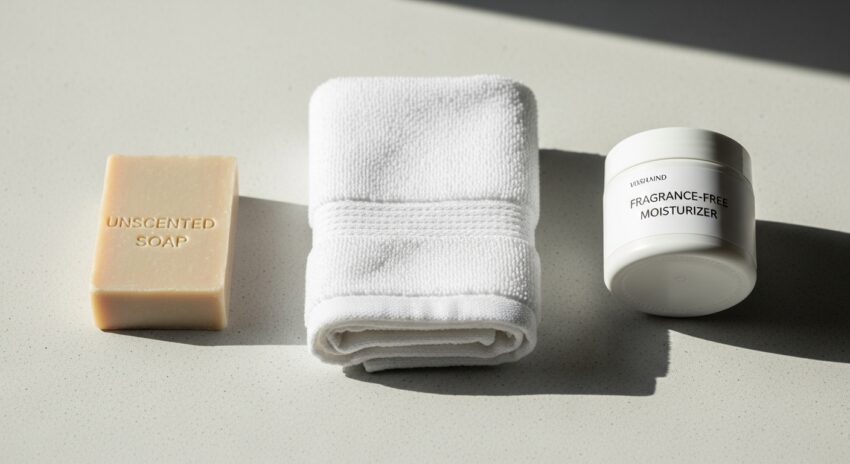
Psoriasis is a chronic inflammatory skin condition that causes thickened, scaly patches of skin. It can affect the scalp, elbows, knees, lower back, and other areas of the body, and severity varies widely from person to person.
Psoriasis is not contagious, but it can be persistent, uncomfortable, and emotionally challenging. Symptoms often follow a pattern of flare-ups and remission and may be influenced by immune, genetic, and environmental factors.
This guide explains:
-
What psoriasis is
-
Common symptoms and triggers
-
Different types of psoriasis
-
Conventional medical approaches
-
Supportive, non-medical skin care practices
-
When to seek medical care
📑 Table of Contents
Click a section below to jump directly to that topic.
- What Is Psoriasis?
- Common Symptoms of Psoriasis
- What Triggers Psoriasis Flare-Ups?
- Types of Psoriasis
- How Psoriasis Is Diagnosed
- Conventional Treatment Options
- Supportive Care for Psoriasis-Prone Skin
- Environmental & Lifestyle Triggers
- Food Sensitivities & Psoriasis
- Alcohol & Psoriasis
- Diet & Essential Fatty Acids
- Vitamin D & Sun Exposure
- Gentle Bath & Cleansing Products
- Lifestyle Considerations
- Pediatric & Medical Safety Disclaimer
- Frequently Asked Questions About Psoriasis
- Final Notes
What Is Psoriasis?
Psoriasis is an immune-mediated skin condition in which skin cells build up more quickly than normal, leading to thickened plaques and visible scaling.
The condition is long-term and may improve or worsen over time. While the exact cause is not fully understood, psoriasis is believed to involve:
-
Immune system dysfunction
-
Genetic predisposition
-
Environmental and lifestyle triggers
Common Symptoms of Psoriasis
Symptoms vary by type and severity, but may include:
-
Thick, raised patches of skin
-
Silvery or white scaling
-
Redness or discoloration
-
Dry or cracked skin
-
Itching or soreness
Some people experience mild symptoms, while others may have widespread or persistent plaques.
What Triggers Psoriasis Flare-Ups?

Triggers differ from person to person, but common factors include:
-
Stress
-
Skin injury or irritation
-
Certain medications
-
Infections
-
Alcohol use
-
Environmental allergens
Identifying and avoiding personal triggers can be an important part of managing psoriasis.
Types of Psoriasis
Plaque Psoriasis
The most common form, characterized by raised, scaly patches.
Scalp Psoriasis
Affects the scalp and hairline and may resemble dandruff but is typically thicker and more persistent.
Guttate Psoriasis
Often appears as small spots on the skin, sometimes following infection.
Inverse Psoriasis
Occurs in skin folds and appears smooth and shiny rather than scaly.
Pustular Psoriasis
A rare form featuring pus-filled lesions.
Erythrodermic Psoriasis
A severe and potentially serious form affecting large areas of skin.
How Psoriasis Is Diagnosed
Psoriasis is usually diagnosed through:
-
Physical examination
-
Medical history
-
Review of symptoms and family history
In some cases, a skin biopsy may be used to confirm diagnosis.
Conventional Treatment Options
Medical treatment depends on severity and may include:
-
Topical treatments (corticosteroids, vitamin D analogs)
-
Phototherapy
-
Oral or injectable medications
Treatment plans should always be guided by a healthcare professional.
Supportive Care for Psoriasis-Prone Skin
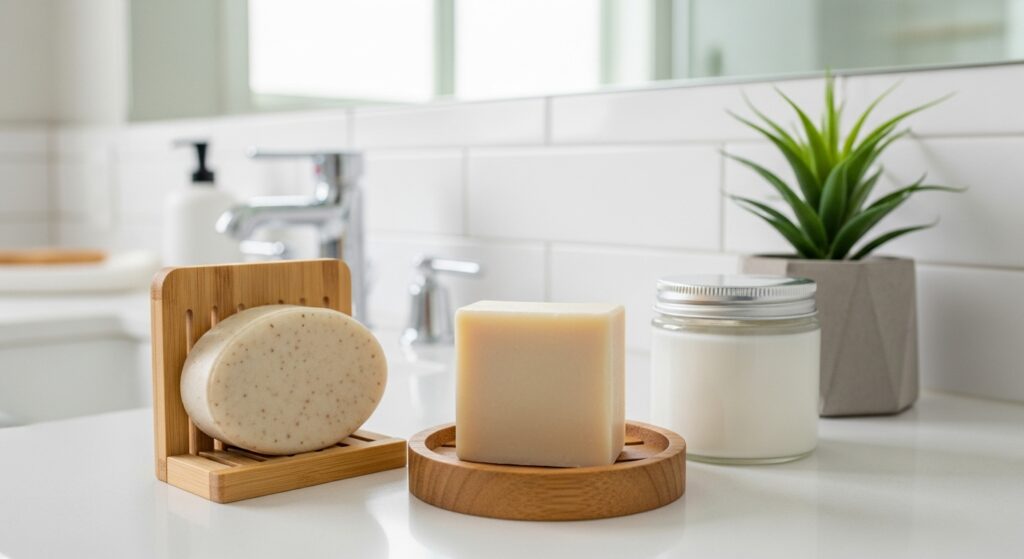
Supportive care focuses on reducing irritation and supporting the skin barrier, not curing psoriasis.
Some people find benefit from:
-
Using gentle, fragrance-free cleansers
-
Avoiding harsh soaps and shampoos
-
Keeping skin moisturized
-
Reducing exposure to known irritants
Gentle Skin Care Products Often Used
-
Unscented vegetable-oil soap
-
Mild shampoo or shampoo bar
-
Fragrance-free moisturizer
These products may help reduce dryness and irritation for some individuals.
Some people find that switching to fragrance-free cleansers and moisturizers helps reduce dryness and irritation associated with psoriasis-prone skin.
Environmental & Lifestyle Triggers
Psoriasis flare-ups can sometimes be influenced by environmental factors. Some people notice changes in symptoms when they reduce exposure to potential irritants such as dust, allergens, or harsh household materials.
Carpeting, fragrances, or airborne irritants may aggravate sensitive skin in certain individuals. Identifying and minimizing personal environmental triggers can be a helpful part of managing psoriasis-prone skin.
Responses vary, and environmental changes do not replace medical treatment.
Food Sensitivities & Psoriasis
Some individuals with psoriasis notice that certain foods appear to coincide with flare-ups. This may include spicy foods, alcohol, or specific food sensitivities.
Food-related responses are highly individual. Keeping a symptom journal or working with a healthcare professional can help determine whether dietary factors play a role in symptom patterns.
Dietary changes should be approached cautiously and with professional guidance when needed.
Alcohol & Psoriasis
Alcohol consumption has been associated with more frequent or more severe psoriasis flare-ups in some individuals. While responses vary, moderation or avoidance may be beneficial for those who notice alcohol-related symptom changes.
Reducing alcohol intake is considered a supportive lifestyle choice rather than a treatment.
Diet & Essential Fatty Acids
Some research has explored the relationship between dietary fats and inflammatory conditions, including psoriasis. Foods containing omega-3 fatty acids, such as oily fish, are often discussed in relation to general skin health.
Dietary responses vary widely, and supplements should only be used under medical guidance, particularly for individuals managing chronic conditions or taking medications.
Vitamin D & Sun Exposure
Vitamin D plays a role in skin health, and controlled light therapy is sometimes used under medical supervision for psoriasis.
Because excessive sun exposure and high-dose supplementation carry risks, any changes related to sunlight or vitamin D intake should be discussed with a healthcare professional.
Gentle Bath & Cleansing Products
Harsh soaps, shampoos, and fragranced products may worsen dryness and irritation for psoriasis-prone skin. Some people prefer fragrance-free, gentle cleansers or shampoo bars to reduce scalp and skin irritation.
Starting with simple, unscented products may help support skin comfort, especially during flare-ups.
Lifestyle Considerations

Certain lifestyle choices may influence flare frequency:
-
Managing stress
-
Limiting alcohol intake
-
Wearing breathable fabrics
-
Maintaining a balanced diet
-
Supporting overall skin hydration
Lifestyle changes do not replace medical treatment but may support overall skin comfort.
Breathable cotton clothing and fragrance-free laundry detergents are often recommended for sensitive or psoriasis-prone skin.
Pediatric & Medical Safety Disclaimer
This content is provided for educational purposes only and is not intended to diagnose, treat, cure, or prevent any medical condition.
Psoriasis is a medical condition that may require professional care. Always consult a qualified healthcare provider, especially for:
-
Children
-
Severe or widespread symptoms
-
Signs of infection
-
Joint pain or swelling
Natural or homemade products should be patch tested and discontinued if irritation occurs.
Frequently Asked Questions About Psoriasis
Is psoriasis contagious?
No. Psoriasis cannot be spread from person to person.
Can psoriasis be cured?
There is currently no cure for psoriasis. Many people manage symptoms through medical care, trigger awareness, and supportive skin routines.
Is psoriasis the same as eczema?
No. While both affect the skin, psoriasis and eczema have different causes, symptoms, and treatments.
Does diet affect psoriasis?
Some people notice symptom changes related to diet, though responses vary. Dietary changes should be discussed with a healthcare professional.
When should I see a doctor?
If symptoms are severe, worsening, painful, or affecting quality of life, medical evaluation is recommended.
Final Notes
Psoriasis management focuses on medical care, trigger awareness, and supportive skin practices. Gentle routines and informed choices may help improve comfort and reduce irritation over time.
For those interested in ingredient control, making simple unscented soap at home can be an option for reducing exposure to fragrance and harsh additives.
Updated: January 2026
Important Note:
This information is for educational purposes only.
This post may contain affiliate links. If you make a purchase through these links, I may earn a small commission at no extra cost to you.
© 2016 – 2026, Tes. All rights reserved.
Psoriasis can be really difficult to deal with. I have had a couple patches from time to time and do not like dealing with them.
From your article, I get the idea that they are triggered by allergens. I did not read what type of allergens tend to trigger psoriasis. Did I miss it or do scientist not know?
Thank you for providing some natural things that we can do to combat psoriasis outbreaks. I feel very lucky that I have only gotten outbreaks a few time because they were very uncomfortable. I will bookmark your site for additional information.
The triggers for Psoriasis can vary so much from one person to the next, and it can be a long hard road trying to figure out what your triggers are, but the most common are stress, injury to the skin, infections, medications and allergies. Because everyone is different, one person may have an outbreak caused by an allergic reaction to something they have eaten, where as that same product may not bother someone else with psoriasis. I hope this helps to answer your question.