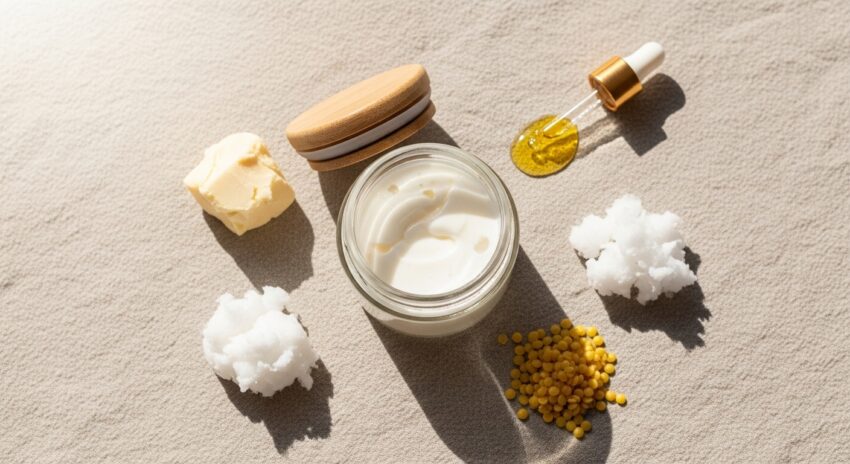
Why Make Your Own Baby Lotion?
A baby’s skin is much thinner and more sensitive than adult skin, making it more prone to dryness and irritation. Many commercial baby lotions contain synthetic fragrances, preservatives, or harsh additives that can be overwhelming for delicate skin.
Making your own baby lotion allows you to choose simple, nourishing ingredients that moisturize gently without unnecessary chemicals. This DIY baby lotion recipe uses natural oils and butters that help protect moisture, soothe dryness, and keep baby’s skin soft and healthy.
This recipe is easy to make, cost-effective, and gives you peace of mind knowing exactly what you’re putting on your baby’s skin.
Gentle DIY Baby Lotion Ingredients (Natural & Baby-Safe)
To get started with natural ingredients and tools for homemade baby lotion, you might like this mother-baby DIY skincare bundle with high-quality butters, oils, and beeswax — perfect for this recipe and more.
-
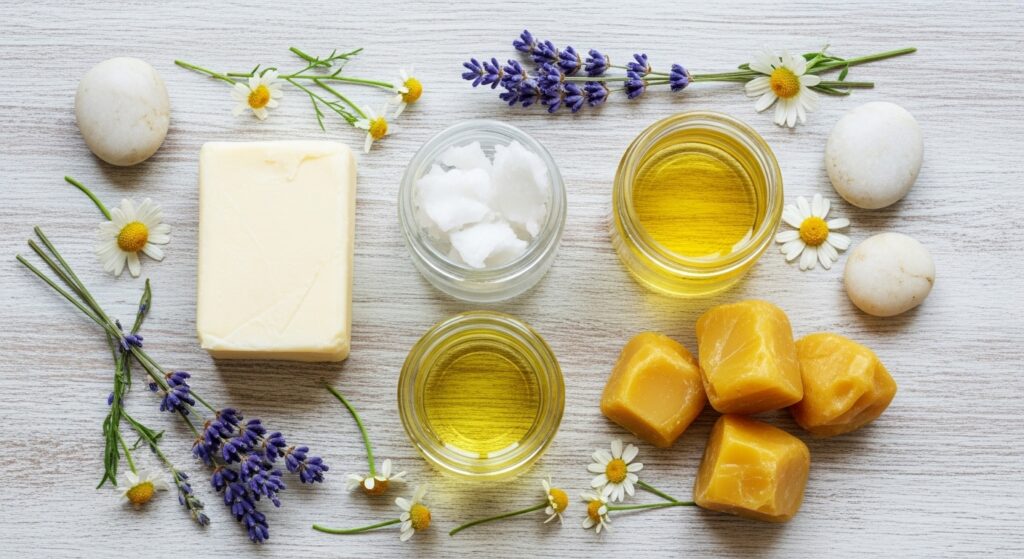
½ cup shea butter – Deeply moisturizing, rich in vitamins A and E, and gentle for sensitive skin
-
¼ cup coconut oil – Helps soften skin and support the natural moisture barrier
-
¼ cup sweet almond oil – Lightweight oil that absorbs easily and is rich in vitamin E
-
1 tablespoon beeswax – Helps thicken the lotion and creates a light protective barrier
Optional (Use With Caution):
-
Chamomile or lavender essential oil – Optional and not recommended for newborns. If used, limit to 1–2 drops total and only for babies over 6 months.
⚠️ Important Safety Note: Many experts recommend avoiding essential oils entirely for babies, especially under 6 months. This lotion works beautifully without any essential oils at all.
If you’re unsure about using essential oils with infants, be sure to read my essential oil safety guide for babies, which explains age guidelines, proper dilution, and when it’s best to avoid essential oils altogether.
If you’re curious about why certain oils are better for delicate skin, my guide to the best oils for sensitive skin explains which oils are most gentle and why they work so well in baby skincare.
How to Make Baby Lotion (Step-by-Step)
-
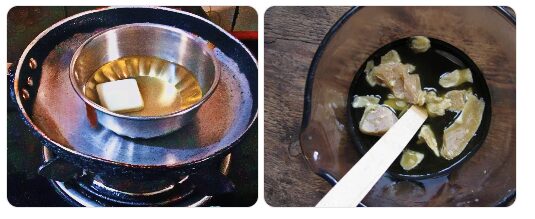
Set up a double boiler and gently melt the shea butter, coconut oil, and beeswax until fully liquid.
-
Remove from heat and stir in the sweet almond oil.
-
Allow the mixture to cool for about 5–10 minutes, until it begins to slightly thicken.
-
(Optional) Add essential oil sparingly, if using.
-
Using a hand mixer or whisk, whip the mixture until light and fluffy.
-
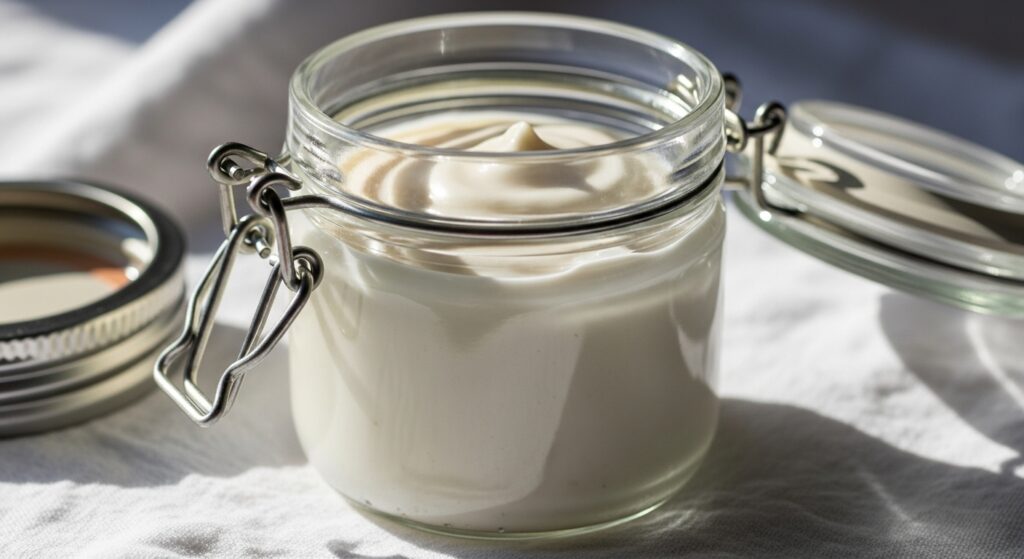
Spoon into a clean, sterilized glass jar and allow to fully set before sealing.
How to Use DIY Baby Lotion
-
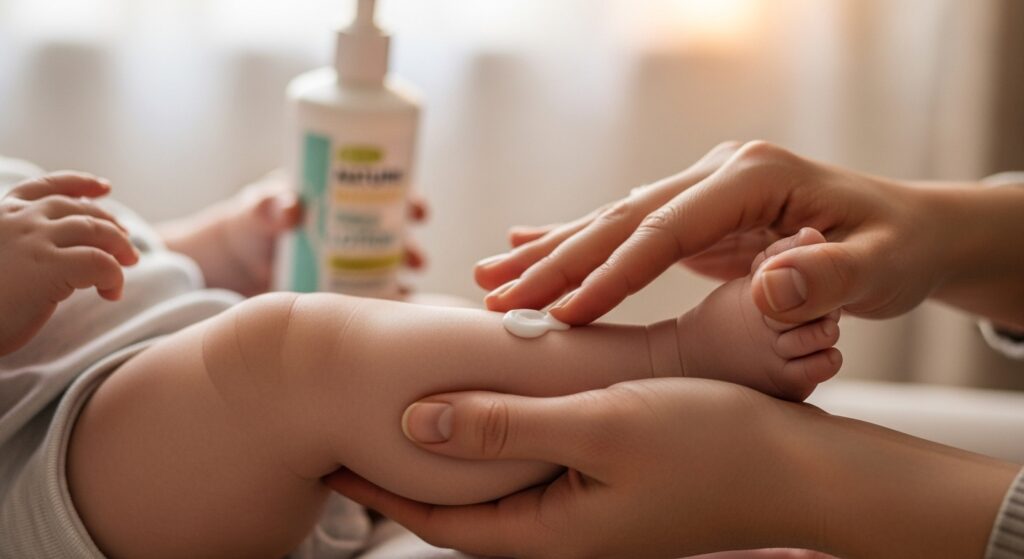
Apply a small amount after bath time or as needed
-
Gently massage into areas prone to dryness such as cheeks, elbows, knees, and legs
-
A little goes a long way
If you prefer a ready-to-use option some days, consider a gentle everyday alternative like this Cetaphil baby lotion gift pack formulated for sensitive baby skin.
This lotion pairs beautifully with a mild cleanser, such as a gentle handmade baby soap, for a simple and nourishing bath-time routine.
Storage & Shelf Life
-
Store in a sealed glass jar away from heat and direct sunlight
-
Shelf life is approximately 3–4 months, depending on ingredient freshness
-
Always discard if you notice changes in smell, texture, or color
For more detailed tips on containers, shelf life, and safe handling, see my guide on how to store homemade skincare products.
Is This Lotion Safe for Newborns?
Yes — when made without essential oils. The base ingredients (shea butter, coconut oil, sweet almond oil, and beeswax) are commonly used in gentle baby skincare products.
For newborns or babies with extremely sensitive skin, always do a patch test before regular use.
Bath time is a great opportunity to moisturize baby’s skin afterward, especially while skin is still slightly damp.
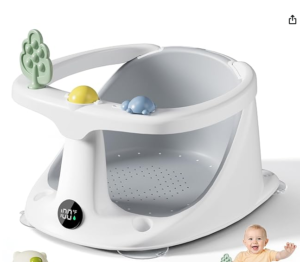
Using a supportive baby bath seat can help make bath time safer and more comfortable for both baby and parent, allowing you to focus on a gentle care routine.
For a complete gentle bath-time routine, this baby and kids bath care set offers mild, skin-calming products that go well with your DIY lotion.
Frequently Asked Questions About DIY Baby Lotion
Is homemade baby lotion safe for newborns?
Yes — when made without essential oils, this DIY baby lotion uses gentle, commonly used ingredients like shea butter, coconut oil, sweet almond oil, and beeswax. These ingredients are often found in commercial baby skincare products. Always perform a patch test before regular use.
Should I use essential oils in baby lotion?
Essential oils are not necessary for baby lotion and are generally not recommended for newborns. If you choose to use them, wait until baby is at least 6 months old and limit use to 1–2 drops total per batch. Many parents prefer fragrance-free products for sensitive baby skin.
Can I use this lotion on baby’s face?
This lotion can be used on areas prone to dryness, such as arms, legs, and cheeks. Avoid contact with eyes, mouth, and broken skin. Use only a very small amount, and discontinue use if irritation occurs.
For very dry areas or when extra moisture protection is needed, you may also want to read **Is Vaseline Safe for Babies? Petroleum Jelly vs Natural Alternatives** to understand when a jelly-style barrier may be helpful.
How long does homemade baby lotion last?
Because this recipe does not contain water or preservatives, it typically lasts 3–4 months when stored properly. Keep it in a sealed container, away from heat and sunlight, and always use clean hands when applying.
What can I substitute for sweet almond oil?
If nut allergies are a concern, sweet almond oil can be replaced with:
-
Jojoba oil
-
Apricot kernel oil
-
Olive oil (light olive or infused olive oil)
Each alternative is gentle and suitable for sensitive skin.
Why does this baby lotion not contain water?
This recipe is an oil-based lotion, not an emulsion. Oil-only formulas are simpler, shelf-stable, and do not require preservatives, making them ideal for gentle baby skincare.
What should I do if my baby has sensitive skin or eczema?
If your baby has very sensitive skin or a diagnosed skin condition, consult a healthcare professional before trying new skincare products. Always perform a patch test and stop use if redness or irritation appears.
Can adults use this lotion too?
Absolutely. This gentle lotion works well for adults with sensitive skin, dry hands, or fragrance sensitivities. Many parents end up using it themselves!
Is beeswax necessary in this recipe?
Beeswax helps thicken the lotion and adds a light protective barrier to the skin. If you prefer a softer texture, you can slightly reduce the beeswax, but removing it entirely will result in a much softer balm-like consistency.
Important Note:
This recipe is for educational purposes only. Always consult a qualified healthcare provider for concerns about baby skin conditions. Patch testing is recommended before use.
This post may contain affiliate links. If you make a purchase through these links, I may earn a small commission at no extra cost to you.
Updated Jan 2026
© 2025 – 2026, Tes. All rights reserved.
As a first-time mom, I’ve been extra cautious about what I put on my toddler’s skin, especially since he’s had little patches of dryness here and there. I love how simple and gentle this recipe is. I actually recognize every ingredient, which already makes me feel more confident about trying it out. The fact that it’s budget-friendly is such a bonus, too!
By the way, do you find this lotion works well for toddlers with a bit of sensitive eczema, or would you suggest tweaking the recipe for that? Also, have you ever tried making a smaller batch for travel, like keeping a little jar in the diaper bag? That would be so handy for us on the go.
This lotion is mild and should be fine for sensitive skin. You could cut the recipe in half for a smaller batch or make it and store the rest.
This was such a gentle and well-explained guide. Thank you for sharing a natural baby lotion recipe that feels both simple and nourishing. I really appreciate how you walked through each ingredient and its purpose, making it easy to understand why this blend is gentle enough for little ones’ sensitive skin. The step-by-step instructions and tips on storage make it feel accessible even for those new to DIY skincare.
I’m curious — have you noticed a particular ingredient in your lotion that makes the biggest difference in moisturization or soothing properties compared to store-bought options?
Thank you so much — I’m really glad the recipe felt clear and approachable. In my experience, the biggest difference comes from the combination of shea butter for deep moisturization and gentle carrier oils like sweet almond or olive oil, which help soothe and protect the skin barrier. Because there are no synthetic fillers or fragrances, these ingredients can actually do their job without irritating sensitive baby skin. I’m happy you found the instructions and storage tips helpful!
This was such a gentle and well-explained guide. Thank you for sharing a natural baby lotion recipe that feels both simple and nourishing. I really appreciate how you walked through each ingredient and its purpose, making it easy to understand why this blend is gentle enough for little ones’ sensitive skin. The step-by-step instructions and tips on storage make it feel accessible even for those new to DIY skincare.
I’m curious — have you noticed a particular ingredient in your lotion that makes the biggest difference in moisturization or soothing properties compared to store-bought options?
Thank you so much — I’m really glad you found it helpful! ????
If I had to choose, it’s really the combination of simple oils and a gentle butter that makes the biggest difference rather than one single ingredient. Keeping the recipe minimal helps support delicate skin without the extra fillers or fragrances often found in store-bought lotions.
Every baby’s skin is a little different, so I always suggest a small patch test and adjusting if needed. Thanks again for such a thoughtful comment — I truly appreciate it!