How Soap Making Oils Affect Hardness, Lather, and Skin Feel
Soap making oils have different molecular compositions, and it’s these fatty acids that determine how a finished bar of soap performs. Hardness, lather, longevity, and skin conditioning all depend on the oils you choose and how you balance them.
Once a soap maker understands how oils work together, it becomes possible to design soaps intentionally — whether that’s a gentle baby bar, a rich conditioning facial soap, or a hard, long-lasting bath bar.
Understanding how fatty acids influence soap performance is the key to creating balanced, predictable recipes — and avoiding common beginner mistakes.
If you’re completely new to soap making, start with my guide on 10 Questions Every New Soap Maker Asks before diving into oil selection.
- Fatty Acids in Soap Making Oils
- Hard Oils vs Soft Oils in Soap Making
- Properties of Common Soap Making Oils
- The 10 Best Oils to Use in Soap Making
- Vegetable Oils vs Animal Fats
- Shelf Life of Soap Making Oils
- Antioxidants vs Preservatives
- Why Lye Calculators Matter
- How to Choose the Best Oil Combination
- Frequently Asked Questions
Fatty Acids in Soap Making Oils
To make soap, fatty acids must be combined with an alkali (lye) and water. Oils, fats, and butters are all made up of fatty acids, but each oil has a unique molecular makeup that affects the final soap.
Key fatty acids and what they do:
-
Lauric & Myristic Acids – Cleansing power and bubbly lather (can be drying)
-
Oleic Acid – Conditioning and mildness
-
Linoleic & Linolenic Acids – Softness and skin nourishment
-
Stearic & Palmitic Acids – Hardness and bar longevity
Balancing these is the foundation of good soap-making.
Understanding oil properties becomes much easier when you see how they work in real recipes. My collection of Soap Making Recipes for Beginners shows how different oils create different types of bars.
Hard Oils vs Soft Oils in Soap Making Recipes
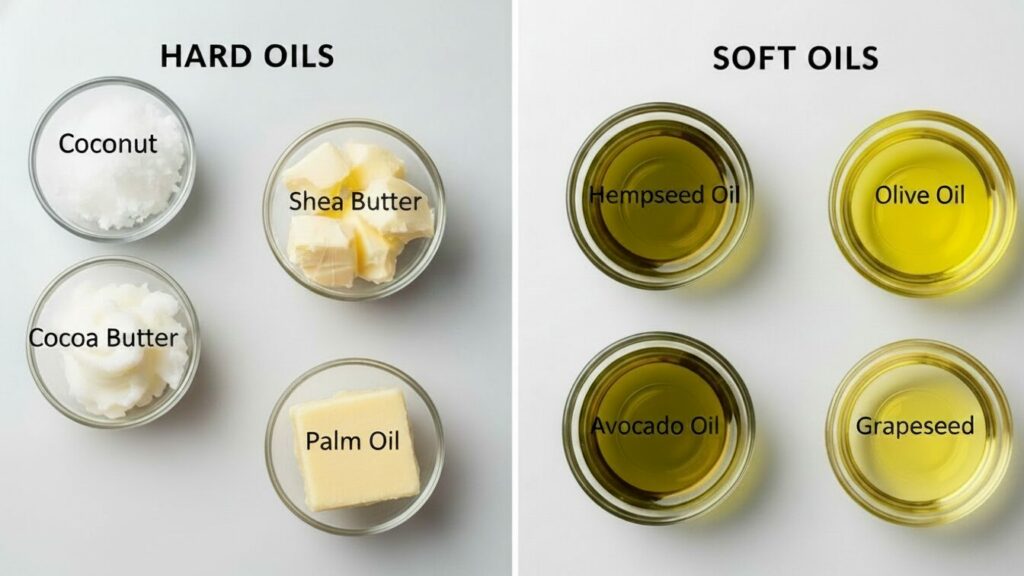
A well-balanced soap recipe usually includes both hard oils and soft oils.
A reliable starting ratio is:
-
60% hard oils
-
40% soft oils
You can adjust this depending on the type of soap you want to create.
Changing oil percentages always requires recalculating lye amounts using a soap lye calculator.
Hard Oils
Hard oils add:
-
Bar hardness
-
Longevity
-
Stable lather
Examples include coconut oil, palm oil, palm kernel oil, cocoa butter, shea butter, lard, and tallow.
Soft Oils
Soft oils contribute:
-
Conditioning
-
Skin nourishment
-
Creaminess
Examples include olive oil, avocado oil, grapeseed oil, hemp seed oil, almond oil, and apricot kernel oil.
Olive oil is the exception — it can create a hard bar on its own (Castile soap), but requires a long cure time to reach its full potential.
Properties of Common Soap Making Oils
| Oil | Hardness | Lather | Primary Properties |
|---|---|---|---|
| Almond Oil | Soft | Medium | Conditioning, low cleansing |
| Apricot Kernel Oil | Soft | Medium | Soothing, conditioning |
| Avocado Oil | Soft | Stable | Soothing, conditioning |
| Canola (Rapeseed) | Soft | Poor | Conditioning |
| Castor Oil | Soft | Rich & Fluffy | Boosts lather, humectant |
| Cocoa Butter | Hard → Brittle | Creamy | Conditioning |
| Coconut Oil | Hard | Rich | Strong cleansing |
| Grapeseed Oil | Soft | Thin | Conditioning |
| Hemp Seed Oil | Soft | Thin | Soothing, restorative |
| Jojoba Oil | Mushy | None | Restorative (use sparingly) |
| Lard | Hard | Creamy | Cleansing & conditioning |
| Olive Oil | Soft → Hard | Low | Conditioning, soothing |
| Palm Oil | Hard → Very Hard | Stable | Cleansing |
| Palm Kernel Oil | Hard → Brittle | Rich & Fluffy | Strong cleansing |
| Shea Butter | Hard | Stable | Soothing, restorative |
| Tallow | Hard → Very Hard | Creamy | Cleansing |
| Wheatgerm Oil | Soft | Creamy | Soothing |
The 10 Best Oils to Use in Soap Making
There is no single “best” oil — the best oil depends on the type of soap you want to create.
If you’re looking for a practical starting point, this guide to the 10 best oils to use in soap making breaks down which oils work best for beginners and why.
Olive Oil
A cornerstone oil for many soap makers. Highly conditioning, gentle, and ideal for sensitive or baby skin. Pure olive oil soap (Castile) benefits from a 6–8 week cure.
Beginner Tip: Olive oil soap hardens slowly. Castile soap benefits from a 6–12 month cure for best hardness and lather.
Coconut Oil
Excellent for cleansing and bubbly lather. Use in moderation to avoid dryness.
Beginner Tip: Coconut oil creates strong cleansing bars. Using more than 25–30% may cause dryness unless superfatted higher.
Palm Oil
Adds hardness and longevity with stable lather. Certified sustainable palm oil is recommended.
Palm Kernel Oil
Very hard and highly cleansing. Use sparingly for balance.
Castor Oil
Exceptional for boosting lather. Best kept below 5–8% of total oils.
Beginner Tip: Castor oil dramatically boosts lather but can make soap sticky if overused. Keep it under 5–8% of total oils
Avocado Oil
Rich, nourishing oil ideal for superfatting and dry skin soaps.
Grapeseed Oil
Lightweight and conditioning, but should be used in smaller percentages.
Apricot Kernel Oil
Gentle and soothing, often used in facial and baby soaps.
Shea Butter
Adds hardness and restorative skin benefits.
Cocoa Butter
Creates hard, creamy bars but should be balanced with moisturizing oils.
Vegetable Oils vs Animal Fats in Soap Making
Animal Fats (Tallow & Lard)
Historically, soap was made using animal fats — primarily tallow (beef fat) and lard (rendered pork fat). These fats produce:
-
Hard, long-lasting bars
-
Creamy lather
-
Excellent cleansing ability
One drawback is that animal-fat soaps may lather less in cold water and can feel drying for some skin types. To counter this, soap makers often add moisturizing ingredients like glycerin, goat milk, lanolin, or aloe.
Many commercial soap companies still use tallow today, and artisan soap makers often blend animal fats with vegetable oils for balance.
Plant-Based Oils
Plant oils are preferred by those seeking vegan or cruelty-free soaps. These oils produce:
-
Gentle, moisturizing soaps
-
Reliable lather in all water temperatures
-
Excellent conditioning for sensitive skin
Common plant oils include olive, sunflower, canola, palm, and coconut. While plant-based soaps may have slightly less lather on their own, adding the right combination of oils and butters creates bars just as hard and luxurious as those made with animal fats.
Shelf Life of Soap Making Oils
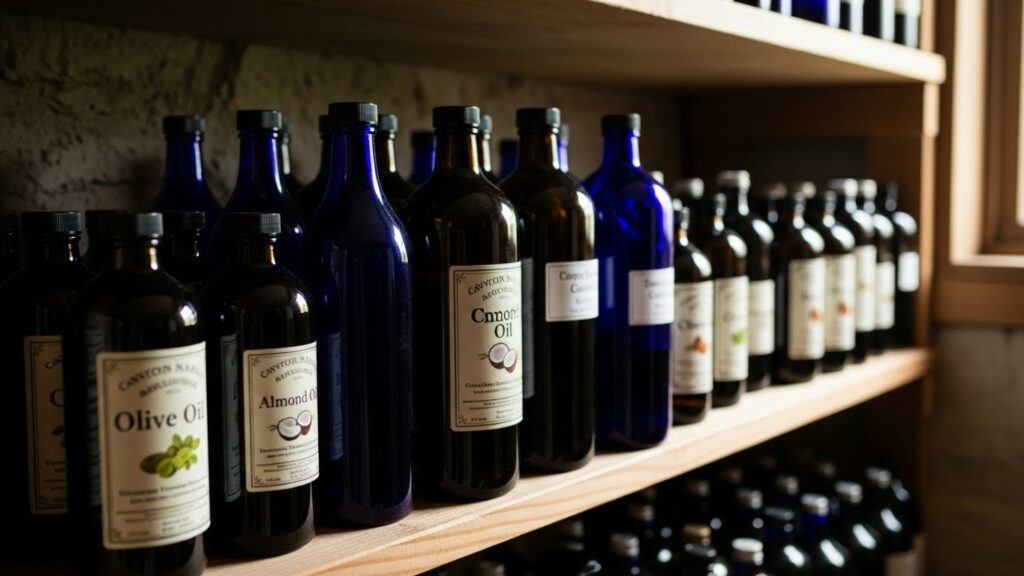
Oils do expire, and using rancid oils can ruin a batch of soap or lotion.
Most oils have a shelf life of 1–3 years, depending on:
-
Fatty acid composition
-
Storage conditions
-
Exposure to light, heat, and air
Approximate Shelf Life of Common Oils
| Oil | Shelf Life |
|---|---|
| Castor Oil | 3–5 years |
| Olive Oil | 3 years |
| Coconut Oil | 2 years |
| Palm Oil | 2 years |
| Palm Kernel Oil | 2 years |
| Lard | 2 years |
| Apricot Kernel Oil | 3 years |
| Hemp Oil | 2 years |
| Neem Oil | 2 years |
| Rice Bran Oil | 3 years |
| Jojoba Oil | 2 years |
| Rosehip Oil | 3 years |
| Wheatgerm Oil | 2 years |
| Fractionated Coconut Oil | Indefinite (proper storage) |
💡 Tip: Store oils in a cool, dark place and clearly label containers with expiration dates to avoid waste.
Many soap makers store bulk oils in food grade storage containers or amber bottles to reduce light exposure and extend shelf life.
Antioxidants vs Preservatives
Antioxidants
Antioxidants slow oxidation and help extend oil shelf life but do not prevent mold or bacteria.
Common natural antioxidants:
-
Vitamin E
-
Rosemary Essential Oil
Preservatives
Preservatives are necessary for water-based products (lotions, creams).
Common options include:
-
Grapefruit Seed Extract
-
Potassium Sorbate
-
Sodium Benzoate
-
Geogard ECT / Ultra
-
Phenoxyethanol
-
Germaben II
Antioxidants protect oils; preservatives protect products that contain water.
Why Lye Calculators Matter
Each oil has a unique saponification value, meaning it requires a specific amount of lye to turn into soap. Always use a reliable lye calculator when creating recipes.
-
Too little lye = soft soap
-
Too much lye = caustic soap
Accurate calculations are essential for safety and quality.
If you’re new to formulating recipes, this beginner-friendly guide explains how to use a soap lye calculator safely and avoid common mistakes that lead to lye-heavy or overly soft soap.
Always weigh oils and lye using a digital scale accurate to 0.01 grams — volume measurements are unsafe for soap making.
Never substitute oils or change percentages without recalculating lye — even small changes can affect safety.
How to Choose the Best Oil Combination
Every oil brings something different to the table — hardness, bubbles, creaminess, or conditioning. Great soap comes from balance, not guesswork.
It took many batches to find my favorite oil blends, and experimentation is part of the joy of soap making. Start with a balanced recipe, then adjust oils, scents, and colors as your confidence grows.
Frequently Asked Questions About Soap Making Oils
What oil makes the hardest bar of soap?
Oils high in stearic and palmitic acids create the hardest bars. Common examples include palm oil, tallow, lard, cocoa butter, and shea butter. These oils are often combined with softer oils for balance.
What oil makes the most bubbles in soap?
Coconut oil and palm kernel oil create the most bubbly lather. Castor oil is often added in small amounts to boost and stabilize bubbles.
Can you make soap with only one oil?
Yes. Olive oil soap, also known as Castile soap, is made using 100% olive oil. It produces a gentle, conditioning bar but requires a longer cure time for hardness.
What oils are best for sensitive or baby skin?
Olive oil, avocado oil, apricot kernel oil, and shea butter are commonly used for sensitive skin soaps due to their gentle, conditioning properties.
What soap making oils last the longest?
Castor oil and olive oil have some of the longest shelf lives when stored properly in a cool, dark place. Fractionated coconut oil can last indefinitely under ideal storage conditions.
Many experienced soap makers also keep a trusted soap making reference book on hand for fatty acid profiles, oil behavior, and recipe troubleshooting.
Important Note:
This information is for educational purposes only.
This post may contain affiliate links. If you make a purchase through these links, I may earn a small commission at no extra cost to you.
Updated Jan 2026
© 2026, Tes. All rights reserved.
thanks for sharing:)
I live in Greece and have plenty of olive oil so this is a great idea to my own body oil and also it help for the damaged hair, you know.
it is a very interesting article and i have to tell you that i have always looked for natural solutions for my beauty or health products.
Do you have any recipes how we can use these oils? How can we make a body oil or face cream, even a hair mask?
Thanks a lot again and i am looking forward for more info 🙂 great site:)
Cristina
Natural oils are so beneficial to our skin and hair. You can check the recipe page there are always more being added. Recipes
Wow! I learn something new. I am great consumer. I have used soap but didn’t know how best it could be made more natural with locally available oil. This article presented innovative idea and has identified and provides steps to be self reliant. I like you site, and I will look into it. Great stuff learnt here. thanks.
Some of the best handmade soaps are made with natural and locally sourced ingredients. Check out your local farmer’s market and you’ll be sure to find a soap vendor. Thanks for your comments.
Hi
I love making my own soaps and love the fact that on your website you have a lot of useful and helpful information.
You have mentioned some of my favourite oils that I not only use when I make my soaps but in my everyday life.
Grape seed oil, castor oil, olive oil,coconut oil, and avocado oil, love em.
Thank you for all the extra information you have added about each oil, such as breaking down the compounds and benefits.
I will be sharing this article with my other soap making friends so thanks for that and i know where to come when I want to find out more soap making information.
Thank you
Jennifer
Hi Jennifer, it’s always great to hear from other soap makers. I’m glad you like the site and thanks for sharing it with your soap making friends.
I never realized how much the balance of fatty acids in oils determines whether a soap feels hard, creamy, bubbly, or conditioning. It makes me appreciate the craft behind even a simple bar of soap. I’m especially intrigued by how olive oil can eventually create a hard bar on its own, but only after such a long cure time.
When experimenting with new recipes, do soap makers typically start with a “base formula” (like a 60/40 hard-to-soft oil ratio) and then make adjustments, or is it better to design each recipe from scratch based on the desired qualities?
thanks for reaching out and commenting. When I starting making my own recipes I did start out with a 60/40 split and then tweaked my recipes from there. You could start with 60% hard oils like coconut or palm and 40% soft oils like olive or sunflower and adjust from there.