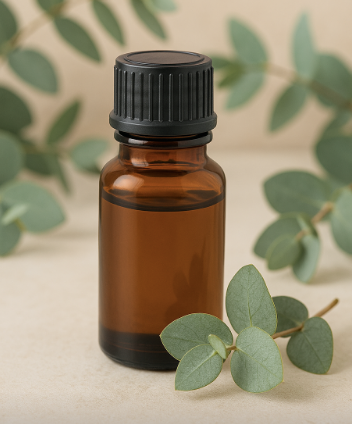
Overview: What Is Eucalyptus Essential Oil?
Eucalyptus essential oil is a powerful, refreshing oil best known for its ability to support clear breathing, respiratory comfort, muscle relief, and natural cleansing. Its crisp, camphoraceous aroma is instantly recognizable and widely used in aromatherapy, chest rubs, shower steamers, natural cleaning products, and soap making.
Because of its strength and effectiveness, eucalyptus essential oil is commonly used in cold and flu season blends, post-workout products, and cleansing soaps. It is a staple oil for both home wellness routines and functional handmade products.
Choose a high-quality eucalyptus essential oil from a reputable supplier for best results.
Botanical Source of Eucalyptus Essential Oil

Eucalyptus essential oil is distilled from the leaves of eucalyptus trees, most commonly:
-
Eucalyptus globulus
-
Eucalyptus radiata
Native to Australia, eucalyptus trees are now cultivated worldwide. Different species vary slightly in aroma and strength, with E. radiata often considered gentler for topical use.
How Eucalyptus Essential Oil Is Made
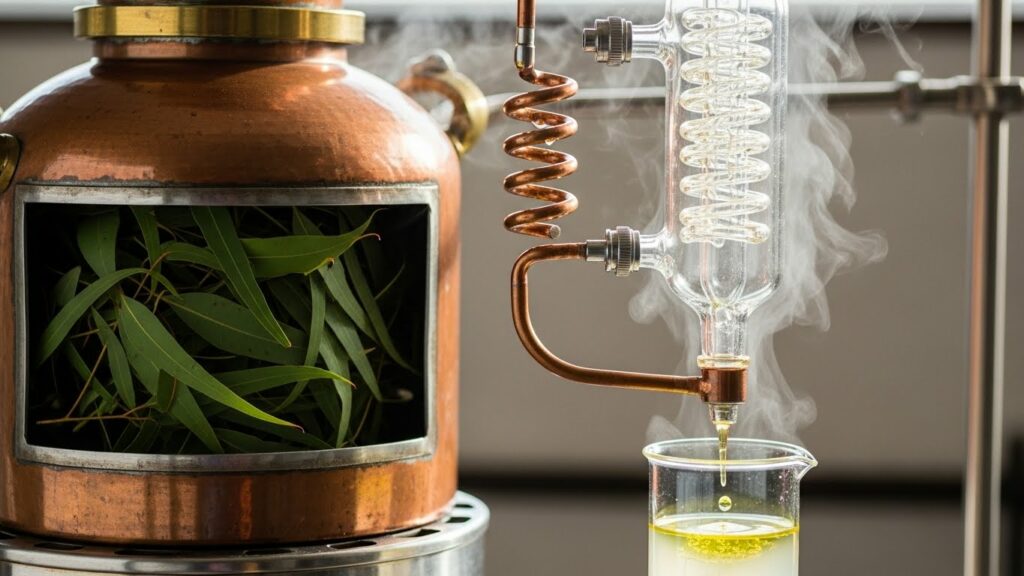
Eucalyptus essential oil is extracted through steam distillation of fresh eucalyptus leaves. The distillation process captures the oil’s high cineole content, which gives eucalyptus its strong, cooling, and penetrating aroma.
High-quality eucalyptus oil should smell clean, sharp, and medicinal — not sweet or musty.
Aroma Profile & Emotional Benefits
Eucalyptus essential oil has a fresh, camphoraceous, cooling aroma that feels cleansing and invigorating.
It is commonly used to:
-
Promote alertness and mental clarity
-
Create a fresh, clean environment
-
Reduce feelings of mental fatigue
-
Support focus during illness or congestion
Because of its intensity, eucalyptus is often blended with softer oils to balance its scent.
Top Benefits of Eucalyptus Essential Oil
Eucalyptus essential oil is valued for its naturally supportive properties:
-
Supports respiratory comfort
-
Helps open airways and ease congestion
-
Popular for muscle and joint relief blends
-
Strong cleansing and deodorizing qualities
-
Common ingredient in natural cleaning products
Its strength makes proper dilution essential.
Eucalyptus Essential Oil for Skin Care
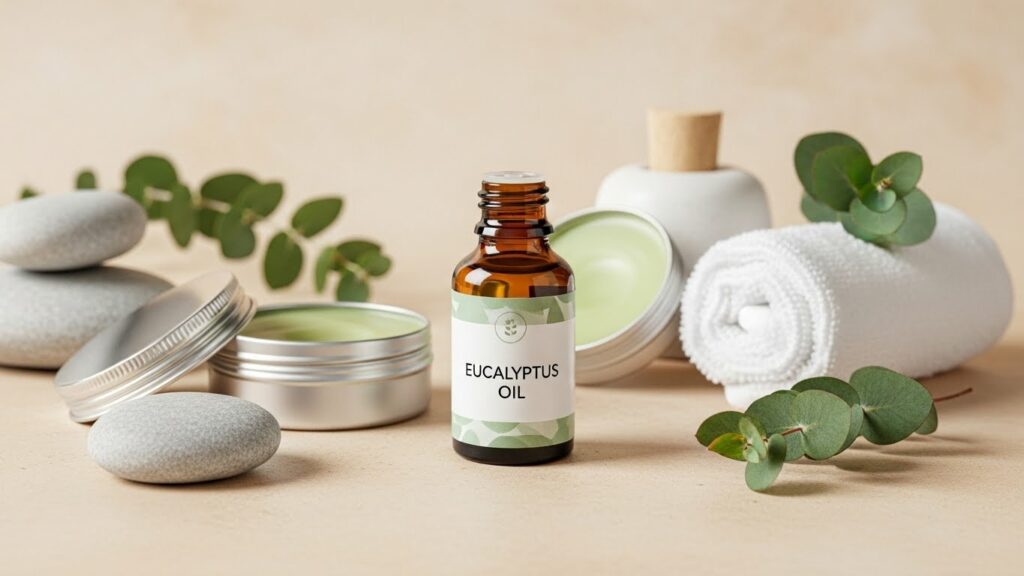
Eucalyptus essential oil is typically used in targeted skincare applications, not daily facial care:
-
Used in muscle rubs and balms
-
Added to foot care and deodorizing products
-
Helps refresh tired skin
-
Often blended at low dilution rates
Because eucalyptus can be stimulating, it should always be properly diluted before skin use.
Eucalyptus essential oil should always be diluted in a carrier oil such as jojoba oil or fractionated coconut oil before skin use.
👉 See Essential Oil Dilution Chart for safe topical guidelines.
Eucalyptus Essential Oil for Hair & Scalp Health
Eucalyptus essential oil may be used in scalp care products:
-
Helps refresh the scalp
-
Supports scalp cleanliness
-
Often included in shampoo bars and scalp treatments
-
Commonly blended with tea tree or rosemary
Lower dilution rates are recommended, especially for sensitive scalps.
🧼 Using Eucalyptus Essential Oil in Soap Making
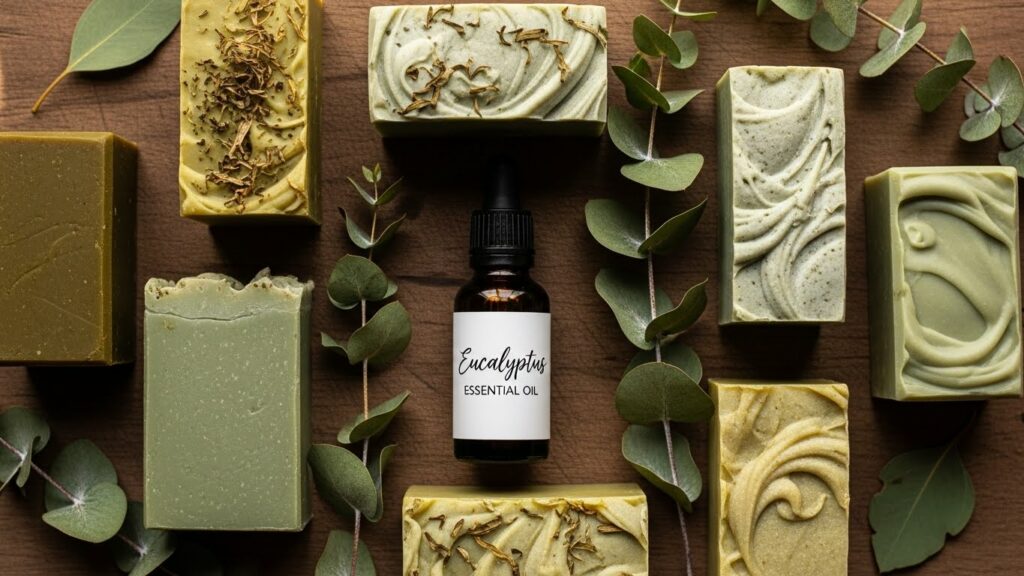
Eucalyptus essential oil is widely used in cold process soap making, particularly for cleansing, respiratory, and post-workout soaps. Its sharp, fresh scent performs well in soap and remains noticeable after cure.
Eucalyptus works especially well when blended with peppermint, rosemary, or tea tree to create invigorating soap blends.
Eucalyptus essential oil is especially well suited for:
-
Shower and steam soaps
-
Post-workout and muscle soaps
-
Gardener’s and mechanic’s soaps
-
Respiratory-themed soap blends
Soap makers appreciate eucalyptus for its low acceleration risk and clean behavior in soap batter.
Soap Maker Notes:
-
Scent strength: Strong
-
Acceleration risk: Low
-
Discoloration: None
-
Blends well with: Peppermint, Tea Tree, Rosemary, Lavender, Lemon
Accurate formulation requires a digital gram scale when using essential oils in soap making.
A soap making reference book or essential oil blending guide is helpful when creating respiratory or shower soaps.
👉 If you’re new to scenting soap, see How to Scent Soap Naturally and Essential Oils vs Fragrance Oils.
Respiratory & Wellness Uses
Eucalyptus essential oil is best known for respiratory support:
-
Used in steam inhalations
-
Added to shower steamers
-
Common in chest rub blends
-
Helps create a clear breathing environment
It is often blended with peppermint or lavender for balance.
Historical Uses of Eucalyptus Essential Oil
Eucalyptus has a long history of traditional use:
-
Used by Indigenous Australians for respiratory comfort
-
Adopted by early settlers for cleansing and healing
-
Widely used in hospitals and infirmaries in the past
-
Remains a cornerstone oil for seasonal wellness
Its association with cleanliness and breathing support has endured for generations.
How to Use Eucalyptus Essential Oil Safely
-
Always dilute before skin application
-
Perform a patch test before first use
-
Avoid use on children without professional guidance
-
Avoid contact with eyes and mucous membranes
-
Keep out of reach of children
👉 See Essential Oil Dilution Chart and How to Use Essential Oils Safely at Home.
Essential Oils That Blend Well With Eucalyptus
Eucalyptus blends especially well with:
-
Peppermint
-
Tea Tree
-
Rosemary
-
Lavender
-
Lemon
These blends are popular in soap making, aromatherapy, and wellness products.
Frequently Asked Questions About Eucalyptus Essential Oil
Is eucalyptus essential oil good for congestion?
Yes, it is widely used to support clear breathing.
Can eucalyptus essential oil be used in soap making?
Yes, it performs very well and holds scent in cold process soap.
Is eucalyptus safe for skin?
Yes, when properly diluted and used at appropriate rates.
Is eucalyptus safe for children?
Use caution and consult a professional before use on children.
Final Thoughts
Eucalyptus essential oil is a powerful, refreshing oil with a long history of supporting respiratory comfort and natural cleansing. Used correctly, it is an excellent addition to soap making, wellness routines, and seasonal care blends.
Important Note:
This information is for educational purposes only.
This post may contain affiliate links. If you make a purchase through these links, I may earn a small commission at no extra cost to you.
updated 2026
© 2025 – 2026, Tes. All rights reserved.