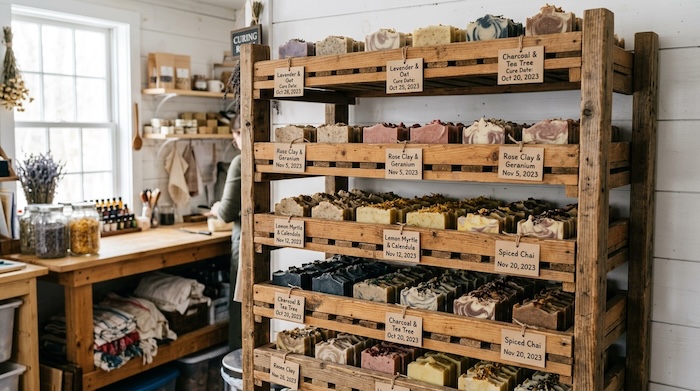
One of the most common questions new soap makers ask is:
“How long should handmade soap cure before I can use it?”
The short answer is that most cold process soap should cure for 4 to 6 weeks. However, the real answer depends on the recipe, water content, oils used, humidity, and the quality of soap you want to produce.
A well-cured bar lasts longer, lathers better, feels milder on the skin, and provides a much better overall experience.
Whether you’re making handmade soap for your family, selling at craft fairs, or running a soap business, understanding proper cure times is one of the easiest ways to improve the quality of your finished bars.
If you’re new to soap making, you may also want to read my guides on:
- Soap Making Recipes for Beginners
- What Is Trace in Soap Making?
- How to Use a Lye Calculator
- Best Oils for Soap Making
Table of Contents
- What Does Soap Curing Mean?
- Why Curing Matters
- Recommended Cure Times
- How to Tell When Soap Is Fully Cured
- Does Water Discount Affect Cure Time?
- Best Conditions for Curing Soap
- Should You Cure Soap Longer Than Six Weeks?
- Common Soap Curing Mistakes
- How Cure Time Affects Selling Handmade Soap
- Frequently Asked Questions
- Related Soap Making Articles
- Final Thoughts
What Does Soap Curing Mean?
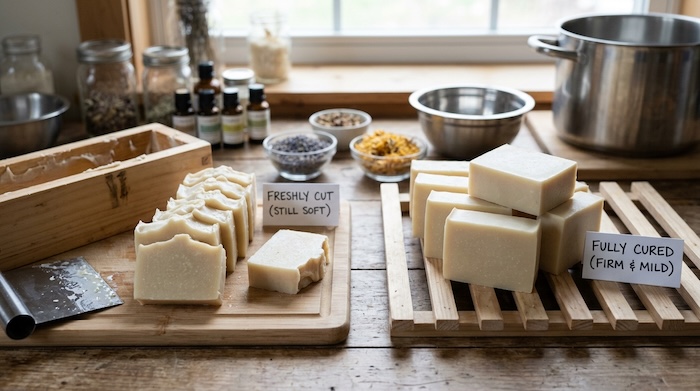
Soap curing is the process that occurs after the soap has been made and removed from the mold.
During curing:
- Excess water evaporates
- The soap becomes harder
- Lather improves
- The bar becomes milder
- The soap lasts longer in the shower
Think of curing as similar to aging cheese or drying lumber. Time improves the finished product.
Even though most cold process soap finishes saponifying within 24 to 72 hours, the soap continues to improve significantly during the curing period.
If you’re new to soap making, understanding what trace is in soap making can help you better understand the stages between mixing your ingredients and curing your finished bars.
Why Curing Matters
Many new soap makers get excited and try a bar after only a week or two.
While the soap may clean well, it often isn’t performing at its best.
A fully cured bar offers:
Harder Soap
As water evaporates, the bar becomes denser and harder.
Harder soap:
- Lasts longer
- Dissolves more slowly
- Holds its shape better
Better Lather
Many soap recipes produce noticeably richer lather after several weeks of curing.
You may find a soap that seemed disappointing at two weeks becomes fantastic after six weeks.
Milder Soap
Fresh soap can sometimes feel slightly harsh.
As curing continues, the soap becomes gentler and more pleasant on the skin.
This is especially important for facial soaps, baby soaps, and soaps designed for sensitive skin.
Longer Lasting Bars
A properly cured bar can last significantly longer than one used too early.
This is one reason handmade soap often receives better customer reviews when soap makers allow a full cure before selling.
Recommended Cure Times
Standard Cold Process Soap
Most recipes:
4 to 6 weeks
This is the industry standard and generally provides excellent results.
Castile Soap (100% Olive Oil)
Castile soap is famous for requiring patience.
Recommended cure:
6 months to 12 months
Many experienced soap makers believe Castile soap reaches its peak after a year of curing.
If you make Castile soap, you’ll definitely want to read my guide to Castile Soap Making.
High Olive Oil Recipes
Recipes containing:
- 50% or more olive oil
- Rice bran oil
- Avocado oil
often benefit from:
8 to 12 weeks of curing
The oils you choose can have a significant impact on curing time, hardness, and lather quality. If you’re still formulating recipes, my guide to the Best Oils for Soap Making explains how different oils affect the finished bar.
High Coconut Oil Recipes
Recipes with a large percentage of coconut oil tend to harden quickly and may perform well after:
4 weeks
However, additional cure time still improves the final product.
Salt Bars
Salt bars often improve dramatically with longer cures.
Recommended:
8 to 12 weeks minimum
Many soap makers prefer six months.
How to Tell When Soap Is Fully Cured
Time is the easiest guideline, but there are other clues.
A cured bar should:
- Feel hard and solid
- Weigh noticeably less than when freshly cut
- Produce stable lather
- Feel mild on the skin
- Have a consistent texture throughout
Many experienced soap makers keep one freshly cut bar and compare it periodically to cured bars.
The difference can be surprising.
Does Water Discount Affect Cure Time?
Yes.
A recipe made with less water generally cures faster because there is less moisture to evaporate.
However, water discounting doesn’t eliminate the need for curing.
Even heavily discounted recipes benefit from several weeks of aging.
If you’re experimenting with water discounts, my article on Soap Making Troubleshooting can help you avoid common problems.
Best Conditions for Curing Soap
Proper storage during curing is important.
Store soap:
- In a cool location
- Out of direct sunlight
- With good air circulation
- On curing racks or breathable shelves
Avoid:
- Plastic containers
- Airtight storage
- Damp basements
- High humidity areas
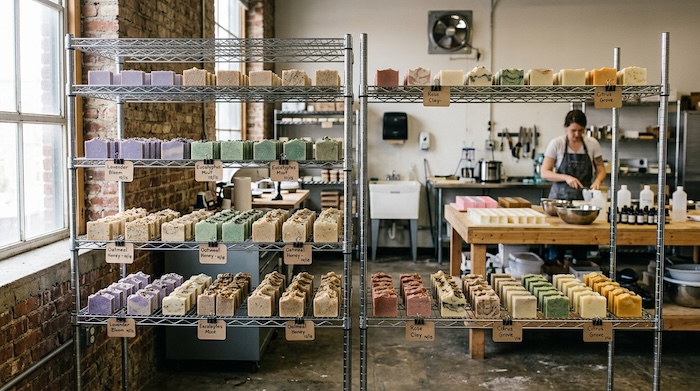
Wire shelving units work exceptionally well for curing large batches.
Many soap makers use wire shelving racks for curing multiple batches because they allow excellent airflow around every bar.
Should You Cure Soap Longer Than Six Weeks?
Absolutely.
Many soap makers find that:
- 8 weeks is better than 6
- 12 weeks is better than 8
- Several months can dramatically improve certain recipes
The longer cure often produces:
- Better lather
- Harder bars
- Improved longevity
Professional soap makers frequently maintain inventory months ahead so their products have plenty of time to mature before sale.
Common Soap Curing Mistakes
Using Soap Too Early
Probably the most common mistake.
Just because soap is safe doesn’t mean it’s at its best.
Poor Airflow
Soap needs air circulation.
Crowding bars together slows the curing process.
Storing in Plastic
Plastic traps moisture and can interfere with curing.
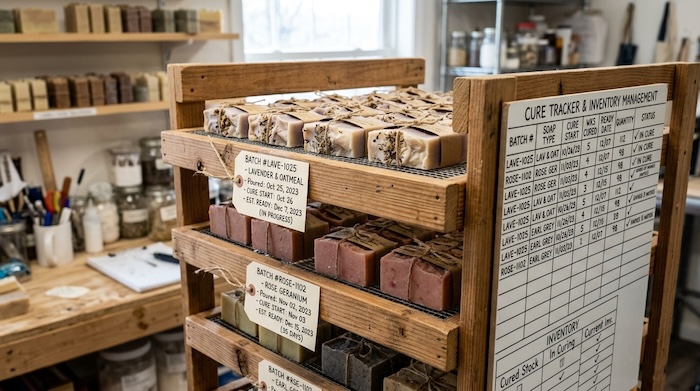
Not Labeling Batches
Always record:
- Date made
- Recipe used
- Fragrance
- Colorants
This makes it much easier to compare cured batches later.
This is where a Soap Making Batch Log & Cure Tracker becomes incredibly useful for tracking cure dates and recipe performance.
How Cure Time Affects Selling Handmade Soap
If you sell soap at craft fairs, farmers markets, or online, cure time is part of product quality.
Customers may not know why one soap feels better than another, but they notice.
Properly cured soap:
- Lasts longer
- Feels more professional
- Receives better reviews
- Creates repeat customers
Selling under-cured soap may save time, but it often hurts your reputation in the long run.
Frequently Asked Questions
Can I use soap after one week?
Yes, but it usually won’t be at its best. Most soap benefits greatly from at least four weeks of curing.
Is soap fully saponified after 24 hours?
Not usually. Most recipes continue saponifying for several days.
Does hot process soap need to cure?
Hot process soap is technically usable sooner, but a 2 to 4 week cure still improves hardness and longevity.
Why does my soap feel lighter after curing?
Water evaporates during curing, reducing the weight of the bar.
Can soap cure too long?
Not under normal conditions. Many soaps continue improving for months or even years when stored properly.
Does fragrance oil affect curing time?
Fragrance oils generally do not significantly change cure time, although some fragrances can accelerate trace or affect the hardness of fresh soap. Regardless of fragrance used, most cold process soaps still benefit from a full 4 to 6 week cure.
Related Soap Making Articles
If you’d like to continue learning about cold process soap making, you may also enjoy:
- Beginner’s Guide to Natural Cold Process Soap Making
- What Is Trace in Soap Making?
- How to Use a Lye Calculator
- Best Oils for Soap Making
- Soap Making Troubleshooting Guide
- Castile Soap Making Guide
- Essential Oil Safety for Soap Makers
Final Thoughts
If there’s one lesson every soap maker learns eventually, it’s that patience pays off.
Most cold process soap should cure for 4 to 6 weeks, but many recipes continue improving well beyond that point. Giving your soap adequate time to mature results in a harder, longer-lasting, milder bar that performs better in every way.
The difference between a two-week-old bar and a properly cured six-week-old bar is often remarkable. When in doubt, give your soap more time. Your skin—and your customers—will thank you.
Disclosure:
The information provided on this website is for educational purposes only and should not be considered professional advice. Always practice proper safety when making soap or skincare products.
This post may contain affiliate links. As an Amazon Associate, I earn from qualifying purchases at no additional cost to you.
© 2026, admin. All rights reserved.
I am reading this on pintreas and am glad I did. I have been looking and looking for how to store my soap just for my family. I just want to make small batches . Pleas reply. Thank you Gail Reese
Thanks for your comment. For storing soap, make sure it is kept in a cool dark place. Not where it will pick up moisture. I like to keep mine in the linen closet.