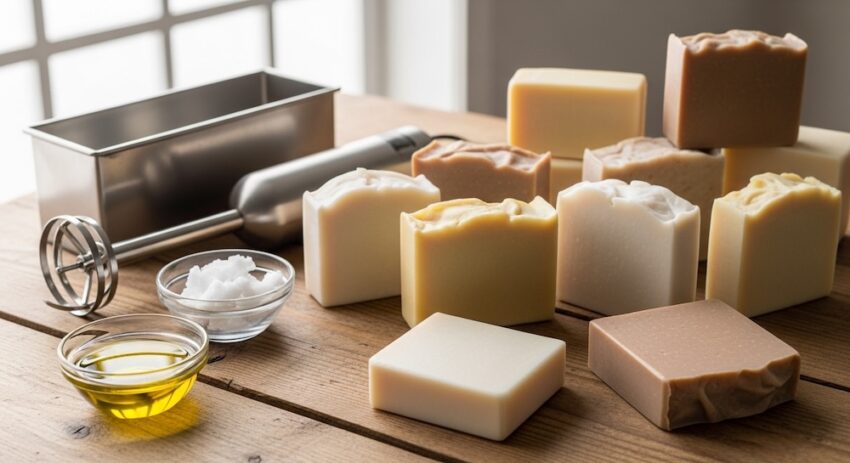
If you’re looking for reliable soap-making recipes — from beginner cold process formulas to specialty bars — you’re in the right place.
Over the years, I’ve tested and refined dozens of recipes. Some were too soft. Some cracked. Some didn’t last in the shower. Eventually, I narrowed everything down to dependable formulas that create hard, long-lasting bars with beautiful lather.
This guide brings everything together in one place — from basic cold process soap recipes to natural ingredients, specialty bars, and advanced techniques.
Why Make Your Own Soap?
Many commercial “soaps” are actually synthetic detergent bars. When you make your own soap, you control:
-
The ingredients
-
The fragrance strength
-
The superfat level
-
The additives
-
The sustainability factor
Handmade soap naturally retains glycerin, which helps moisturize skin — something often removed from commercial bars.
For many of us, soap making becomes more than a hobby. It becomes a creative outlet, a healthier alternative, and sometimes even a small business.
Table of Contents
- Why Make Your Own Soap?
- What Are Soap Making Recipes?
- Understanding Soap Formulation and Fatty Acids
- Cold Process vs Melt and Pour Soap Making
- Beginner Soap Making Recipes to Start With
- Common Beginner Soap Making Mistakes
- Natural Ingredients to Elevate Your Soap Making Recipes
- Specialty Soap Recipes for Personal Preferences
- Advanced Soap Making Techniques
- Troubleshooting Common Soap Making Problems
- Curing, Packaging, and Storing Handmade Soap
- Frequently Asked Questions About Soap Making Recipes
- Final Thoughts on Soap Making Recipes
What Are Soap Making Recipes?
Soap-making recipes are carefully balanced formulas of oils, lye (sodium hydroxide), and water. When combined properly, these ingredients go through a chemical reaction called saponification, turning oils into soap.
The balance of fatty acids determines whether your soap becomes:
-
Hard or soft
-
Creamy or bubbly
-
Mild or highly cleansing
If you’re new, start with my dependable Basic Cold Process Soap Recipes Guide, where I share the 5 core recipes I personally use most often.
Understanding Soap Formulation and Fatty Acids
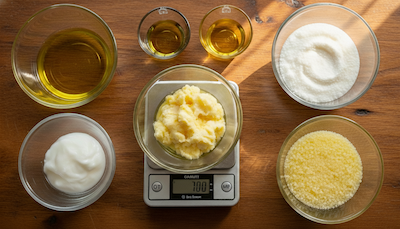
Every soap-making recipe is built around fatty acid profiles. Different oils contribute different properties to your finished bar.
For example:
-
Lauric & Myristic acids (from coconut oil) create bubbles and cleansing power.
-
Oleic acid (from olive oil) provides conditioning and mildness.
-
Palmitic & Stearic acids (from palm oil and butters) add hardness and longevity.
Balancing these fatty acids is what separates a beginner formula from a professional-quality bar.
That’s why I recommend beginners start with proven formulas instead of randomly mixing oils.
Before changing any recipe, always run it through a soap calculator to confirm safe lye amounts and superfat levels.
If you’re new to recipe formulation, my guide on How to Use a Lye Calculator for Soap Making explains exactly how to calculate safe lye amounts and adjust recipes correctly.
Cold Process vs Melt and Pour Soap Making
There are two primary methods beginners explore when learning soap-making recipes.
Cold Process Soap Recipes
Cold process soap making involves mixing oils with a lye solution. It gives you complete control over:
-
Oil selection
-
Additives
-
Colors
-
Swirls
-
Essential oil blends
If you’re ready to learn the fundamentals, start with my Step-by-Step Cold Process Soap Making Guide.
Before working with lye, please review my detailed Lye Safety Guide for Soap Making.
A quality digital scale, safety goggles, and stainless steel mixing bowls make soap-making safer and far more accurate.
And if you’re unsure about tools, here’s my complete Soap Making Equipment Guide so you can set up your workspace properly.
Some of the most useful tools include silicone loaf molds, immersion blenders, and soap cutters, especially if you plan to make soap regularly.
Melt and Pour Soap Recipes
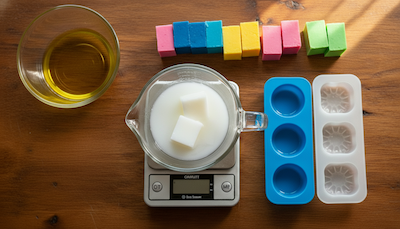
Melt and pour soap skips the lye process because the base has already completed saponification.
It’s perfect if you:
-
Want quick results
-
Are crafting with children
-
Prefer decorative projects
-
Don’t want to handle lye
You can learn more in my full guide to Melt and Pour Soap Bases and Techniques.
Beginner Soap Making Recipes to Start With
When you’re just beginning, simple formulas are best.
Traditional Castile Soap Recipe (100% Olive Oil)
Castile soap is made with olive oil only. It’s extremely mild and gentle but requires a longer cure time to harden properly.
Start here: Traditional Castile Soap Recipe (100% Olive Oil)
Gentle Baby Soap Recipe for Sensitive Skin
For delicate skin, I use a high-olive oil formula enriched with calendula and almond oil.
You can find the full formula here: Gentle Baby Soap Recipe for Sensitive Skin
If you’re creating a full baby skincare set, this bar pairs beautifully with my homemade Baby Lotion Recipe and natural Baby Powder Recipe.
Common Beginner Soap Making Mistakes
Every soap maker makes mistakes in the beginning — I certainly did.
Here are the most common ones:
-
Not weighing oils accurately
-
Measuring by volume instead of using a digital scale
-
Improper lye safety practices
-
Over-blending to thick trace
-
Not allowing full cure time
Most of these can be prevented by reviewing the proper equipment and safety steps before starting.
For a deeper explanation, see How Long Should Handmade Soap Cure?
Natural Ingredients to Elevate Your Soap Making Recipes
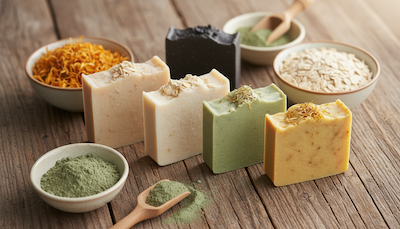
Once you master the basics, natural additives can enhance both appearance and performance.
Popular Soap Oils and Butters
-
Olive oil – conditioning and gentle
-
Coconut oil – cleansing and bubbly
-
Palm oil – hardness and stability
-
Shea butter – creamy lather
-
Cocoa butter – firmness and luxury
You can learn more about using Shea Butter in Cold Process Soap Recipes in my detailed ingredient guide.
Herbs, Clays, and Natural Additives
Natural additions bring character and benefits to your bars:
-
Calendula petals
-
Activated charcoal
-
French green clay
-
Oatmeal
-
Used coffee grounds
When adding fragrance, always review my Essential Oils Safety Guide for Soap Making before blending.
Safe usage rates matter — especially for products applied to the skin.
Specialty Soap Recipes for Personal Preferences
Once you’re comfortable with base recipes, you can branch out into specialty formulations.
Shampoo Bars
Plastic-free and eco-friendly, shampoo bars are increasingly popular. They require careful oil balancing for hair and scalp health.
Shaving Soap
Shaving soaps are formulated for dense, stable lather and glide.
Vegan and Palm-Free Soap Recipes
For those focused on sustainability and ethical sourcing, palm-free or vegan recipes are excellent alternatives.
These advanced formulations all build upon the fundamentals found in my Basic Cold Process Soap Recipes.
Advanced Soap Making Techniques

Once you’ve mastered trace and cure times, you can experiment with advanced design techniques:
-
Swirling methods
-
Layered designs
-
Soap embeds
-
Botanical decorations
-
Controlling gel phase
Understanding gel phase helps improve color vibrancy and texture consistency.
Investing in quality molds and professional cutters can significantly improve results — especially if you plan to sell your soap.
Advanced designs are much easier with soap swirl tools, mica colorants, and multi-bar cutters.
Troubleshooting Common Soap Making Problems
I cover many of these issues in greater detail in Soap Making Problems and Solutions.
Even reliable soap-making recipes can behave differently depending on temperature, humidity, or ingredient substitutions.
Soap Is Too Soft
-
Too much liquid oil
-
High humidity
-
Insufficient cure time
Soap Is Crumbly
-
Too much lye
-
Low water content
Orange Spots (DOS)
-
Oils becoming rancid
-
Excess canola oil
-
Improper storage
Whenever you modify a recipe, re-run it through a soap calculator to ensure safe proportions.
Curing, Packaging, and Storing Handmade Soap
No matter which soap-making recipe you choose, proper curing is essential.
Cold process soap must cure for 4–6 weeks in a well-ventilated space. This allows water to evaporate and the bar to harden fully.
For a deeper explanation, see How Long Should Handmade Soap Cure?
After curing:
-
Store in a cool, dry place
-
Use breathable packaging
-
Label ingredients clearly
If selling, consistent curing and professional packaging build customer trust. Soap cigar bands, kraft boxes, and ingredient label printers can help create a more professional finished product.
Frequently Asked Questions About Soap Making Recipes
How long does cold process soap need to cure?
Most recipes require 4–6 weeks. High olive oil soaps like Castile may need longer.
Can you make soap without lye?
All true soap requires lye. Melt and pour bases have already completed the saponification process.
What oils are best for beginner soap-making recipes?
Olive oil, coconut oil, and palm oil create balanced, beginner-friendly bars.
Why did my soap turn out soft?
Soft soap can result from high liquid oil content, humidity, incorrect lye calculation, or insufficient cure time.
Can I substitute oils in a soap recipe?
Yes, but every oil has different fatty acid properties. Always run substitutions through a soap calculator before making changes.
What is the best beginner soap recipe?
A simple recipe containing olive oil, coconut oil, and palm oil is often the easiest starting point because it provides a good balance of hardness, cleansing, and conditioning.
Do handmade soaps last longer than commercial soap?
Properly cured handmade soap can last a long time, especially when formulated with hard oils and allowed to dry between uses.
Final Thoughts on Soap Making Recipes
Soap making is both science and art.
Once you understand balanced formulations, proper safety, and correct curing, you can consistently create beautiful, long-lasting bars.
If you’re just starting, begin with my Basic Cold Process Soap Recipes Guide, follow safe practices, and build from there.
Master the fundamentals first — creativity naturally follows.
Important Note:
This information is for educational purposes only.
This post may contain affiliate links. If you make a purchase through these links, I may earn a small commission at no extra cost to you.
Updated Feb 2026
© 2024 – 2026, Tes. All rights reserved.