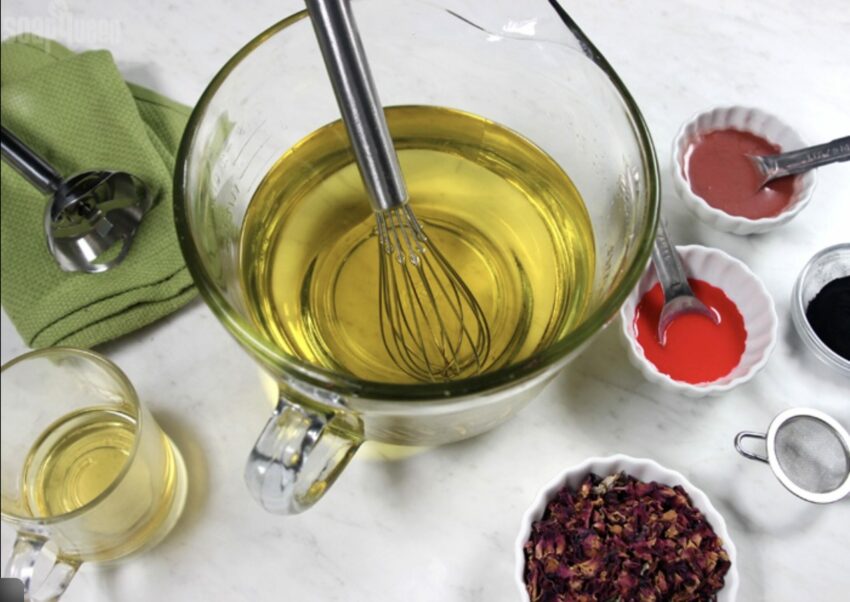
A beginner-friendly guide to accurate, confident cold process soap making
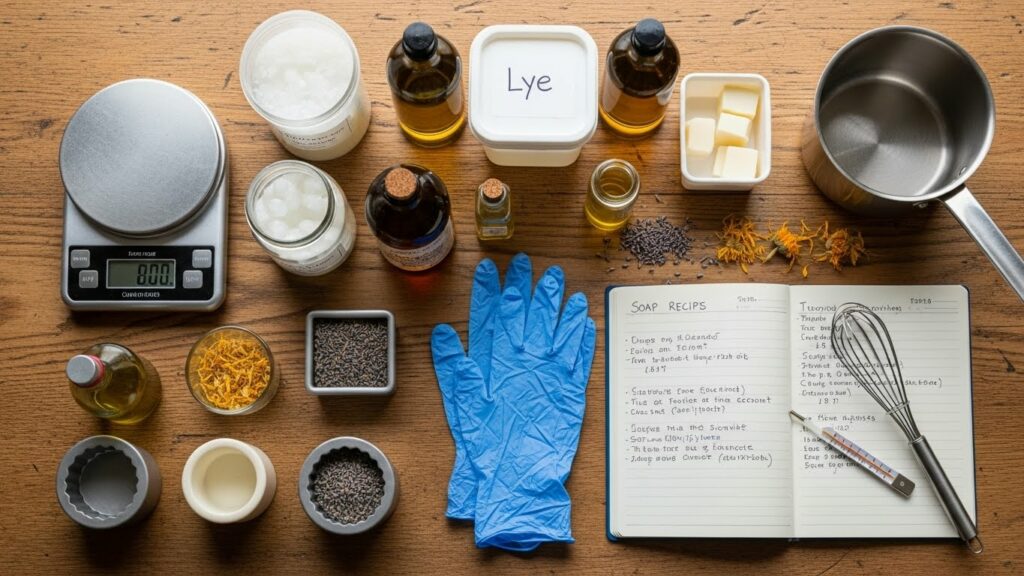
Using a soap lye calculator is one of the most important safety steps in soap making. Whether you’re brand new or refining your recipes, a lye calculator ensures the correct amount of sodium hydroxide (NaOH) is used so your soap is safe, balanced, and skin-friendly.
This guide walks you through exactly how to use a soap lye calculator safely, explains why each step matters, and highlights common mistakes that can lead to lye-heavy or overly soft soap.
If you’re new to handling sodium hydroxide, read: What to Do If Lye Touches Skin.
Why a Soap Lye Calculator Is Essential
Soap making is chemistry. Oils and butters are made of fatty acids, and each one requires a specific amount of lye to turn into soap. A lye calculator:
- Prevents lye-heavy (caustic) soap
- Ensures proper hardness, lather, and longevity
- Allows for custom recipes
- Keeps you and your customers safe
⚠️ Never guess lye amounts. Never use volume measurements.
What You Need Before Using a Lye Calculator
Before opening a calculator, gather this information:
- Exact oils and butters you’re using
- Weight of each oil (not percentages yet)
- Type of lye: Sodium Hydroxide (NaOH) for bar soap
- Desired super fat percentage
- Preferred water amount or lye concentration
🧠 Tip:Oils should be weighed and blended in stainless steel bowls for soap making, which are durable, non-reactive, and easy to clean.
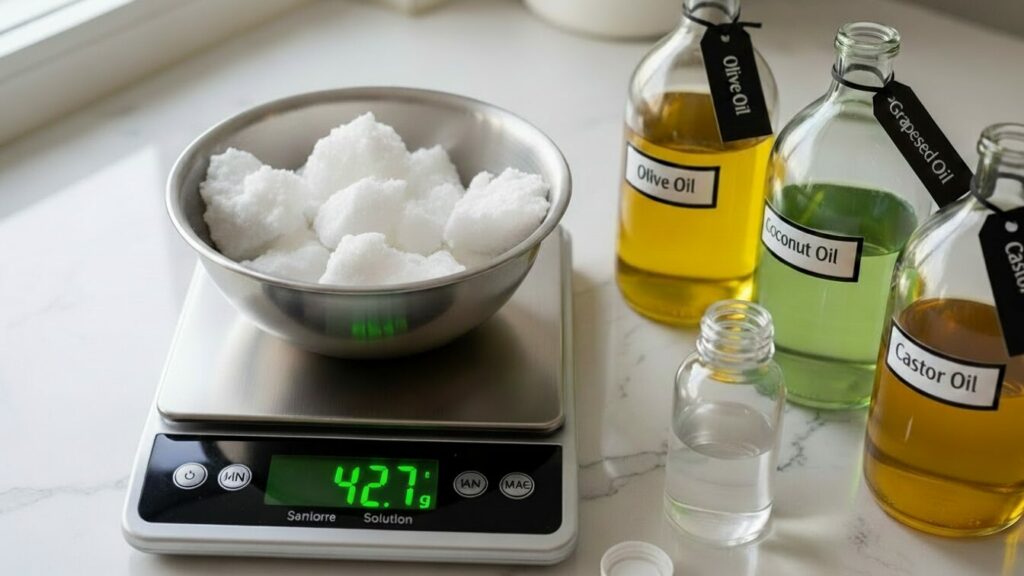
Always weigh oils using a digital scale accurate to grams for soap making, as even small measurement errors can result in lye-heavy or unstable soap.
Step-by-Step: How to Use a Soap Lye Calculator Safely
1. Enter Oils by Weight (Not Cups)
Input each oil by weight, not volume. Oils vary in density, so cups and tablespoons are unsafe for soap calculations.
Example:
- Olive oil – 500 g
- Coconut oil – 300 g
- Castor oil – 100 g
2. Confirm the Correct Lye Type
Choose NaOH (Sodium Hydroxide) for cold process and hot process bar soap.
🚫 Do not select potassium hydroxide (KOH) unless you are making liquid soap.
3. Set a Safe Super fat Level
Super fat is the percentage of oils left unsaponified for skin conditioning.
Recommended superfat ranges:
- Beginner recipes: 5%
- Dry or sensitive skin: 6–8%
- High coconut oil recipes: 8–10%
⚠️ Higher super fat ≠ safer if your lye amount is wrong.
4. Choose a Sensible Water Amount
Many calculators let you choose:
- Water as % of oils (common: 30–38%)
- Lye concentration (common: 30–33%)
Beginner-friendly option:
👉 33% lye concentration (about 2:1 water to lye)
Avoid extreme water discounts until you understand trace speed and acceleration.
5. Double-Check Every Number
Before you make soap:
- Recheck oil weights
- Confirm NaOH is selected
- Verify superfat percentage
- Confirm units (grams vs ounces)
🛑 One wrong checkbox can ruin an entire batch.
Safety Practices When Using Lye Calculators
Using the calculator correctly is only part of staying safe. Always wear chemical safety goggles for soap making when working with lye to protect your eyes from splashes and fumes. Proper hand protection is critical, so use chemical-resistant nitrile gloves for lye handling whenever mixing or pouring sodium hydroxide.
Always:
- Wear gloves and eye protection
- Mix lye into water (never water into lye)
- Work in a well-ventilated area
- Label printed recipes clearly
Never:
- Use glass or thin plastic (choose heat/chemical-rated containers)
- Substitute oils without recalculating
- Trust someone else’s recipe without verifying
- Round lye amounts up “to be safe”
For full lye handling and PPE guidance, see my Lye Safety guide.
Common Lye Calculator Mistakes to Avoid
❌ Using volume measurements
❌ Forgetting to recalculate after oil changes
❌ Selecting the wrong lye type
❌ Ignoring superfat settings
❌ Copying Pinterest recipes without verification
💡 Pro Tip: Save or print your calculator results and keep them with your batch notes.
Pinterest recipes should always be verified using your own calculator before making a full batch.
Beginner Tip: Test New Recipes First
When trying a new oil blend:
- Make a small test batch
- Allow full cure (4–6 weeks)
- Test for hardness, lather, and skin feel
This prevents wasting oils and helps you fine-tune future recipes.
After curing, you can also check your finished bars using these Soap pH Testing method
Pro Tip: Save or Print Your Calculator Results
Keeping a soap making batch log helps you track oil weights, lye amounts, superfat levels, and cure results so successful recipes can be repeated safely.
A gentle recipe many beginners love is my Oatmeal Honey Soap Recipe, which walks through safety, cure time, and both cold process and melt and pour options.
FAQ: Soap Lye Calculator Safety
Q: Can I reuse a lye calculation if I change oils?
No. Any oil change requires a full recalculation.
Q: Is higher super fat safer?
Not if the lye amount is incorrect. Accuracy matters more than superfat.
Q: Can I reduce lye to make soap gentler?
No. This can result in oily, unstable soap. Use superfat properly instead.
Q: Should I trust online soap recipes?
Only after running them through your own lye calculator.
Q: What soap lye calculator should I use?
A: Use a reputable, widely-used soap calculator and double-check the lye type (NaOH vs KOH), units, and superfat settings before saving results.
Final Thoughts
A soap lye calculator is your most important safety tool in soap making. When used correctly, it allows you to create beautiful, gentle, and reliable bars with confidence.
Take your time, double-check your numbers, and never rush the calculation step — your soap (and your skin) depends on it
Important Note:
This information is for educational purposes only.
This post may contain affiliate links. If you make a purchase through these links, I may earn a small commission at no extra cost to you.
Updated Jan 2026
© 2026, Tes. All rights reserved.