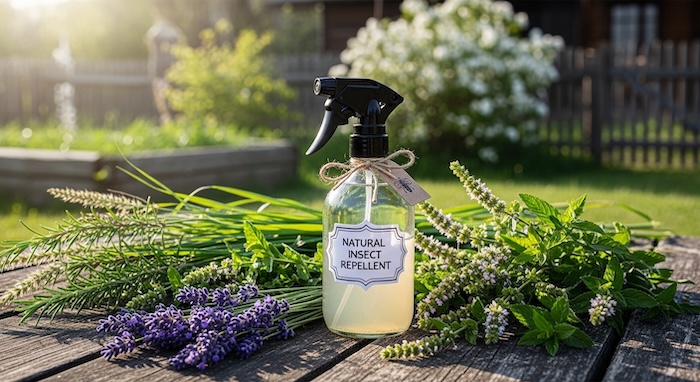
Spending time outside is one of the best parts of spring and summer—especially when you live a more off-grid or homesteading lifestyle. But mosquitoes, blackflies, and no-see-ums can make even the nicest evening miserable.
Like many people, I used to rely on store-bought sprays. But most of them contain DEET, which—while effective—isn’t something I love putting on my skin regularly, especially around kids.
Over the years, I’ve tested different natural options, and I finally landed on a simple DIY insect repellent that actually works when used properly.
🌿 Why Choose a Natural Insect Repellent?
Natural repellents don’t kill insects like chemical sprays—they repel them using scent. Certain essential oils confuse and deter biting insects, making you far less attractive to them. If you’re new to working with essential oils, be sure to read my Essential Oils Safety Guide before making any homemade skincare products.
Benefits of going natural:
- No harsh chemicals like DEET
- Safer for frequent use (when properly diluted)
- Pleasant scent instead of chemical odor
- Easy to make at home
- Customizable based on what you have
👉 If you’re already making your own products, you might also like:
Beginner Cold Process Soap Making Guide
🧴 DIY Natural Insect Repellent Recipe
Ingredients
- 1/2 cup distilled water
- 1/2 cup witch hazel
- 30–50 drops essential oils
- 1 tsp vegetable glycerin
Many of these same essential oils are also commonly used in handmade soap recipes. If you’re interested in soap making, see my guide to the Best Essential Oils for Soap Making.
Instructions
- Add witch hazel and distilled water to a glass spray bottle
- Add essential oils
- Add glycerin if using
- Shake well before each use
- Spray on skin and clothing (avoid eyes and mouth)
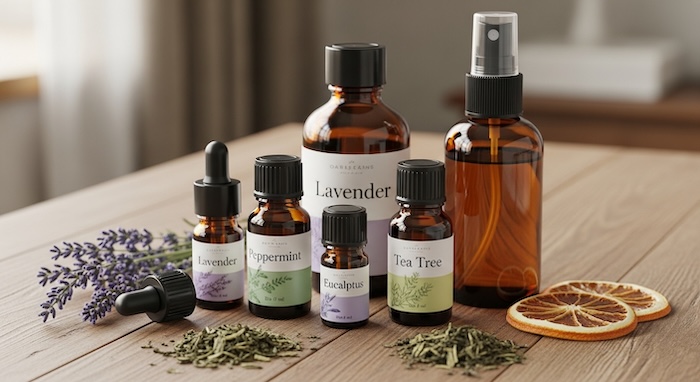
🌼 Best Essential Oil Blends for Bug Repellent
🦟 Mosquito Repellent Blend
- 10 drops citronella
- 10 drops lemon eucalyptus
- 10 drops lavender
- 5 drops peppermint
🌲 Deep Woods / Off-Grid Blend
Perfect for cabins, forests, and heavy bug areas:
- 15 drops citronella
- 10 drops cedarwood
- 10 drops eucalyptus
- 5 drops tea tree
🌸 Kid-Friendly (Milder) Blend
- 10 drops lavender
- 10 drops geranium
- 5 drops cedarwood
⚠️ Always dilute more for children and test first.
👉 Learn more about safe usage here:
Essential Oils Safety Guide
Recommended Supplies for Making Natural Bug Spray
To make this recipe, you’ll need a few basic supplies:
- Glass Spray Bottles
- Witch Hazel
- Vegetable Glycerin
- Citronella Essential Oil
- Lemon Eucalyptus Essential Oil
- Lavender Essential Oil
- Cedarwood Essential Oil
I keep several amber glass spray bottles on hand because essential oils can break down some plastics over time. If you’re making homemade bug spray regularly, a set of reusable glass spray bottles is worth having.
⚠️ Important Safety Tips
Natural doesn’t always mean risk-free—especially with essential oils.
- Always dilute properly
- Avoid eyes, mouth, and broken skin
- Do a patch test before full use
- Reapply every 1–2 hours
- Avoid certain oils for babies and pets
🌿 Essential Oil Safety Disclaimer
Essential oils are highly concentrated and should always be used with care. Some oils may cause skin irritation or allergic reactions, especially in children, pregnant women, or individuals with sensitive skin.
Always:
- Dilute essential oils properly
- Perform a patch test before full use
- Research individual oils before using
- Consult a qualified professional if you have concerns
This recipe is not recommended for infants. Use caution when applying to children and avoid use on pets unless you are certain the oils are safe for them.

🧪 Does Natural Bug Spray Actually Work?
Yes—but with realistic expectations.
Natural repellents:
✔ Work well for moderate exposure
✔ Are great for everyday outdoor use
✔ Need more frequent reapplication
They may not last as long as chemical repellents, but for gardening, homesteading, and evenings outside—they work surprisingly well.
🌿 Tips to Make Your Repellent Work Better
- Apply before going outside
- Reapply often (especially if sweating)
- Spray clothing as well as skin
- Avoid heavily scented lotions that attract bugs
👉If mosquitoes are a constant problem around your yard, garden, or homestead, you may also find my guide on reducing insect populations around your property helpful: Best Mosquito & Bug Control Solutions
Additional Bug Control Methods That Work
While homemade insect repellent works well for everyday gardening and outdoor chores, sometimes mosquito populations are simply overwhelming.
Around our off-grid property, I combine homemade bug spray with a few other proven methods:
- Eliminate standing water whenever possible
- Use Mosquito Dunks in rain barrels and water collection areas
- Wear bug-repellent clothing when hiking or working in heavy brush
- Use a Thermacell Mosquito Repeller around decks, campsites, and outdoor seating areas
When mosquitoes are especially bad, a Thermacell can create a much larger bug-free zone than sprays alone.
Comparing Common Mosquito Protection Options
| Method | Natural | Reapplication Needed | Best For |
|---|---|---|---|
| Homemade Bug Spray | Yes | Every 1–2 Hours | Gardening |
| Thermacell Repeller | Yes (No Skin Application) | Minimal | Patios & Campsites |
| Bug-Repellent Clothing | Yes | Long Lasting | Hiking |
| DEET Repellent | No | Less Frequent | Heavy Mosquito Areas |
🏷️ Personal Use Only
This DIY insect repellent is shared for personal, at-home use only. Regulations surrounding insect repellents vary, and in Canada, products intended for sale must meet strict requirements set by Health Canada.
Always check your local regulations before producing or selling any topical products.
Other Natural Products You Can Make at Home
If you enjoy making your own natural products, you may also enjoy:
- Beginner Cold Process Soap Making Guide
- Best Essential Oils for Soap Making
- Essential Oils Safety Guide
- DIY Baby Lotion Recipe
- Homemade Natural Baby Powder
- Soap Making Supplies for Beginners
🧾 FAQ Section
What essential oils repel mosquitoes naturally?
Citronella, lemon eucalyptus, lavender, peppermint, cedarwood, geranium, and tea tree oil are among the most commonly used essential oils for homemade mosquito repellents.
Can I use homemade bug spray on clothing?
Yes. Many people spray homemade insect repellent on clothing as well as exposed skin. Always test a small area first to ensure it does not stain delicate fabrics.
Which essential oil is best for blackflies?
Many people find citronella, cedarwood, eucalyptus, and peppermint helpful for reducing blackfly bites, though frequent reapplication is usually necessary.
⚠️ Disclaimer
This post is for informational purposes only and is based on personal experience and research. This DIY natural insect repellent is not registered or approved by Health Canada or any regulatory agency. It is not intended to diagnose, treat, cure, or prevent any disease.
Effectiveness may vary depending on environment, insect type, and individual sensitivity. Always use caution when applying any product to your skin.
🌱 Final Thoughts
Making your own natural insect repellent is one of those simple, practical skills that fits perfectly into a more self-sufficient lifestyle.
It’s easy, affordable, and gives you full control over what goes on your skin.
And once you find a blend that works for your area—you may never go back to store-bought sprays again.
© 2026, Tes. All rights reserved.
Really enjoyed reading your DIY natural insect repellent recipe. I like how you explain the importance of using plant-based ingredients and how simple essential oils can be combined to create something effective without relying on harsh chemicals. The way you break down the recipe makes it feel very approachable, even for someone trying this for the first time. I also appreciate the focus on practical use for outdoor protection, especially during summer when insects are most active. Do you think this type of spray works better when applied to skin directly, or do you find it more effective when used on clothing and outdoor areas as well?
Hi thanks for your comment. I am usually hiking or working in the garden when I use the spray so I spray it on my clothing, hat etc. My Aunt has a boat and when they are sleeping on it, she sprays it on a cloth and puts it in the window and says it works very well to stop the mosquito’s
I’ve actually tried making my own bug repellent before, mainly for ants, using vinegar and ground black pepper. Unfortunately, it wasn’t very effective, lol. Reading through your recipe makes me curious if this blend with essential oils will work better. I really like the idea of customizing the scent while keeping things natural and safe for everyday use.
I’ll definitely give this a try! Have you found that certain blends work better against ants specifically, or are they mostly geared toward mosquitoes and flies?
I’ve found essential oil blends tend to work much better for mosquitoes and flies than for ants. Ants can be pretty stubborn once they’ve decided where they want to go. Peppermint oil, tea tree, lemon eucalyptus, and even cinnamon oil seem to help discourage them around entry points, but I usually find the biggest difference comes from sealing cracks and wiping down scent trails first. I also noticed homemade sprays need to be reapplied more often than store-bought repellents, especially outdoors.