Many parents wonder whether Vaseline is safe for babies — or if a natural, petroleum-free option is a better choice for delicate skin.
Vaseline® Healing Jelly has been used for decades to help protect dry skin, soothe diaper areas, and prevent moisture loss. Because it’s made from petroleum, however, it often raises questions about safety, purity, and whether plant-based alternatives are a better option for baby skincare.
Let’s look at the facts — and then explore gentle, natural alternatives you can make yourself.
What Is Vaseline Made Of?
Vaseline Healing Jelly contains 100% white petrolatum (USP grade).
Petrolatum is an occlusive ingredient, meaning it forms a protective barrier on the skin that helps lock in moisture. It does not absorb into the skin — instead, it sits on the surface to reduce water loss.
This is why petrolatum is commonly used for:
-
Diaper area protection
-
Dry or chapped skin
-
Minor skin irritation
-
Lip care
Although petrolatum is derived from petroleum, cosmetic-grade petrolatum is highly refined and very different from raw petroleum products.
Is Petrolatum Safe for Babies?
What the Research and Regulations Say
In Canada and the United States, petrolatum used in cosmetics and over-the-counter skin products must meet strict refinement and purity standards. Only highly refined grades are permitted for personal care use.
Health authorities consider cosmetic-grade petrolatum non-toxic and safe when used as intended, including in baby products.
Advocacy organizations such as the Environmental Working Group (EWG) classify petrolatum as a moderate concern, not because it is proven harmful, but because lower-grade forms may contain impurities if improperly refined. These concerns do not apply to USP-grade petrolatum used in regulated baby products.
Bottom Line
✔ Cosmetic-grade petrolatum is considered safe for baby skin
✔ It does not penetrate the skin or act systemically
✔ Safety depends on refinement quality, which is regulated in baby products
Why Some Parents Prefer Petroleum-Free Baby Products
If you prefer lightweight moisture instead of a protective jelly, you may also like this simple homemade natural baby lotion made with gentle, plant-based ingredients.
Even though petrolatum is considered safe, many families choose petroleum-free options for personal or environmental reasons.
Common reasons include:
-
Preference for plant-based ingredients
-
Desire for biodegradable products
-
Avoidance of fossil-fuel-derived ingredients
-
Interest in ingredients that provide skin-nourishing properties, not just moisture barriers
This has led to growing interest in natural baby jellies and balms made with oils and beeswax.
Homemade Petroleum-Free Baby Jelly Recipes
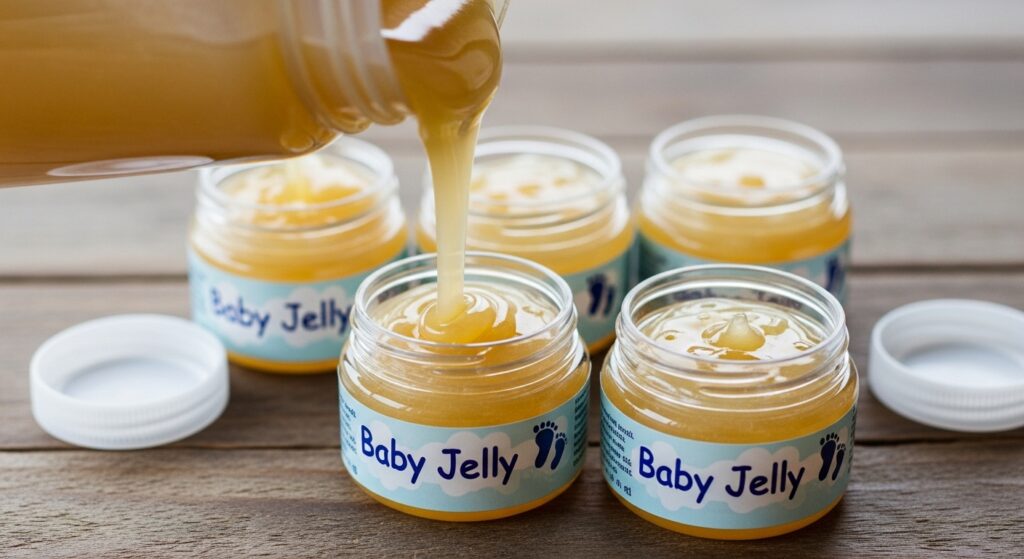
These recipes create a soft, protective jelly similar in texture to petroleum jelly, using simple, natural ingredients.
Natural Baby Jelly – Recipe #1 (Olive Oil Base)
Ingredients
- 2 oz olive oil
- ½ oz beeswax
- 10–12 drops vitamin E oil
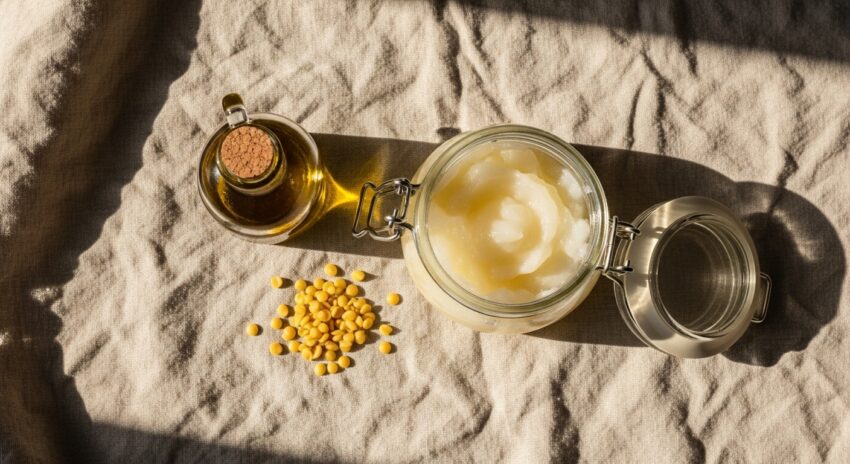
Cosmetic-grade beeswax pastilles are easy to measure and melt evenly, making them ideal for homemade baby skincare recipes.
Natural Baby Jelly – Recipe #2 (Castor Oil Base)
Ingredients
- 475 g castor oil
- 25 g beeswax
- 6 g vitamin E oil
Vitamin E oil is often added to homemade skincare recipes to help support freshness and extend shelf life.
Directions:
For most of my lotions and creams, I use a pot filled with water and place the ingredients in a glass Pyrex measuring cup set inside the pot for gentle heating.
- Place the Olive Oil or Castor Oil and Beeswax in a 4 cup pyrex measuring cup
- Place the measuring cup in the pot of water
- Heat until completely melted
- Allow the mixture to cool a bit before adding Vitamin E
- Stir well and then package into cosmetic jars

Estimated shelf life: 12–24 months when stored in a cool, dry place.
Small glass cosmetic jars with secure lids work well for storing homemade baby jelly and keeping batches fresh and organized.
Vaseline vs Natural Baby Jelly: A Simple Comparison
| Feature | Vaseline | Natural Baby Jelly |
|---|---|---|
| Petroleum-free | ❌ | ✔ |
| Creates moisture barrier | ✔ | ✔ |
| Skin-nourishing oils | ❌ | ✔ |
| Biodegradable | ❌ | ✔ |
| DIY option | ❌ | ✔ |
Frequently Asked Questions
Is Vaseline safe to use on newborns?
Yes. Cosmetic-grade petrolatum is commonly used in baby products and is considered safe when used as directed.
Does petrolatum clog pores?
Petrolatum is non-comedogenic, meaning it does not clog pores. It sits on the skin’s surface rather than absorbing into it.
Is petroleum jelly toxic?
Highly refined petrolatum used in cosmetics is considered non-toxic. Concerns typically relate to unrefined petroleum products, which are not used in regulated baby skincare.
Is natural baby jelly better than Vaseline?
Neither is inherently “better.” Vaseline provides an effective moisture barrier, while natural baby jelly offers plant-based oils that some parents prefer for ingredient transparency and environmental reasons.
Can I use essential oils in baby jelly?
Essential oils are generally not recommended for newborns. If used at all, they should be extremely diluted and reserved for older babies. This recipe intentionally avoids essential oils.
Final Thoughts
Vaseline Healing Jelly is considered safe for babies when made with cosmetic-grade petrolatum. However, if you prefer a petroleum-free option made from simple, plant-based ingredients, homemade baby jelly can be a gentle and effective alternative.
As with any baby skincare product, always patch test first and keep ingredient lists minimal.
Related Baby Care Recipes
For moisture control and comfort during diaper changes, this natural baby powder recipe is another gentle, talc-free option many parents choose.
-
Natural Baby Soap Recipe
-
Natural Baby Powder Recipe
-
All-Natural Baby Care Products
Important Note:
This information is for educational purposes only.
This post may contain affiliate links. If you make a purchase through these links, I may earn a small commission at no extra cost to you.
Updated Jan 2026
© 2020 – 2026, Tes. All rights reserved.
Hello there, thanks for bringing clarity ti this really controversial topic that I have heard a lot of people talk about in recent years and I feel really happy to finally have an answer to it and I’m happy about that. I have to say the issue if vasline being harmful to babies have been really serious and I’ll like to share this article to a few friends
Thanks for your comments Justin and feel free to share this article with your friends. Thanks for stopping by the site.
Although you have satisfactory answered my question about products derived from petroleum being good for our babies health, I still remain with a firm belief that they should be avoided. In my opinion, I will prefer to follow these recipes you have given us. And I’ll still buy Vaseline if I’m in a hurry (but without guilt this time).
I Ann, I have to agree with you I prefer to make my own as I did for my children, for the grandchildren as well.