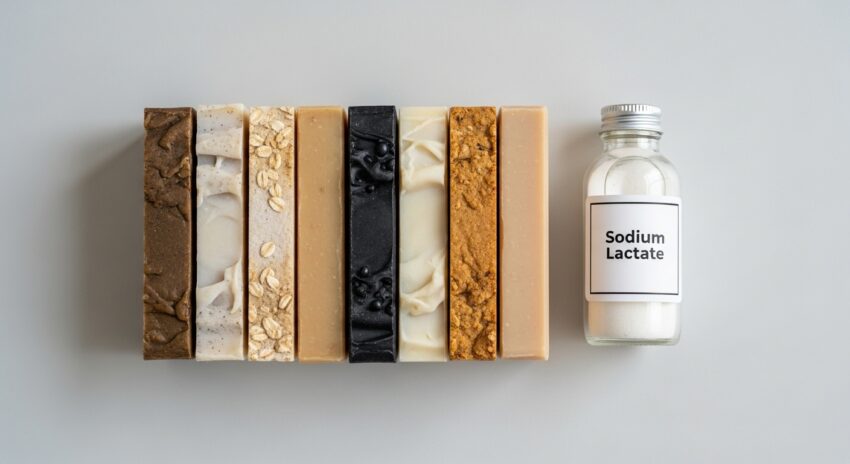
What Is Sodium Lactate?
Uses in Soap Making, Skincare, and Food Preservation
Sodium lactate is the sodium salt of lactic acid, typically produced through the fermentation of natural sugar sources such as corn or sugar beets. It appears as a clear liquid, though powdered forms are also available for industrial and food-related applications.
Because it is derived through fermentation, sodium lactate is often considered a naturally sourced ingredient. It is widely used across the food, cosmetic, and soap-making industries for its moisture-binding and stabilizing properties.
This guide explains what sodium lactate is, how it’s used in different applications, and whether you actually need it in your soap recipes.
📑 Table of Contents
Click a section below to jump directly to that topic.
- What Is Sodium Lactate?
- Sodium Lactate as a Food Preservative
- Sodium Lactate in the Cosmetic Industry
- Humectant Benefits for Skin
- pH Balancing Properties
- Skin Sensitivity & Safety Notes
- Sodium Lactate in Soap Making
- Sodium Lactate in Lotions & Creams
- Do You Need Sodium Lactate in Soap?
- Frequently Asked Questions About Sodium Lactate
- Final Thoughts on Sodium Lactate
What Is Sodium Lactate?
Sodium lactate is a water-soluble salt formed from lactic acid and sodium hydroxide. In cosmetic and soap-making applications, it is valued for its ability to bind moisture, improve texture, and stabilize formulations.
Although it undergoes processing, its fermentation-based origin places it in the category of naturally derived ingredients rather than synthetic additives.
Sodium Lactate as a Food Preservative
In the food industry, sodium lactate is commonly used as a preservative and pH regulator. It helps inhibit the growth of bacteria and fungi by lowering water activity and stabilizing acidity.
It is sometimes used as an alternative to preservatives such as sodium benzoate or potassium sorbate, particularly in processed meats and packaged foods where moisture control is important.
⚠️ Important: Food-grade sodium lactate is regulated and formulated differently than cosmetic or soap-making versions. Always use ingredients labeled for their intended purpose.
Sodium Lactate in the Cosmetic Industry
Sodium lactate is widely used in skincare and personal care products, including:
-
Lotions and creams
-
Shampoos and conditioners
-
Lip balms
-
Eye and contact lens solutions
In cosmetic formulations, sodium lactate primarily functions as a humectant and pH stabilizer.
Humectant Benefits for Skin
Sodium lactate is a natural component of the skin’s Natural Moisturizing Factor (NMF). It attracts and retains moisture, helping skin stay hydrated without the sticky feel associated with some humectants, such as glycerin.
This makes it especially useful in lightweight lotions and adult leave-on skincare products.
pH Balancing Properties
Sodium lactate helps stabilize and balance the pH of formulations, which is particularly important in leave-on skincare products where improper pH can cause irritation or reduce product effectiveness.
⚠️ It is not recommended for infants or very young children due to increased skin sensitivity and immature skin barriers.
Skin Sensitivity & Safety Notes
While sodium lactate is generally considered safe for cosmetic use, a few precautions are important:
-
It may increase sun sensitivity at higher concentrations
-
Overuse can cause irritation, especially on sensitive skin
-
Best used within established formulation guidelines
As with any cosmetic ingredient, moderation and proper formulation matter.
Sodium Lactate in Soap Making
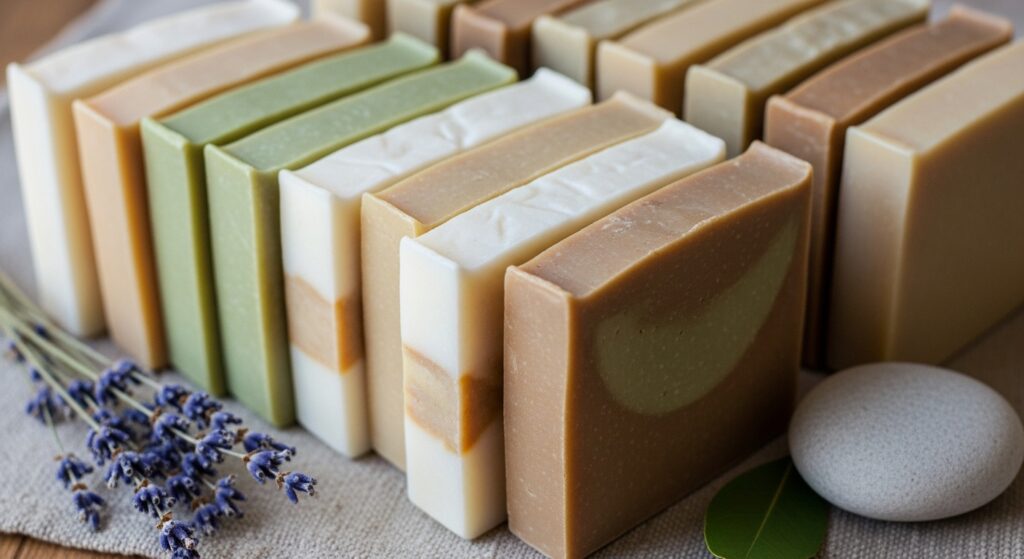
In handmade soap, sodium lactate is most commonly used in cold process soap making. Its role in soap is structural rather than cleansing or conditioning.
Many soap makers choose a cosmetic-grade sodium lactate specifically formulated for cold process soap making to ensure consistency and safety.
Benefits in Cold Process Soap
When used correctly, sodium lactate can:
-
Create a harder, longer-lasting bar
-
Help soap release from molds more easily
-
Reduce stickiness in high-olive or soft-oil recipes
It is especially helpful when working with silicone molds or recipes that contain a high percentage of soft oils.
How to Use Sodium Lactate in Soap
Sodium lactate should be added to the cooled lye solution, not directly to the oils.
Best practice:
-
Add after the lye solution cools below 54°C (130°F)
-
Stir thoroughly before combining with oils
Recommended Usage Rate
The standard usage rate is:
1 teaspoon per pound of oils
⚠️ Using more than recommended can cause soap to become brittle, cracked, or crumbly.
Because soap making is a precise process, using a digital scale designed for soap making helps ensure additives like sodium lactate are used accurately and consistently.
How Sodium Lactate Affects Trace
Sodium lactate typically slows trace, which can be helpful when working with fragrance or essential oils that accelerate soap batter.
This slower trace can provide more working time for swirls and designs, though it may slightly extend mixing time.
Sodium Lactate in Lotions & Creams
In lotions and creams, sodium lactate is sometimes used as an alternative to glycerin.
It offers several advantages:
-
Acts as an effective humectant
-
Provides a less sticky skin feel than glycerin
-
Can improve both short- and long-term hydration
When substituting:
-
Replace glycerin by weight, not volume
-
Ensure the overall formulation remains balanced and skin-safe
Do You Need Sodium Lactate in Soap?
From experience, the answer is: not always.
If your soap recipe already contains a well-balanced blend of hard and soft oils, sodium lactate may be unnecessary. Proper oil selection, accurate lye calculation, and sufficient curing time can produce a firm, long-lasting bar without additives.
However, sodium lactate can be helpful when:
-
Using high-olive or other soft-oil recipes
-
Working with silicone molds
-
Wanting faster unmolding
Choosing the right oil balance matters, which is why understanding the best oils to use in soap making can significantly affect how your finished bars perform.
Sodium lactate is especially helpful when working with silicone soap molds, where softer recipes can otherwise be difficult to unmold cleanly.
Frequently Asked Questions About Sodium Lactate
What does sodium lactate do in soap making?
It helps harden cold process soap, allowing bars to unmold more easily and last longer.
How much sodium lactate should I use in soap?
1 teaspoon per pound of oils is the standard usage rate.
When do you add sodium lactate to soap?
Add it to the cooled lye solution once temperatures drop below about 54°C (130°F).
Can sodium lactate speed up trace?
No. It usually slows trace, which can be helpful with accelerating fragrances or essential oils.
Is sodium lactate natural?
It is typically produced by fermenting natural sugars and is widely regarded as a naturally derived ingredient.
Is sodium lactate safe for skin?
When used at proper cosmetic rates, it is considered safe for adult skincare. It is not recommended for infants or very young children.
Can sodium lactate replace glycerin in lotion?
Yes, in some formulations it can replace glycerin by weight, though testing is always recommended.
Final Thoughts on Sodium Lactate
Sodium lactate is a versatile, fermented ingredient with many practical uses:
-
Food preservative
-
Cosmetic humectant
-
pH stabilizer
-
Soap hardening agent
When used correctly and in appropriate amounts, it is considered safe and effective across multiple applications. As with all formulation ingredients, understanding why and when to use sodium lactate matters far more than using it by default.
Important Note:
This information is for educational purposes only.
This post may contain affiliate links. If you make a purchase through these links, I may earn a small commission at no extra cost to you.
Updated Jan 2026
© 2017 – 2026, Tes. All rights reserved.
The process of making soap is so.fascinating! I have been tempted to give it a try but I have been a little intimidated by the process (sounds like something could go wrong and quickly if rules are not followed exactly, which is scary!) Due you have a simple recipe you would recommend for someone who is new to this?
Hi Martina, it really isn’t as scary as it sounds. I have a page with recipes you can try and step by step instructions on how to make soap. I have provided the links to both pages below for you.
Recipes
Make Natural Soap at Home -Step by Step instructions with pictures
Great info!
Thanks
Hello, I’ve never soaped with SL but I just ordered some and wanted to try to add to softer bars that I like a lot, but are not as hard. My question is, if SL speeds up the trace like salt does? If I plan to make softer oils design soap, can I count on not tracing to quick?
Thank you!
Joanna
Hi Joanna, The sodium lactate is used often to help soap with hardness, but it doesn’t speed up trace, it actually slows it down which can be good in some cases.
Hey, Ive been wondering why it makes soap harder? What is the chemistry behind it? Do you know?