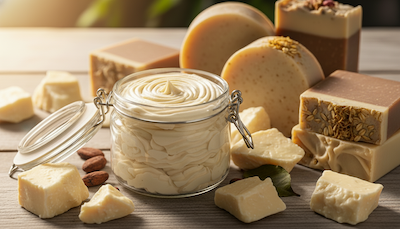
Have you ever wondered where the rich, creamy ingredient in many natural skincare products actually comes from? I’m talking about cocoa butter, one of the most popular ingredients in natural skincare and cold process soap making.
Cocoa butter doesn’t just appear magically in lotions and soaps. It begins its life inside the pods of the cacao tree, a tropical plant that grows in warm climates around the world.
If you’ve ever enjoyed chocolate, you’ve already encountered cacao beans. But cocoa butter itself plays a very different role — deeply moisturizing and protecting the skin.
For soap makers and natural skincare enthusiasts, cocoa butter is one of those ingredients that can completely transform a recipe.
Where Cocoa Butter Comes From
 Cocoa butter begins as seeds inside cacao pods growing on the cacao tree.
Once harvested, the beans go through several steps before they become cocoa butter:
• Fermentation
• Drying in the sun
• Roasting
• High-pressure pressing
During the pressing process, the natural fat is separated from the cacao bean. This fat becomes the smooth golden butter known as cocoa butter.
The remaining solids become cocoa powder, which is used to make chocolate.
For skincare and soap making, cocoa butter is valued for its rich texture and skin-loving nutrients.
You can find pure cosmetic-grade cocoa butter online if you’re making your own skincare or soap.
Why Cocoa Butter Is So Good for Your Skin
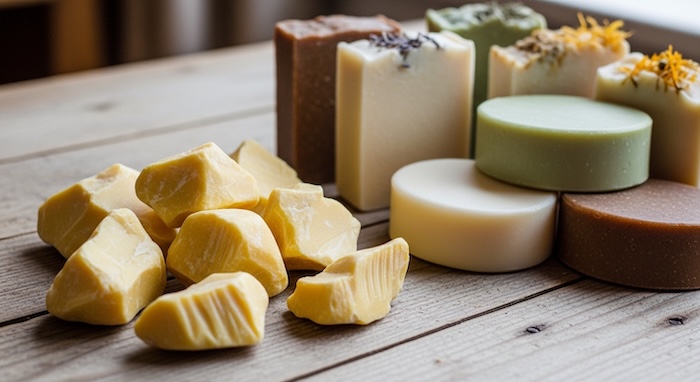 Cocoa butter is packed with fatty acids that help nourish and protect the skin.
Some of the main fatty acids include:
• Palmitic acid – helps soften skin
• Stearic acid – supports the skin barrier
• Oleic acid – deeply moisturizing
These fatty acids help the skin:
• retain moisture
• stay soft and smooth
• improve elasticity
Cocoa butter also contains natural antioxidants that help protect skin from environmental stress.
Because of its thick, creamy texture, cocoa butter forms a protective barrier on the skin that helps prevent moisture loss.
This is one reason it is often used in body butters, lotions, and handmade soaps.
Why Soap Makers Love Cocoa Butter
In cold process soap making, cocoa butter serves several important purposes.
It helps create:
• harder soap bars
• creamy stable lather
• conditioning properties for the skin
Many soap makers include cocoa butter in recipes because it helps produce a long-lasting bar of soap that feels luxurious on the skin.
If you’re learning to make soap, you may also enjoy my guide to
➡️ Beginner Cold Process Soap Making
Cocoa Butter in Natural Skincare Products
Cocoa butter is widely used in many natural skincare products.
You’ll commonly find it in:
• body butters
• lip balms
• lotions
• massage bars
• handmade soaps
One of the simplest ways to enjoy cocoa butter is in a rich homemade body butter.
You might enjoy trying my Natural Coconut Body Butter recipe, which combines nourishing oils and butters for deeply moisturized skin.
Choosing Good Quality Cocoa Butter
Not all cocoa butter is created equal.
When possible, look for cocoa butter that is:
• unrefined
• fair trade
• ethically sourced
Ethically sourced cocoa butter helps support farming communities and reduces the environmental impact of cacao production.
If you’re making soap or skincare products, many soap makers prefer unrefined cocoa butter because it retains more natural nutrients.
Using Cocoa Butter in Homemade Skincare
Cocoa butter is very versatile and can be used in many DIY skincare recipes.
Common uses include:
• homemade body butters
• lotion bars
• lip balms
• cold process soap
Because cocoa butter is quite firm at room temperature, it is often melted and blended with softer oils like coconut oil or sweet almond oil.
Many natural skincare recipes combine cocoa butter with oils like coconut oil.
Organic Coconut Oil for Soap and Skincare
Final Thoughts on Cocoa Butter
Cocoa butter has been used in skincare for generations, and it remains one of the most popular natural ingredients today.
From handmade soap to luxurious body butters, this rich butter provides deep moisture and skin-loving nutrients.
Whether you’re buying natural skincare products or making your own soap, cocoa butter is an ingredient worth including in your routine.
Once you start using it, it’s easy to see why so many soap makers and natural skincare lovers consider it a must-have ingredient.
Frequently Asked Questions About Cocoa Butter
What is cocoa butter made from?
Cocoa butter is a natural fat extracted from cacao beans, which grow inside the pods of the cacao tree. After the beans are harvested, fermented, dried, and roasted, they are pressed to separate the fat. This fat becomes cocoa butter, while the remaining solids are processed into cocoa powder used to make chocolate.
Is cocoa butter good for your skin?
Yes, cocoa butter is widely used in natural skincare because it contains fatty acids that help moisturize and protect the skin. It can help improve skin softness, support elasticity, and reduce moisture loss by forming a protective barrier on the skin.
Why is cocoa butter used in soap making?
Cocoa butter is popular in cold process soap making because it helps create harder soap bars with a creamy lather. It also adds conditioning properties that leave the skin feeling soft and moisturized after washing.
Is unrefined cocoa butter better for skincare?
Many natural skincare makers prefer unrefined cocoa butter because it retains more of its natural nutrients and antioxidants. It also has the natural chocolate aroma that comes from the cacao bean.
Can cocoa butter clog pores?
Cocoa butter is considered moderately comedogenic, which means it may clog pores for some people, especially on the face. However, it works very well as a body moisturizer and is commonly used in body butters, lotions, and soaps.
How long does cocoa butter last?
Cocoa butter has a relatively long shelf life compared to many natural oils. When stored in a cool, dark place, it can last two to five years because it contains natural antioxidants that help slow spoilage.
If you’re new to soap making, my Beginner Cold Process Soap Making guide explains how ingredients like cocoa butter affect your soap recipes.
Disclosure:
The information provided on this website is for educational purposes only and should not be considered professional advice. Always practice proper safety when making soap or skincare products.
This post may contain affiliate links. As an Amazon Associate, I earn from qualifying purchases at no additional cost to you.
Updated March 2026
© 2023 – 2026, admin. All rights reserved.
Hi there,
I just read your article on the benefits of cocoa butter for the skin, and I must say, it’s quite enlightening! Your detailed explanation of its moisturizing properties, rich fatty acid content, and benefits for skin hydration and elasticity is very informative. I’m particularly interested in the part about cocoa butter’s potential in reducing scars and blemishes. However, I’m curious about how cocoa butter performs in different skin types, especially sensitive skin. Is it suitable for all skin types, or are there any precautions to consider?
Thank you for your work and sharing this helpful information!
Warm regards,
Makhsud
I have found that cocoa butter works well with all skin types, but if a person has allergies they should do a skin test for sure. I am allergic to cocoa butter and can use it in soap and lotions, but not in lip balm. So it really does depend on the application and the person.