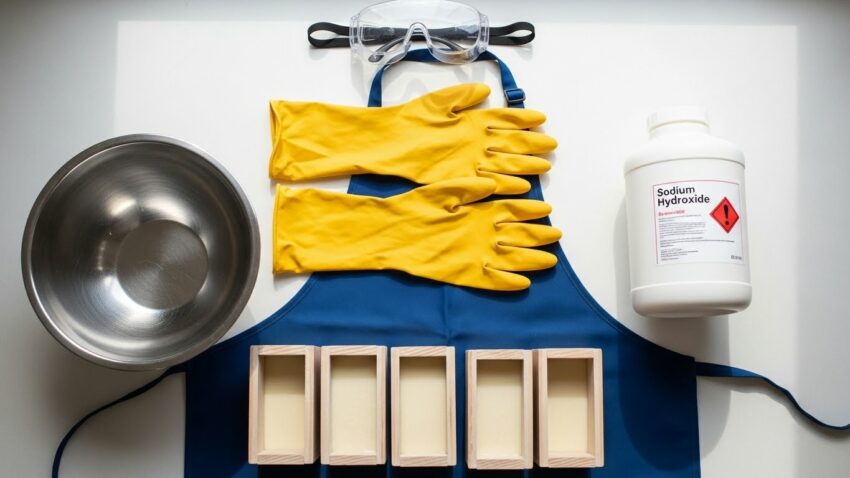
Working with sodium hydroxide (lye) is a normal part of cold process soap making, but accidents can happen — even to experienced soap makers.
Lye is a highly caustic substance, and knowing exactly what to do if it touches your skin can prevent serious burns and long-term damage.
While lye burns can be serious, prompt and correct action greatly reduces the risk of long-term injury.
This guide explains what to do immediately if lye touches skin, why some commonly suggested remedies are dangerous, and how to protect yourself when working with lye.
Table of Contents
Click a section below to jump to that topic.
- What to Do Immediately If Lye Touches Skin
- Why Vinegar Should NOT Be Used on Lye Burns
- Why Lye Burns Are Dangerous
- Flush With Water Immediately
- MSDS Guidelines for Sodium Hydroxide
- How to Prevent Lye Burns When Making Soap
- Proper Lye Storage and Spill Cleanup
- Personal Protective Equipment for Soap Making
- When to Get Medical Attention
- Lye Safety FAQ
❌ Do NOT Try to Neutralize Lye on Skin
I’ve been making soap for many years and am always cautious when working with lye. Even so, I’ve experienced a lye splash on my skin — and it hurts.
Many articles online suggest using vinegar to neutralize lye burns. This is dangerous advice.
When I first started making soap, I kept a large bottle of vinegar nearby “just in case.” One day, while pouring my lye solution into oils, a small splash landed on the exposed skin between my glove and shirt sleeve.
I immediately applied vinegar — and the pain intensified dramatically.
That experience taught me an important lesson:
👉 DO NOT USE VINEGAR ON A LYE BURN.
Why Vinegar Should NOT Be Used on Lye Burns
Many articles incorrectly suggest using vinegar to neutralize lye. This advice is unsafe.
Here’s why:
-
Mixing acid (vinegar) with a strong alkali (lye) creates heat
-
The chemical reaction can intensify the burn
-
Vinegar does not stop tissue damage fast enough
I learned this the hard way early in my soap-making journey. When lye splashed onto my skin, applying vinegar caused immediate, intense pain — far worse than the initial contact.
Bold warning (important):
Never use vinegar on a lye burn. Water is the safest and most effective response.
Why Lye Burns Are Dangerous
Lye damages skin by breaking down fats and proteins, allowing it to penetrate deeper into tissue. Unlike acid burns, alkali burns can continue causing damage even after initial contact.
This is why prolonged rinsing with water is essential — it physically removes and dilutes the chemical.
What to Do Immediately If Lye Touches Skin
Flush With Water Immediately
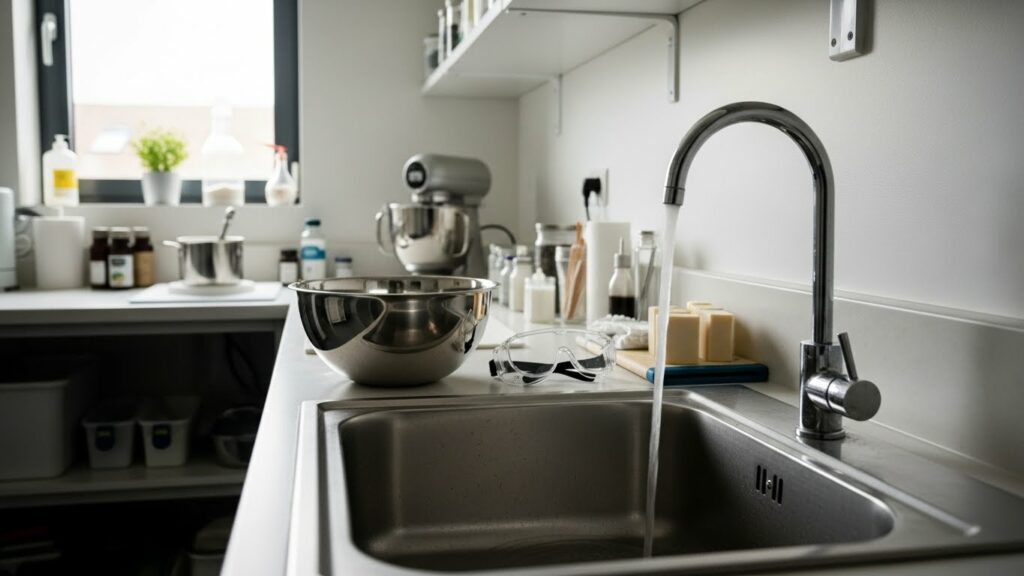
If lye touches your skin:
-
Rinse immediately with cool (not ice-cold) running water
-
Use a sink, hose, or shower
-
Rinse for at least 15 minutes
-
-
Remove contaminated clothing or gloves
-
Lye trapped in fabric continues to burn
-
-
Do NOT apply vinegar
-
This is dangerous and can worsen the burn
-
-
Continue rinsing if irritation persists
-
Seek medical attention for severe burns
Time is critical. The faster lye is diluted and washed away, the less damage it can cause.
MSDS Guidelines for Sodium Hydroxide
After my experience, I printed the Material Safety Data Sheet (MSDS) for sodium hydroxide — something every soap maker should do.
The MSDS clearly states:
-
Flush affected skin immediately with large amounts of water
-
Seek medical attention for severe exposure
-
Do not use neutralizing chemicals on skin
Please read and print a copy of the MSDS Sheet for Sodium Hydroxide and keep it in your soap making area.
Using a soap lye calculator correctly is just as important as knowing how to handle lye safely.
Personal Protective Equipment for Soap Making
How to Prevent Lye Burns When Making Soap
Most lye accidents are preventable.
Always:
-
Wear chemical-resistant gloves
-
Use safety goggles
-
Wear long sleeves and closed shoes
-
Mix lye in a well-ventilated area
-
Add lye to water — never water to lye
-
Keep children and pets out of the workspace
Even small splashes can cause burns. Proper safety gear is not optional.
Proper Lye Storage
-
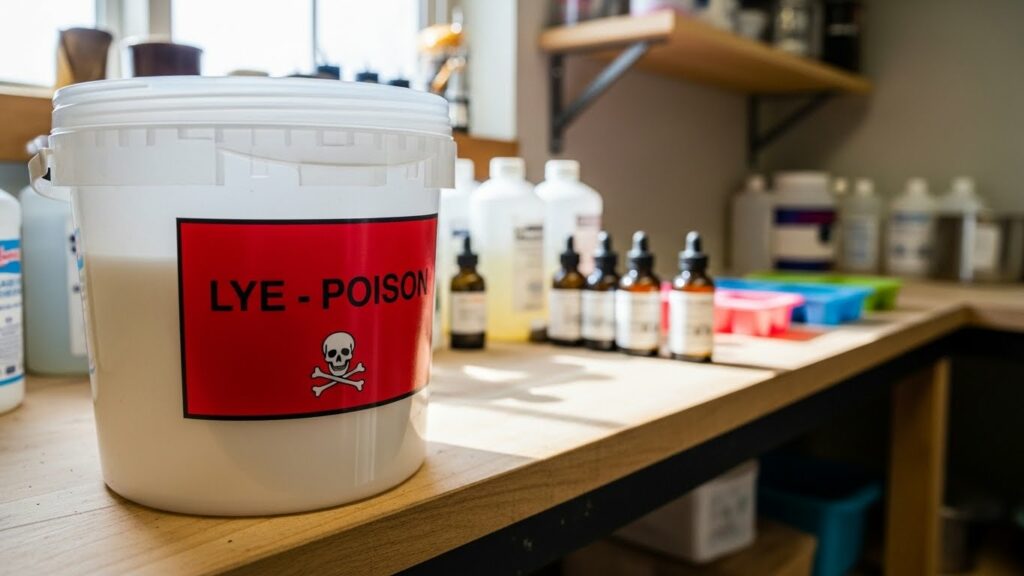
Store lye in clearly labeled containers marked “LYE” and “POISON”
-
Use airtight containers with secure lids
-
Keep lye away from children and pets
Proper Lye Storage and Spill Cleanup
-
Sweep up immediately
-
Mop the area thoroughly with cold water
-
This is only for countertops or floors after lye has been removed — never for treating skin exposure.
Safe Lye Mixing Practices
-
Always mix lye in the sink
-
Pour lye into water, never water into lye
-
Work slowly and deliberately
Always Wear Protective Gear
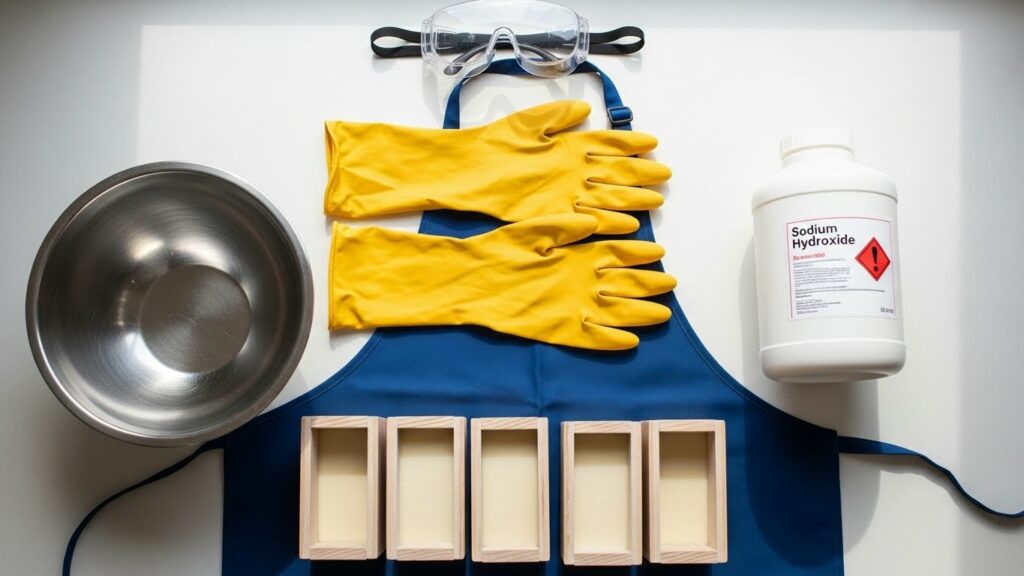
Protective equipment is not optional when working with lye.
Personal Protective Equipment for Soap Making
Chemical Splash Goggles
Eye protection is critical when working with sodium hydroxide.
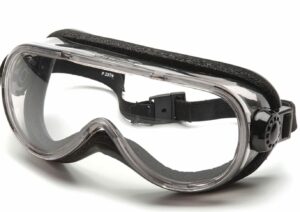
These chemical splash goggles provide full eye coverage and are ideal for protecting against lye splashes while making soap.
(Pyramex Anti-Fog Chemical Splash Goggles)
Chemical Resistant Gloves
Your hands are at the highest risk of exposure.
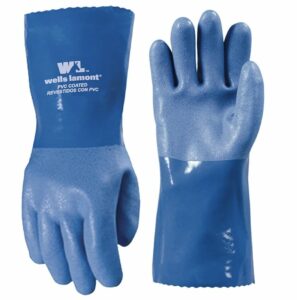
These 14-inch PVC-coated chemical resistant gloves help protect hands and forearms from lye splashes and spills during soap making.
Wells Lamont 14″ Chemical Resistant Gloves
Chemical Resistant Apron
Protecting your body and clothing is just as important.
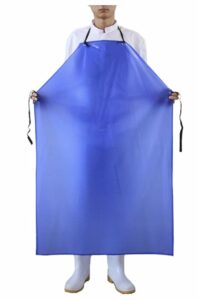
This full-length chemical resistant apron provides excellent protection against lye splashes and also keeps oils and soap batter off your clothing.
Surblue Waterproof Chemical Resistant Apron
Purchasing goggles, gloves, and an apron is one of the smartest investments you can make for your soap room. For a relatively small cost, you significantly reduce the risk of serious injury while working with lye.
When to Get Medical Attention
Seek medical help if:
-
The burn is blistering or deep
-
Pain continues after thorough rinsing
-
The affected area is large
-
Lye contacts the eyes, face, or genitals
For eye exposure, rinse continuously with clean water and seek emergency care immediately.
Lye Safety FAQ
Frequently Asked Questions
Should I neutralize lye with vinegar?
No. Vinegar can worsen lye burns due to the heat created during the chemical reaction.
How long should I rinse lye off my skin?
Rinse continuously for at least 15 minutes with cool running water.
Can lye burns get worse over time?
Yes. Alkali burns can continue damaging tissue if not thoroughly rinsed away.
Is it safe to continue soap making after a lye spill?
Only after the area is cleaned, you’ve confirmed no further exposure, and any injury is properly addressed.
Important Note:
This information is for educational purposes only and does not replace professional medical advice. Seek medical care for serious injuries.
© 2017 – 2026, Tes. All rights reserved.
Hello here. I stumbled upon your website and saw this great advice about the lye. It is good to know how to react in this case of emergency. Overall the water is good for everything. In this case, the water makes a big difference.
Natural soaps are healthy for the skin. There are so many ingredients which can benefit the biggest organ:skin. I like aromatic scents of pure essential oils as tree oil or lavender.
Thanks for great advice, Nemira.
Water is the best, I read an article not to long ago about a lady who had been making soap and turned around and her young child had got ahold of the lye and spilled it, she quickly undressed and put the child in the shower, called 911 and kept the water running. The child ended up with mild burns and the doctors told her the best thing she did was to continue to flush with water as it dilutes the chemical.
Wow this is a very educational post. It’s taken for granted that vinegar would neutralize most chemical splashes on skin, but I’m glad you’ve provided this warning.
So always have a water source nearby when working with lye. A vital reminder.
Do you wear elbow length gloves when working with lye?
Thanks for the article.
The gloves I wear for soap making don’t come up to the elbow. They come half way up and I also wear long sleeves, but accidents do happen. Maybe I should consider that.
Hi my name is kathy!
This is the 1 time in about a year and half since I made soap’
And before that I only made it 3 or 4 times*
A friend show me how plus watch videos a lot which bell’s
I was making it wore gloves and stuff’ . After I got go trace and added color and was Kim’s
I got in big hurry . My husband needed me to get him/
I took off gloves and though it was ok . I got my hands on soap before I pour into mold..
Burn a loy.
I remembered the vinegar dump all over bout hands. I had some how got cuts on hand too.
It really burned.
I got more vinegar and same thing. Still burns . Cold water help. I can’t do warm it still burns.
I’ll never take off my gloves again. Lesson learn hard way. No more vinegar cold water only than if ya have alo I didn’t have it.
Oh Cathy that’s terrible, I’m sure it was quite painful. Yes lesson learned always dilute with water and use those gloves.
Thanks i’m glad you are enjoying the site.