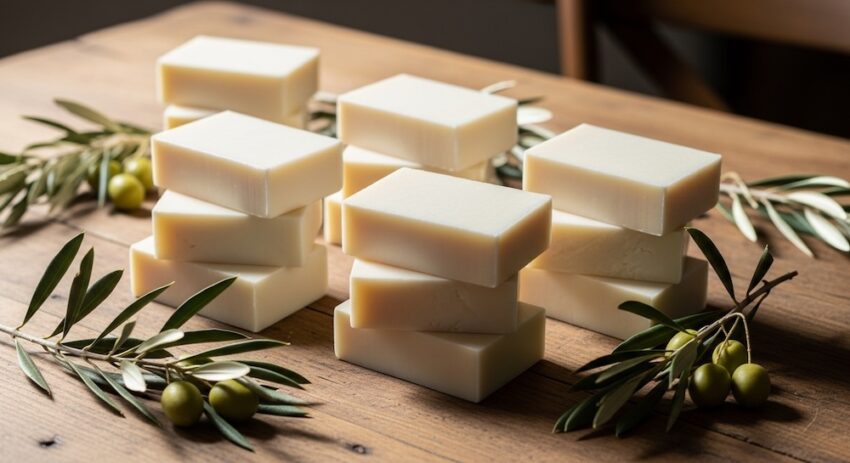
When I first started making soap, I used a balanced recipe of olive oil, coconut oil, and palm oil — and it worked wonderfully. Over the years, depending on ingredient costs, supply availability, and environmental considerations, I developed six tried-and-true soap recipes.
But there’s one recipe that always sparks debate:
Pure Castile soap.
You would think a simple, 100% olive oil soap would be a top seller.
Surprisingly — it’s not.
Let’s talk about why.
If you’re new to soap making, be sure to read my complete Soap Making Recipes Guide where I walk through oils, lye safety, and beginner-friendly recipes.
What Is Castile Soap?

Castile soap gets its name from the Castile region of Spain, where olive oil–based soap originated centuries ago.
Early Europeans made soap using:
-
Olive oil
-
Plant ashes (early lye source)
References to Castile soap date back to the 1600s, describing it as a soap made strictly from olive oil.
Traditionally:
-
Bar Castile soap is made using sodium hydroxide (NaOH)
-
Liquid Castile soap is made using potassium hydroxide (KOH)
And originally, it was made with 100% olive oil.
Why the Term “Castile” Is Confusing Today
Over time, the term Castile has been used more loosely.
Some people now refer to any vegetable oil soap as Castile — including soaps made with coconut, hemp, jojoba, or other plant oils.
Even organizations like the David Suzuki Foundation have referenced Castile soap as being environmentally friendly because it uses vegetable oils.
But in my opinion — and in traditional soap making — true Castile soap is 100% olive oil.
Anything else is technically closer to what many soap makers call Bastile (mostly olive oil with a small percentage of other oils).
📊 Castile vs Bastile vs Regular Cold Process Soap
| Feature | True Castile Soap | Bastile Soap | Regular Cold Process Soap |
|---|---|---|---|
| Main Oil | 100% Olive Oil | Mostly Olive Oil (70–90%) | Multiple oils |
| Coconut Oil | None | Small amount (5–20%) | Usually 20–30% |
| Lather | Low, creamy | Moderate bubbles | Large, fluffy bubbles |
| Hardness | Soft at first | Medium | Firm |
| Cure Time | 4–6 months ideal | 4–6 weeks | 4–6 weeks |
| Skin Feel | Very gentle | Gentle + cleansing | Balanced cleansing |
| Best For | Sensitive skin | Everyday use | General customers |
| Beginner Friendly | Slow trace | Easier | Easiest |
If you’re selling soap, most customers prefer the lather and hardness of a Bastile or balanced multi-oil recipe.
My Honest Experience Making Pure Castile
I’ve made pure olive oil Castile soap several times. Here’s what I discovered:
- People say they want unscented soap… but they buy the scented bars.
- The unscented Castile often ended up in my sale basket.
- My Castile logs frequently developed soda ash, especially on corners and edges.
- The finished bar does not bubble much.
- Customers often think a soap that doesn’t produce big bubbles isn’t working.
Here’s the truth:
It’s coconut oil that creates large, fluffy bubbles. Olive oil creates a low, creamy lather — very gentle, but not dramatic.
And when selling soap, perception matters.
Why Pure Olive Oil Soap Can Be Temperamental
Pure Castile soap:
- Traces slowly
- Stays soft longer
- Has a longer cure time
- Can develop soda ash more easily
- Produces small bubbles
That doesn’t mean it’s inferior. In fact, it’s incredibly mild and conditioning.
But it requires patience — both from the soap maker and the customer.
Large Batch Pure Castile Soap Recipe
(Makes approximately 25 four-ounce bars)
Ingredients
-
64 oz Olive Oil
-
23.4 oz Water
-
8.7 oz Lye (Sodium Hydroxide)
Total: 96.1 oz soap base
This is true Castile soap — nothing but olive oil as the fat.
You can divide this recipe in half for smaller test batches.
Small Batch Castile Soap Recipe
(Makes approximately 6 bars)
If you’d prefer to test with a smaller batch first:
Ingredients
-
454 grams Olive Oil
-
57 grams Sodium Hydroxide (Lye)
-
½ to ¾ cup Water
This smaller recipe is ideal for beginners wanting to experiment with pure olive oil soap before committing to a large batch.
Optional: A More Balanced “Castile-Style” Recipe
If you want a bar that behaves better and has more bubbles, I recommend modifying it slightly.
Ingredients
-
51.2 oz Olive Oil
-
12.8 oz Coconut Oil (approx. 20%)
-
23.4 oz Water
-
8.7 oz Lye
This version:
- Hardens faster
- Produces better lather
- Reduces soda ash issues
- Is generally more customer-friendly
While some people say up to 15% coconut oil can still be called Castile, technically this is closer to a Bastile soap.
Step-by-Step Cold Process Instructions
Before You Begin
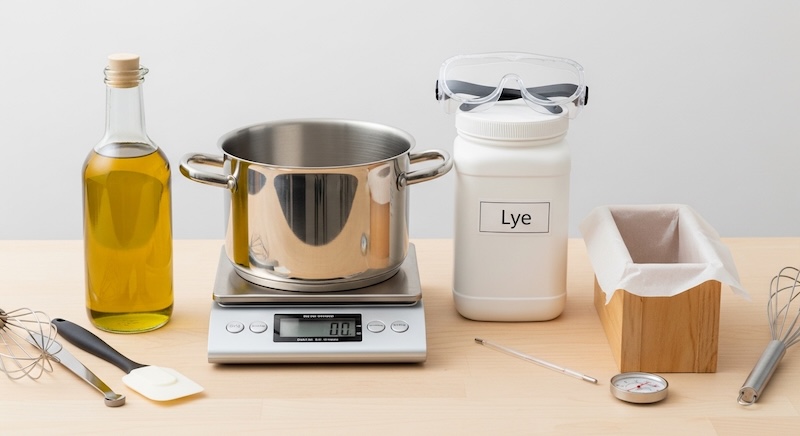
Gather:
- Digital scale
- Stainless steel pot
- Stick blender
- Thermometer
- Mold (lined if necessary)
- Safety goggles
- Gloves
If you’re new to working with lye, read my complete guide on soap making safety before starting.
Step 1: Mix the Lye Solution
- Put on safety gear.
- Measure water into a heat-safe container.
- Measure lye separately.
- Slowly add lye to water (never water to lye).
- Stir until dissolved.
The mixture will heat up to about 180°F. Set aside to cool.
Step 2: Heat the Oils
- Measure olive oil (and coconut oil if using modified version).
- Heat to approximately 130°F.
- Allow to cool to about 100°F.
Step 3: Combine to Trace
When both lye solution and oils are around 100°F:
- Slowly pour lye solution into oils.
- Stick blend until trace forms.
- Add fragrance or color (optional).
- Mix thoroughly.
Step 4: Mold and Insulate
- Pour into molds.
- Cover with cardboard or plastic.
- Wrap in a blanket.
- Let sit 24–48 hours.
Step 5: Cut and Cure
- Remove from mold.
- Cut into bars.
- Cure for 4–6 weeks minimum.
For pure Castile soap, I strongly recommend curing for 6 months for best hardness and improved lather.
So… Should You Make Pure Castile?
If you appreciate traditional soap making and want a gentle, simple ingredient bar — absolutely.
If you are selling soap and customers expect big bubbly lather — you may prefer a blended oil recipe.
After years of making soap, I’ve found multiple-oil bases create a more balanced, market-friendly bar. But Castile remains one of the most traditional and historically beautiful soaps you can make.
And every serious soap maker should try it at least once.
Castile Soap FAQ
Is Castile soap really 100% olive oil?
Traditionally, yes. True Castile soap contains only olive oil, water, and lye. However, many modern soaps labeled “Castile” include other vegetable oils.
Why doesn’t Castile soap bubble much?
Olive oil produces a low, creamy lather. Large bubbles come from oils like coconut oil. Castile cleans gently but does not create big suds.
How long should Castile soap cure?
While it can be used after 4–6 weeks, pure olive oil soap improves dramatically with a 6-month cure. It becomes harder and produces better lather over time.
Is Castile soap good for sensitive skin?
Yes. Because it contains only olive oil, it is often well tolerated by sensitive skin types.
What is the difference between Castile and Bastile soap?
Castile soap is 100% olive oil. Bastile soap is mostly olive oil with a small percentage of other oils like coconut.
Can I use Castile soap for my face?
Many people do because of its mildness. However, as with all soaps, patch testing is recommended.
Important Note:
This information is for educational purposes only.
This post may contain affiliate links. If you make a purchase through these links, I may earn a small commission at no extra cost to you.
Updated Feb 2026
© 2017 – 2026, Tes. All rights reserved.
Hi Teresa,
My name is Anuj Agarwal. I’m Founder of Feedspot.
I would like to personally congratulate you as your blog Making Soap Naturally has been selected by our panelist as one of the Top 100 Soap Making Blogs on the web.
http://blog.feedspot.com/soap_making_blog/
I personally give you a high-five and want to thank you for your contribution to this world. This is the most comprehensive list of Top 100 Soap Making Blogs on the internet and I’m honored to have you as part of this!
Also, you have the honor of displaying the badge on your blog.
Best,
Anuj
I am honored to be a part of the top 100 Soap Making blogs.
Thanks Anuj
Thank you for sharing this information about olive oil soap. Does it matter what type of olive oil you use?
I usually use Pomace Olive oil but have used virgin as well. Both batches have turned our wonderfully