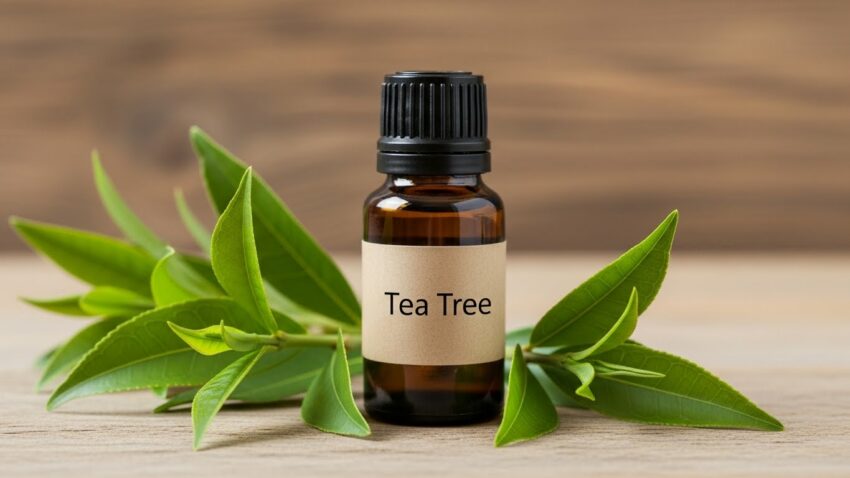
Overview: What Is Tea Tree Essential Oil?
updated 2026
Tea Tree essential oil is one of the most powerful and widely used essential oils in natural health and personal care. Known for its strong cleansing properties, tea tree oil has long been used to support skin health, scalp care, natural cleaning, and soap making.
Because of its versatility and effectiveness, tea tree essential oil is a staple in acne treatments, dandruff shampoos, foot care products, and natural soaps. It is especially valued for its purifying nature and is often one of the first oils people reach for when addressing skin or hygiene concerns naturally.
If you’re just getting started, a high-quality tea tree essential oil or a small essential oil starter set is a practical way to explore its many cleansing uses.
Botanical Source of Tea Tree Essential Oil
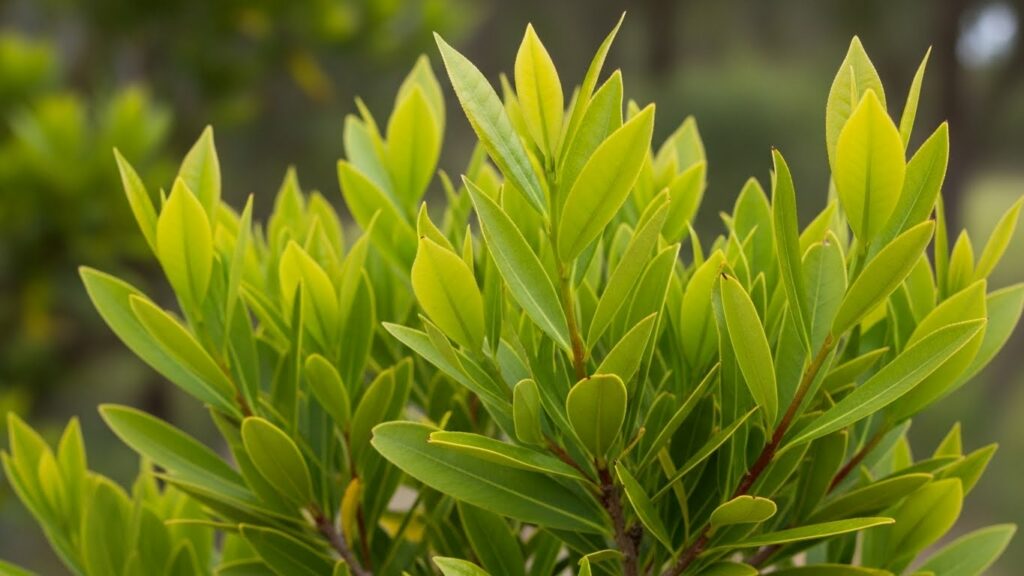
Tea Tree essential oil is distilled from the leaves of:
-
Melaleuca alternifolia
This small tree is native to Australia, where Indigenous Australians traditionally used crushed tea tree leaves for their cleansing and healing properties long before modern distillation methods existed.
How Tea Tree Essential Oil Is Made
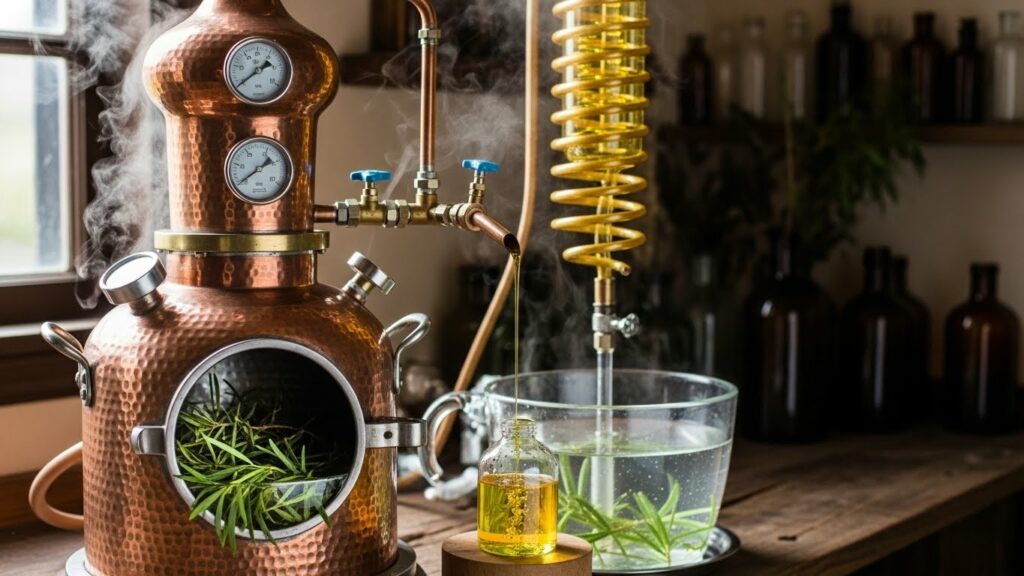
Tea Tree essential oil is produced through steam distillation of freshly harvested leaves. The process extracts the oil’s active compounds, resulting in a thin, clear to pale yellow oil with a strong medicinal aroma.
High-quality tea tree oil should smell fresh, sharp, and camphoraceous — not sweet or perfumed.
Aroma Profile & Emotional Benefits
Tea Tree essential oil has a strong, medicinal, herbaceous scent. While not traditionally used for relaxation, it is often associated with feelings of cleanliness and clarity.
Aromatically, tea tree is used to:
-
Create a sense of freshness and purity
-
Support focus and alertness
-
Help neutralize unpleasant odors
It is frequently blended with citrus or herbal oils to soften its intensity.
Top Benefits of Tea Tree Essential Oil
Tea Tree essential oil is prized for its naturally occurring properties:
-
Powerful antibacterial and antifungal support
-
Helps purify skin and surfaces
-
Supports acne-prone skin
-
Commonly used for foot and nail care
-
Helps reduce scalp buildup and dandruff
Because of its strength, proper dilution is essential.
Tea Tree Essential Oil for Skin Care
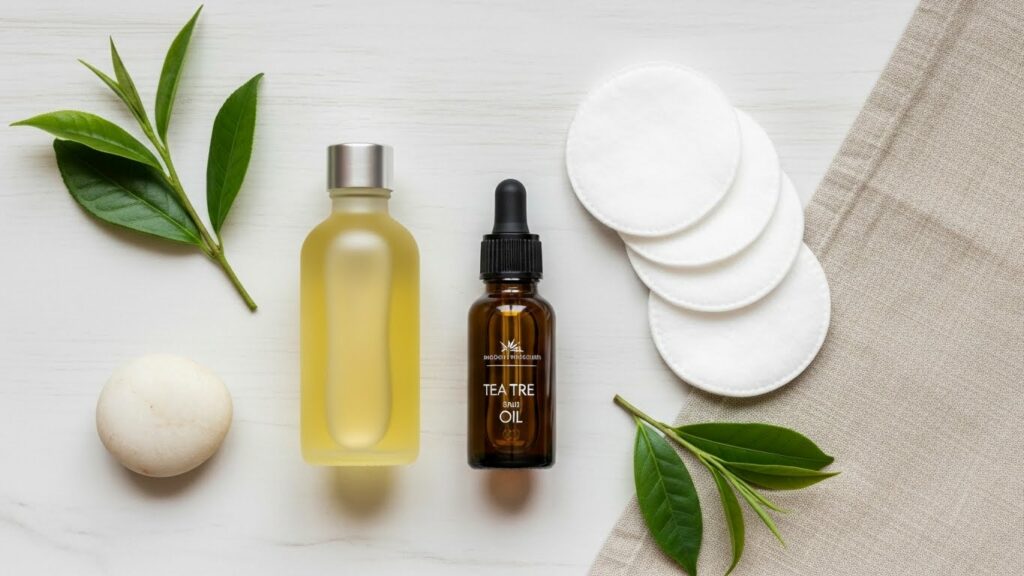
Tea Tree is one of the most popular essential oils used in natural skincare, especially for problem skin:
-
Helps support acne-prone skin
-
Used for minor cuts and blemishes
-
Helps soothe itchy or irritated skin
-
Common ingredient in natural spot treatments and cleansers
Tea tree essential oil should always be diluted in a carrier oil before applying to skin.
Tea tree essential oil should always be diluted in a carrier oil such as jojoba oil or sweet almond oil before applying to the skin.
👉 See How to Use Essential Oils Safely at Home for dilution guidelines.
Tea Tree Essential Oil for Hair & Scalp Health
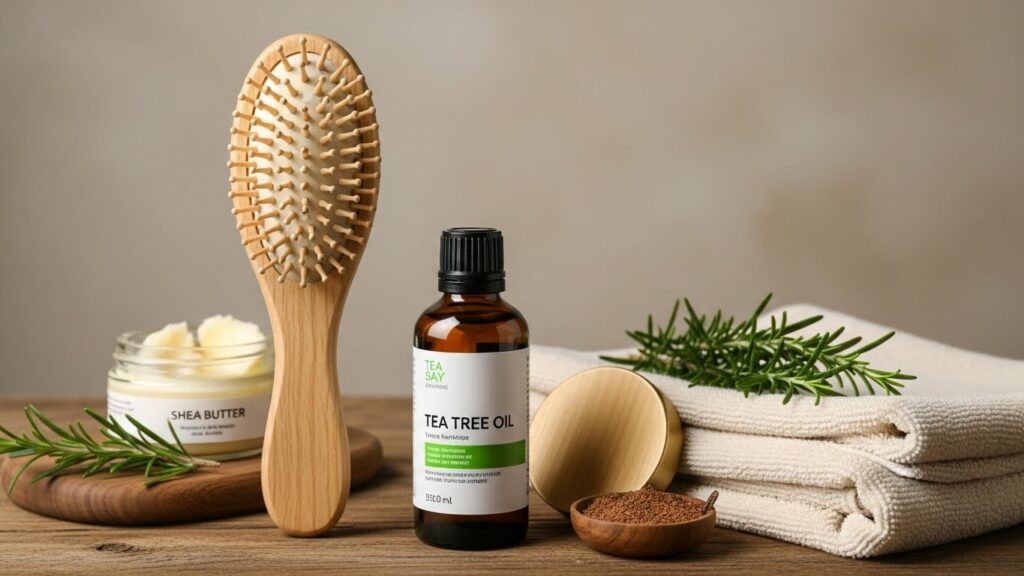
Tea Tree essential oil is widely used in hair and scalp products:
-
Helps reduce dandruff
-
Soothes itchy scalp
-
Supports scalp cleanliness and balance
-
Common ingredient in natural shampoos and scalp treatments
It is especially popular in shampoo bars and scalp oils.
Many people prefer to mix tea tree essential oil in a small glass dropper bottle or roller bottle for easy scalp application.
🧼 Using Tea Tree Essential Oil in Soap Making
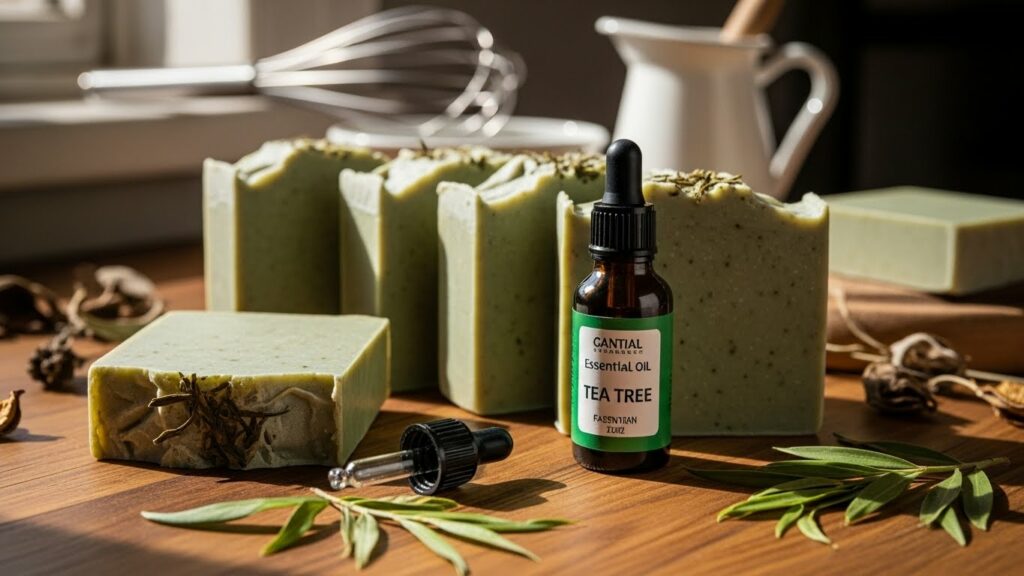
Tea Tree essential oil is a favorite among soap makers due to its strong cleansing properties and excellent performance in cold process soap.
Tea tree holds its scent well in soap, particularly when paired with anchoring oils such as eucalyptus, rosemary, or lavender. Its clean, medicinal aroma makes it ideal for functional soaps designed for skin, foot, or scalp care.
Tea Tree essential oil works especially well in:
-
Acne and facial soaps
-
Foot and deodorizing soaps
-
Shampoo and scalp bars
-
Gardener’s and mechanic’s soaps
Soap makers appreciate tea tree for its low acceleration risk and consistent behavior.
Soap Maker Notes:
-
Scent strength: Strong
-
Acceleration risk: Low
-
Discoloration: None
-
Blends well with: Lavender, Eucalyptus, Rosemary, Lemon, Peppermint
Accurate measurement is critical when using essential oils in soap making. A digital gram scale helps ensure safe and consistent recipes.
Many soap makers also rely on a soap making reference book or essential oil blending guide when creating functional soap recipes.
👉 If you’re new to scenting soap, see How to Scent Soap Naturally and Essential Oils vs Fragrance Oils.
Respiratory & Wellness Uses
Tea Tree essential oil is commonly used in wellness routines:
-
Added to steam inhalation blends for congestion
-
Used in chest rub formulations
-
Helps support a clean breathing environment
It is often combined with eucalyptus or peppermint for respiratory blends.
Historical Uses of Tea Tree Essential Oil
Tea Tree has a long history of traditional use:
-
Indigenous Australians used crushed leaves for skin care
-
Early settlers adopted tea tree for wound cleansing
-
Became widely used during World War II in first aid kits
-
Remains a staple in modern natural hygiene products
Its reputation as a purifying oil has endured for generations.
How to Use Tea Tree Essential Oil Safely
-
Always dilute before skin use
-
Perform a patch test before first use
-
Avoid contact with eyes and mucous membranes
-
Do not use internally
-
Keep out of reach of children
Essential oils should always be stored in dark amber glass bottles and clearly labeled for safety and longevity.
👉 See Essential Oil Dilution Chart for safe usage rates.
Essential Oils That Blend Well With Tea Tree
Tea Tree blends especially well with:
-
Lavender
-
Eucalyptus
-
Rosemary
-
Lemon
-
Peppermint
These combinations are popular in soap making, skincare, and natural cleaning recipes.
Frequently Asked Questions About Tea Tree Essential Oil
Is tea tree essential oil good for acne?
Yes, it is widely used for acne-prone skin when properly diluted.
Can tea tree essential oil be used in soap making?
Yes, it performs very well and holds scent in cold process soap.
Is tea tree essential oil safe for skin?
Yes, when diluted correctly. It should never be applied neat.
Does tea tree essential oil help dandruff?
Yes, it is commonly used in dandruff shampoos and scalp treatments.
Final Thoughts
Tea Tree essential oil is a powerful, versatile oil with a long history of use in natural skincare, hair care, and soap making. When used correctly, it is one of the most effective essential oils for cleansing and purification.
This post may contain affiliate links. If you make a purchase through these links, I may earn a small commission at no extra cost to you.
© 2017 – 2026, Tes. All rights reserved.
Your site gives great information. I just recently got some homemade soaps for mothers day. I was very unsure about them but it turns out I really love them. I did get two with tree tea oil and some other oils mixed together. They smell really great. My skin felt so clean after using it. I will be buying some more. I had no idea you could use tree tea oils for so many things. I will be looking for some with tree tea only. Thank you for the great information.
Hi Monica nice to here you now know how wonderful handmade soaps are. They are so much nicer on the skin. Tea tree really is probably one of the most used essential oils. I make tea tree soap and it’s one of my best sellers. You can check some out here Olive Oil Soaps