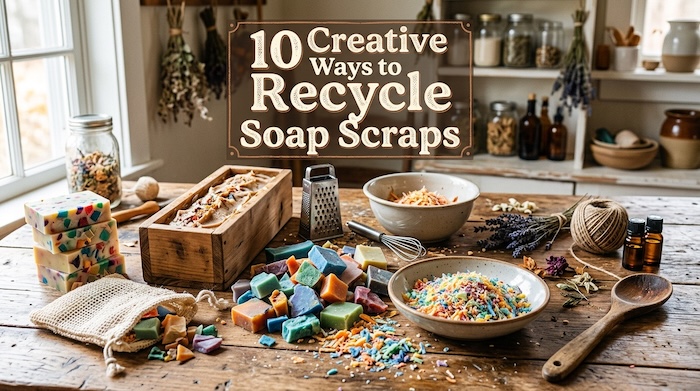
If you’ve been making handmade soap for any length of time, you’ve probably accumulated a collection of soap scraps, end pieces, trimmings, and small bars that seem too good to throw away.
I know I certainly have.
Whether you’re making soap for personal use, gifts, craft fairs, or selling online, those leftover pieces can quickly pile up. The good news is that soap scraps are surprisingly useful and can often be turned into products customers love.
Instead of throwing them away, here are some of my favorite ways to recycle soap scraps and get the most value from every batch.
If you’re new to soap making, you may also want to read Soap Making Supplies for Beginners and Common Soap Making Mistakes New Soap Makers Make.
Why Save Soap Scraps?
Even small pieces of soap contain the same skin-loving ingredients as a full-sized bar.
Saving scraps can:
- Reduce waste
- Increase profits
- Create new products
- Provide customer samples
- Stretch your soap-making supplies further
For soap businesses, using scraps efficiently can add up to hundreds of dollars in additional income over time.
1. Make Homemade Laundry Soap
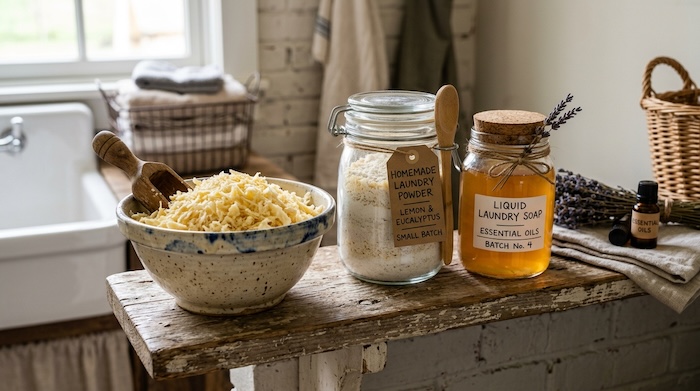
One of the easiest ways to use soap scraps is to grate them and turn them into laundry soap.
Simply collect your soap ends, allow them to dry completely, and grate them using a cheese grater or food processor.
The grated soap can then be used in homemade laundry detergent recipes.
For the complete recipe, see my guide on How to Make Homemade Laundry Soap.
If you process a lot of soap scraps, a stainless steel cheese grater or small food processor for shredding soap can save a tremendous amount of time.
2. Create Soap Saver Bags
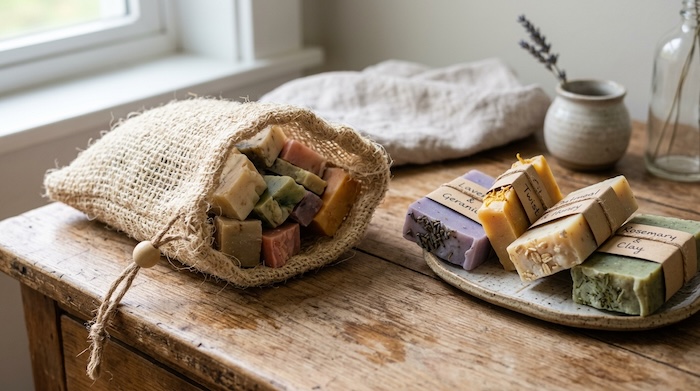
Small soap pieces work perfectly in soap saver bags.
Simply place several scraps inside a natural fiber soap saver bag and continue using every last bit of soap.
Many customers love this option because it reduces waste while providing gentle exfoliation.
A set of natural sisal soap saver bags makes a great addition to any handmade soap business.
3. Sell Soap Scrap Bags
This has always worked well for me.
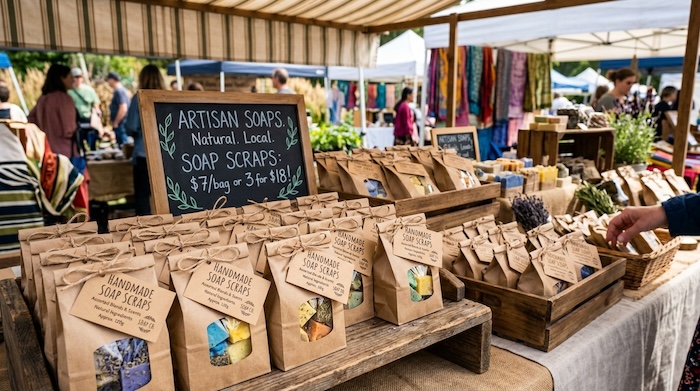
Instead of discarding scraps, place several pieces into small gift bags and sell them at a reduced price.
Customers often enjoy trying multiple scents before purchasing full-sized bars.
I typically find that many people who buy scrap bags eventually return to purchase regular bars.
I usually package approximately eight soap scraps per bag and sell them at a discount.
Kraft paper gift bags and small organza bags work particularly well for this purpose.
4. Offer Samples at Craft Fairs
Soap scraps make excellent customer samples.
Cut larger pieces into smaller portions and hand them out at:
- Craft fairs
- Farmers markets
- Vendor events
- Open houses
A free sample often leads to future sales.
If you sell at markets, you may also enjoy reading Best-Selling Soap Scents: What Customers Actually Buy.
5. Sell Mini Guest Soaps
Many resorts, cabins, bed-and-breakfasts, and vacation rentals appreciate locally made guest soaps.
I once supplied a resort that purchased my smaller bars for guest rooms while also carrying full-sized bars in their gift shop. I also sell these at local farmers markets and Christmas craft fairs, where customers often pick them up as inexpensive gifts, stocking stuffers, or guest bathroom soaps.
Small bars are perfect for:
- Vacation rentals
- Guest bathrooms
- Wedding favors
- Gift baskets
These smaller bars can become an entirely new product line from soap that would otherwise go unused.
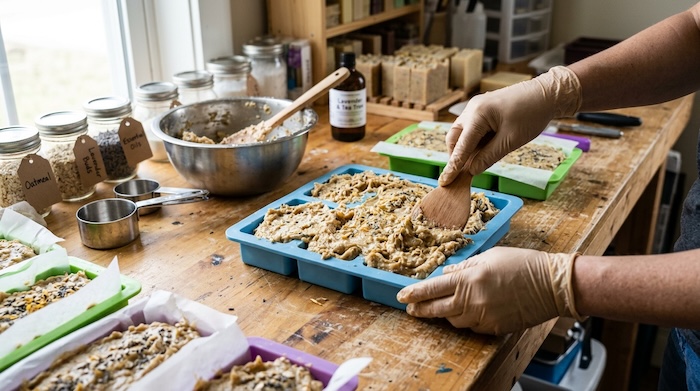
6. Rebatch Soap Into New Bars
One of the most popular ways to recycle soap scraps is through rebatching.
Rebatching allows you to melt down existing soap and create entirely new bars.
If you’ve never tried rebatching before, it’s a great way to rescue imperfect batches and use leftover soap pieces.
Basic Rebatch Method
- Grate the soap scraps.
- Place them in a heat-safe container.
- Add a small amount of water.
- Heat gently until softened.
- Stir until combined.
- Press into molds.
- Allow to harden before unmolding.
Rebatching is also a great way to save batches that developed cosmetic issues such as cracking, fragrance acceleration, or discoloration. While the finished bars may have a more rustic appearance, they still perform just as well as the original soap.
A digital kitchen scale is also useful when weighing larger amounts of soap scraps before rebatching.
A good set of silicone soap molds makes rebatching much easier and allows you to create professional-looking bars.
7. Make Confetti Soap
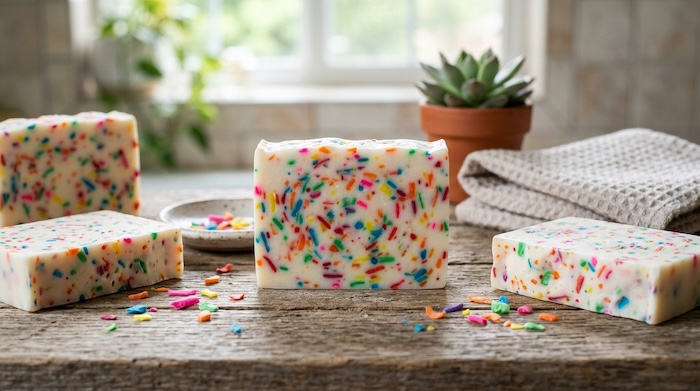
Confetti soap is one of my favorite ways to use colorful soap scraps.
Simply grate dried soap scraps and mix them into a fresh batch of soap at light trace.
The colorful pieces create a beautiful confetti appearance throughout the finished bars.
If you’re unsure what trace looks like, see my guide on What Is Trace in Soap Making?
You can also learn more about creating beautiful bars in Soap Swirl Techniques for Beginners.
 8. Add Soap Chunks to New Batches
Instead of grating scraps, cut them into small cubes.
These cubes can be added to a fresh soap batch to create:
- Embedded soap designs
- Colorful chunks
- Mosaic soap effects
- Decorative artisan bars
This technique works especially well when creating seasonal soaps or using scraps from previous batches.
For scent inspiration, check out Best Essential Oils for Soap Making.
9. Create Soap-on-a-Rope
Small bars work wonderfully as soap-on-a-rope.
Simply drill or punch a hole through the soap and thread natural hemp cord through it.
These are especially popular for:
- Gardeners
- Campers
- Workshop sinks
- Cottage bathrooms
A roll of natural hemp twine is inexpensive and creates a rustic handmade appearance customers love.
10. Build Mixed-Scent Grab Bags
Customers love variety.
Combine different soap scraps into themed grab bags such as:
- Floral collection
- Citrus collection
- Men’s scents
- Seasonal scents
- Best sellers assortment
These inexpensive bundles often become impulse purchases at markets and fairs.
They also provide customers with an easy way to sample multiple scents before committing to full-sized bars.
Can You Melt Soap Scraps Together?
Yes.
Most cold process and hot process soap scraps can be combined through rebatching.
Keep in mind that mixing different scents and colors may create unexpected results, but many soap makers enjoy the unique appearance and one-of-a-kind bars.
Should You Throw Away Soap Scraps?
Almost never.
Even the smallest pieces can be reused as:
- Laundry soap
- Samples
- Confetti soap
- Rebatched bars
- Soap saver bag fillers
- Guest soaps
- Soap-on-a-rope
If you put a little creativity into it, soap scraps can become useful products instead of waste.
If you’re looking for more ways to improve your soap making skills, be sure to read 10 Questions Every New Soap Maker Asks (Answered).
Final Thoughts
Every soap maker ends up with scraps, trimmings, and small bars.
Fortunately, those leftovers can often become new products, customer samples, or even additional income.
My favorite options are confetti soap, sample bags, and rebatching, but there are dozens of ways to use every last piece.
The next time you’re tempted to throw soap scraps away, save them instead—you might be surprised how useful they become.
Before packaging your recycled bars, be sure to read How Long Should Handmade Soap Cure? to ensure your finished soap performs at its best.
Frequently Asked Questions
What can I do with leftover soap scraps?
Leftover soap scraps can be used in many ways, including making laundry soap, creating confetti soap, rebatching into new bars, filling soap saver bags, making guest soaps, or packaging them as sample bags for customers.
Can you melt soap scraps together?
Yes. Most cold process and hot process soap scraps can be melted and combined through a process called rebatching. A small amount of water is added while heating the soap until it softens enough to be molded into new bars.
Is rebatched soap as good as regular soap?
Rebatched soap cleans just as well as the original soap. However, it typically has a more rustic appearance and may not be as smooth as freshly poured cold process soap.
Can I add soap scraps to a new batch of soap?
Absolutely. Soap scraps can be grated or cut into small chunks and added to fresh soap batter. This creates decorative effects such as confetti soap, mosaic soap, or embedded soap designs.
How do you use tiny soap pieces in the shower?
Small soap pieces can be placed inside a soap saver bag or mesh pouch. This allows you to use every last bit of soap while creating a rich lather and gentle exfoliation.
Can I sell soap scrap bags?
Yes. Many soap makers package leftover soap pieces into discounted sample bags. Customers often enjoy trying multiple scents before purchasing full-sized bars, making scrap bags a popular craft fair and farmers market item.
Are soap scraps good for making laundry soap?
Yes. Soap scraps can be grated and used in homemade laundry detergent recipes. Many soap makers save all of their trimmings specifically for this purpose.
Should I throw away soap scraps?
In most cases, no. Soap scraps can be reused in a variety of ways and often become valuable products, customer samples, or household cleaning supplies.
Do soap scraps expire?
Most soap scraps last just as long as regular bars of soap. However, scraps made with oils that have a shorter shelf life may eventually develop rancidity or DOS (Dreaded Orange Spots). For best results, store soap scraps in a cool, dry location and use them within the same timeframe as your finished bars.
Disclosure:
The information provided on this website is for educational purposes only and should not be considered professional advice. Always practice proper safety when making soap or skincare products.
This post may contain affiliate links. As an Amazon Associate, I earn from qualifying purchases at no additional cost to you.
updated June 2026
© 2018 – 2026, Tes. All rights reserved.
My wife is always ordering all these super-expensive fancy soaps on the Internet, so I thought to myself one day, couldn’t we just do this ourselves. This article was exactly what I was looking for. Now, if only I can get my wife on board too, because even though it doesn’t sound that hard, she will probably still just want to click that magic button on Amazon and have it delivered to the door. I’m going to show her this though and see if we can save some cash and go in a different direction. Thanks for the insights.
Reply
Thanks for stopping by the website Brandon. I hope you can convince your wife to make her own soap. Have you looked at the step by step page. Make Natural Soap at Home -Step by Step instructions with pictures
That may help to convince her.
Reply
I love spoap making. I used to make may own soaps and even had a small business on etsy selling them. It was super fun to do but I just didn’t have the time to keep up with work and the business. This reminds me so much when I made soap, it’s such a great hubby and it could be very lucrative in the health category. I stil try to buy handmade soaps as much as I can. Thanks so much for sharing and I cant wait to read more.
Reply
Thanks Andrea. I love making soap it certainly can be time consuming. It’s busy now with upcoming Christmas Markets. Thanks for stopping by the website.
Reply
These are great ideas for what to do with those leftover bar soap pieces. Another idea is to cut a slit in a sponge and put the small piece inside. When you submerge the sponge it will lather up and you can use it to wash your body. You could probably put several small pieces in, depending on the sponge.
Thanks for the great ideas for recycling soap pieces! 🙂
Reply
Hi Stella, that’s an excellent idea! Thanks for sharing
Reply
That is an awesome idea I would have never thought of doing that with the soap. I have to agree with one of the other comments though, if I could just get my wife into making the soap to begin with. Maybe if she sees this site it will help her decide to do it.
Reply
Recycling is great maybe start your wife off with recycling soap pieces…..who know she may get interested in making her own from scratch.
Reply
Some great ideas here for using your soap ends. Will pass this information on to my friend who makes soaps to sell.
She is always giving them away but why not use them as a promotional tool for your business and use them as testers for potential clients.
I also like your idea of wrapping them up with a ribbon or cord to sell at a discounted price.
Will the method of grating them and melting in the microwave also work for conventional shop soap? It seems like a good way to reuse when the soap becomes too small.
Reply
I think your friend will be grateful for the information. I used to give my ends away and sometimes even throw them away when I got to many. As for melting conventional soap – I think your mean store bought. It would depend on how good a quality the soap is and whether or not it was made with natural oils. You could give it a whirl though maybe adding some Olive oil and see what happens. No harm in trying.
Reply
In this age of recycling, you are sharing some great ideas and ways to not waste the cutting ends.
I was wondering would the microwave melting of soap pieces work for store bought soap as well? Seems my family does not like to use the small pieces of soap and I do not like to throw them out.
Reply
You could try it with store bought soap, it would depend on how much oils that soap was made with. If it’s more a detergent bar; which many store bought ones are I’m not sure how well it will work. You can experiment though, maybe add some Olive oil and see what happens.
Reply
Hi Tes. What a great idea for what to do with all those leftover soap pieces. I always try to meld them into the new bar, but it seldom works. It’s great that you are able to sell the recycled soap to make a bit of income from it.
It makes me wonder what happens to all the used soap left in hotel rooms. Do they recycle it? Could it be a source of soap for a recycle business?
Thanks so much for sharing this post.
Reply
Hi Greg, I actually had a motel owner ask me if I would take her leftover soap pieces and melt them down. I was hesitant to do that. Mostly because I had no idea where she bought them from or what they were made of. She now buys my smaller soap pieces for her guest and most of the time the guest take the left overs with them.
Reply
Hi Tes,
I would have never even considered recycling my leftover soap pieces. This a great idea. I always throw out the small leftover pieces. I have a lot of family and friends and collecting leftover pieces of soap will not be a problem for me. Where can I get soap molds or is there anything at home I can use as a soap mold?
Thanks for sharing a great idea with us!
Reply
Hi Rika, you can use lots of things for soap molds. Here is a link to help your out Soap Making Molds – you can use just about anything
Allforhome (TM) Flexible Rectangular Silicone Soap Mold with Wood Box
How to Line a Soap Mold
Reply