Coconut oil for making cold process soap AND getting all those bubbles Coconut Oil for making cold process soap adds special qualities that not every carrier oil has.
Category: Making Soaps
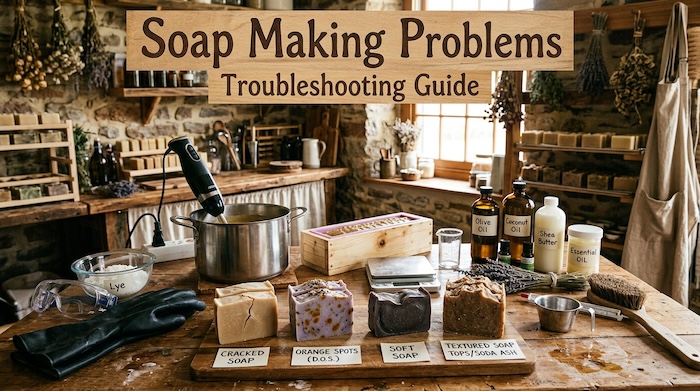
Soap Making Problems – troubleshooting soap making
Soap making does not always go perfectly, especially when you’re learning cold process soap making. Even experienced soap makers occasionally run into problems like soft soap, lye pockets, cracking, or dreaded orange spots (DOS). The good news is that most soap making problems can either be fixed or prevented once you understand what caused them….
Hot Process Soap Making Instructions
Hot Process Soap Making Instructions When making soap the Hot Process way you are adding external heat after the oils and lye solution have been mixed and come to trace.
Soap and PH – how to test your ph levels
🧼 Soap pH Testing: How to Test Homemade Soap Safely Testing the pH of your homemade soap is an important step in making sure your soap is safe, well-made, and gentle on skin. Soap making is chemistry. When oils and lye combine correctly, they form soap and glycerin through a process called saponification. If the…
Sea Salt in Soap
Sea Salt in Soap There seems to be a growing popularity of sea salt in soap. There are many different sea salts you can use and certainly the salts have wonderful benefits to our skin.
Knowing your soap – What to know when purchasing Handmade Soap
Interest in soap making or making your own is becoming increasingly popular within the last few years. Wonderful skin friendly soaps are being made and sold by soap specialists who mix vegetable oils, essential oils, herbs and/or botanicals and clays to create these incredible moisturizing bars.
Beeswax vs Paraffin
Beeswax vs Paraffin, which is better and safer? Both are natural but both are not safe….
Organic and Natural Product Labelling Rules
Organic, Natural and the Guidelines The labelling rules for organic and natural products do vary depending on the country you are living in.
INCI Names
INCI Names for Essential Oils Carrier Oils and most ingredients you’ll use in your Homemade Products
What is INCI
INCI it is a listing of Latin Names for Cosmetic Ingredients and is the shortened name for “International Nomenclature of Cosmetic Ingredients”