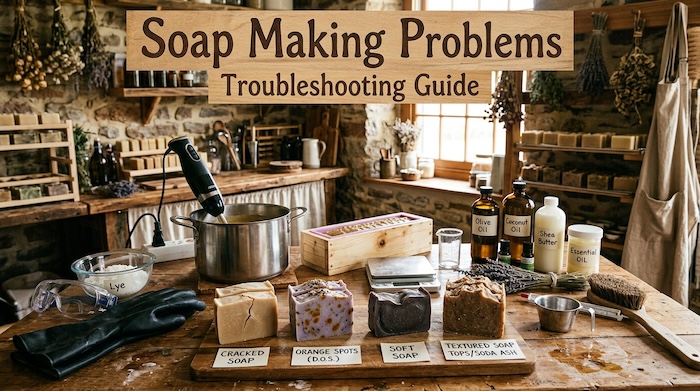
Soap making does not always go perfectly, especially when you’re learning cold process soap making. Even experienced soap makers occasionally run into problems like soft soap, lye pockets, cracking, or dreaded orange spots (DOS). The good news is that most soap making problems can either be fixed or prevented once you understand what caused them.
If you’re new to soap making, make sure to also read Cold Process Soap Making Instructions and How To Use A Soap Lye Calculator Safely before starting your next batch.
Table of Contents
- Lye Heavy Soap
- Soap Is Hard and Crumbling
- Soft Soap After Curing
- Dreaded Orange Spots (DOS)
- Soap Seizing
- Lye Pockets
- Soap Batter Will Not Reach Trace
- Greasy Layer on Top of Soap
- Grainy or Rice-Like Soap Batter
- Tips To Prevent Soap Making Problems
Lye Heavy Soap
Adding too much lye to your recipe can leave you with a soap bar that is harsh, irritating, or unsafe for skin use. Lye-heavy soap may feel dry, brittle, crumbly, or may even zap your tongue slightly if tested carefully.
One of the best ways to avoid this problem is by always running your recipe through a reliable lye calculator before making your batch. I always recommend using a digital kitchen scale for soap making because even small measuring mistakes can completely throw off a recipe.
Common causes:
- Incorrect measurements
- Forgetting to zero the scale
- Using the wrong type of lye
- Entering oils incorrectly in a lye calculator
Checking the pH of your soap can help confirm whether it may be lye heavy. A package of soap pH test strips can be useful when troubleshooting questionable batches.
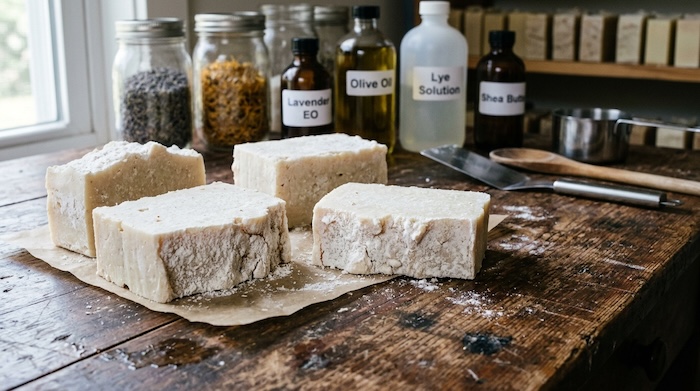
Lye Heavy Soap
Lye-heavy soap should never be sold or used directly on skin. However, after a full cure, it can often still be used for homemade laundry soap.
To make a simple laundry soap blend:
- 2 cups shredded cured soap
- 2 cups baking soda
- 1 cup washing soda
Mix thoroughly and store in an airtight container.
If you’re still learning how lye behaves in soap making, read What To Do If Lye Touches Skin for important safety information.
Soap Is Hard and Crumbling
Soap that becomes overly hard, brittle, or crumbly is usually caused by:
- Too much lye
- Not enough water
- Soap batter overheating
- High percentages of hard oils or waxes
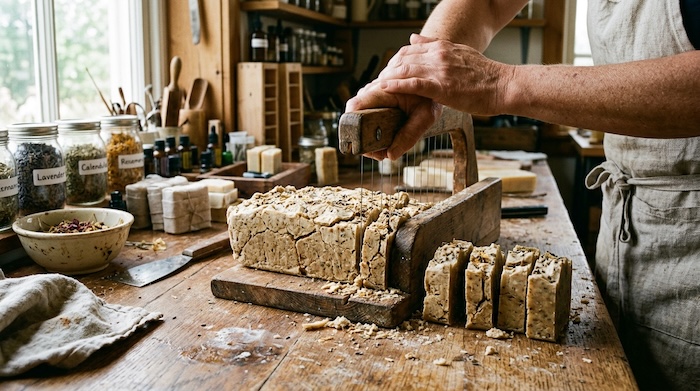
Cutting the soap too late can also make bars crack or crumble while slicing. A good soap cutter for homemade soap bars can help produce cleaner cuts without damaging the bars.
Using a reliable infrared thermometer for soap making can also help prevent overheating issues.
Soft Soap After Curing
Fresh soap is normally soft when first removed from the mold. However, if your soap remains soft after several weeks of curing, something likely went wrong during the recipe or mixing process.
Common causes:
- Not enough lye added
- Too much water
- Very high percentages of soft oils
- Inaccurate measurements
- High humidity during curing
Some oils naturally create softer bars, especially olive oil-heavy recipes, which may simply need a longer cure time.
For harder bars, many soap makers add oils like coconut oil, palm oil, cocoa butter, or tallow. You can learn more about how different oils affect hardness and lather in Soap Making Oils and Their Properties.
Using sturdy silicone soap molds for cold process soap can also help softer batches release more easily.

Dreaded Orange Spots (DOS)
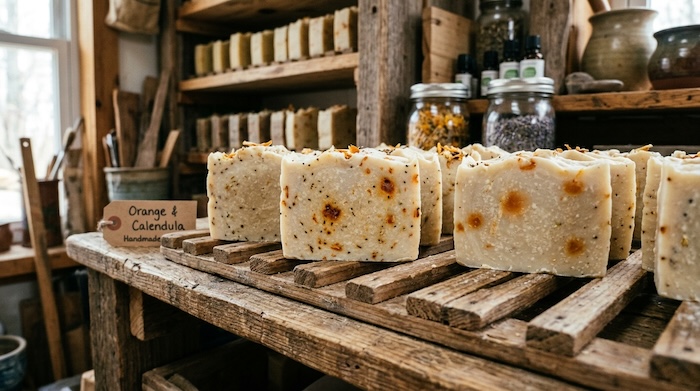
Dreaded Orange Spots, commonly called DOS, are orange or brown spots that appear on soap as oils begin turning rancid.
While soap with DOS is usually not dangerous to use, the smell and quality often decline significantly.
Common causes:
- Old or rancid oils
- Excess humidity
- Poor airflow during curing
- Superfat levels that are too high
- Exposure to heat or sunlight
To help prevent DOS:
- Store soap in a cool dry area
- Use fresh oils
- Cure soap with good airflow
- Avoid excessive superfatting
I also recommend keeping detailed notes in a soap journal so you can track which oils or recipes caused problems later.
Soap Seizing
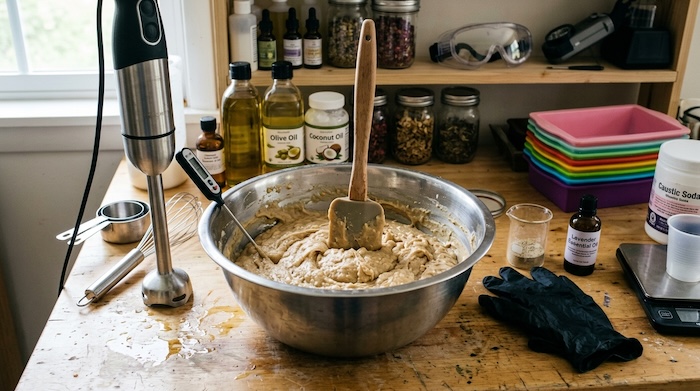
Seizing happens when soap batter thickens extremely fast, sometimes within seconds. This is often caused by certain fragrance oils or essential oils reacting with the soap batter.
Common fragrance oils known to accelerate trace include:
- Floral scents
- Spice fragrances
- Vanilla fragrances
To reduce the risk:
- Soap at lower temperatures
- Blend to light trace before adding fragrance
- Hand stir problem fragrances
- Research fragrance oil behavior before use
If seizing happens, quickly spoon the soap into the mold and press it down firmly.
If you work with fragrance oils often, read Essential Oils vs Fragrance Oils in Soap Making to better understand how different scents behave in cold process soap.
A dependable stick blender for soap making is one of the best tools for keeping soap batter properly emulsified before fragrances are added.
Lye Pockets
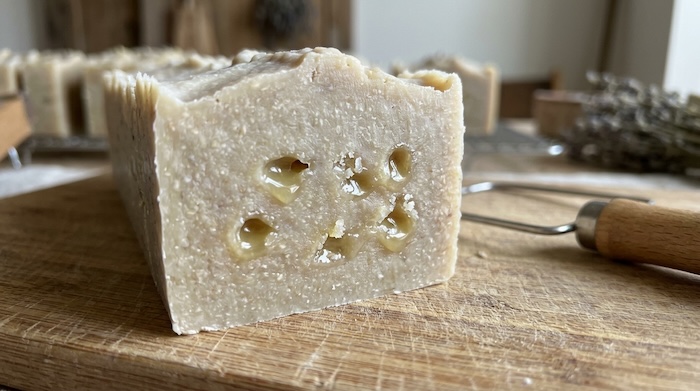
Lye pockets are one of the more dangerous soap making problems. These appear as small liquid-filled pockets or crystal-like areas inside the soap and can burn skin.
Soap with lye pockets should not be used.
Common causes:
- Poor mixing
- Incomplete emulsification
- Incorrect lye measurements
- Temperature issues
- False trace
You may notice lye pockets while cutting your soap bars.
Using a quality immersion blender for cold process soap can greatly reduce the risk of incomplete mixing.
Soap Batter Will Not Reach Trace
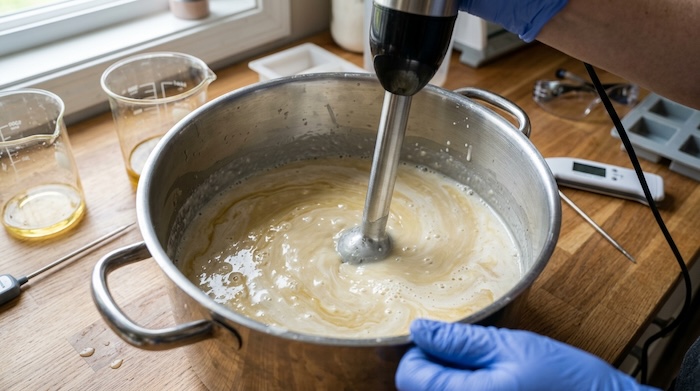
Sometimes soap batter stays thin and refuses to thicken.
Possible causes:
- Too much water
- Not enough lye
- Low temperatures
- Stirring too slowly
- High olive oil recipes
- Weak stick blender
Using a stick blender usually helps speed up trace considerably.
If the issue was incorrect measurements, the batch may need to be discarded.
For beginner-friendly instructions, see Cold Process Soap Making Instructions.
A powerful stick blender for soap making makes reaching trace much easier, especially for beginner soap makers.
Greasy Layer on Top of Soap
A greasy or oily layer on top of soap usually means the oils and lye solution separated.
This can happen when:
- Soap is poured too early
- The batter was not fully emulsified
- Incorrect oil-to-lye ratios were used
- Temperatures dropped too quickly
Sometimes the soap can still be saved by rebatching if separation is caught early enough.
Using an accurate digital thermometer for soap making can help you maintain more consistent temperatures throughout the process.

Grainy or Rice-Like Soap Batter
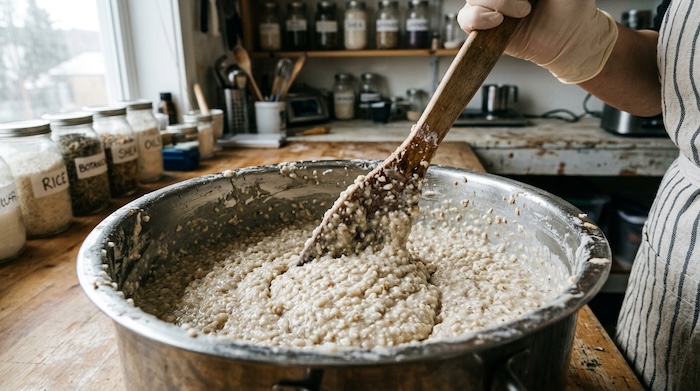
A grainy texture in soap batter is often called “ricing.” It usually happens when fragrance oils react badly with the soap batter.
Other causes may include:
- Soaping too hot
- Soaping too cold
- Incomplete mixing
Most of the time, the soap is still perfectly usable.
Using a stick blender briefly can often smooth the batter back out.
If you enjoy experimenting with colors, botanicals, and additives, read Soap Additives Guide: Clays, Herbs and More.
Tips To Prevent Soap Making Problems
A few simple habits can prevent many soap making disasters:
- Always measure by weight, not volume
- Use a reliable digital scale
- Run recipes through a lye calculator
- Keep accurate batch notes
- Use fresh oils
- Soap at moderate temperatures
- Wear proper safety gear
I strongly recommend keeping:
- chemical resistant gloves for soap making
- safety goggles for soap making
- long sleeve soap making apron
- soap making mixing containers
- heat resistant silicone spatulas
Helpful beginner resources:
Disclosure:
The information provided on this website is for educational purposes only and should not be considered professional advice. Always practice proper safety when making soap or skincare products.
This post may contain affiliate links. As an Amazon Associate, I earn from qualifying purchases at no additional cost to you.
updated May 2026
© 2017 – 2026, Tes. All rights reserved.
Can ph still be tested after bar is hard? If so, how? Thanks. Can I just wet it and apply the ph paper?
Reply
Yes you can test the ph of a bar of soap, simply wet the soap with water and rub the soap to form bubbles. Place the pH strip on the wet soap to get your pH reading.
Testing the Ph of your soap
Reply